


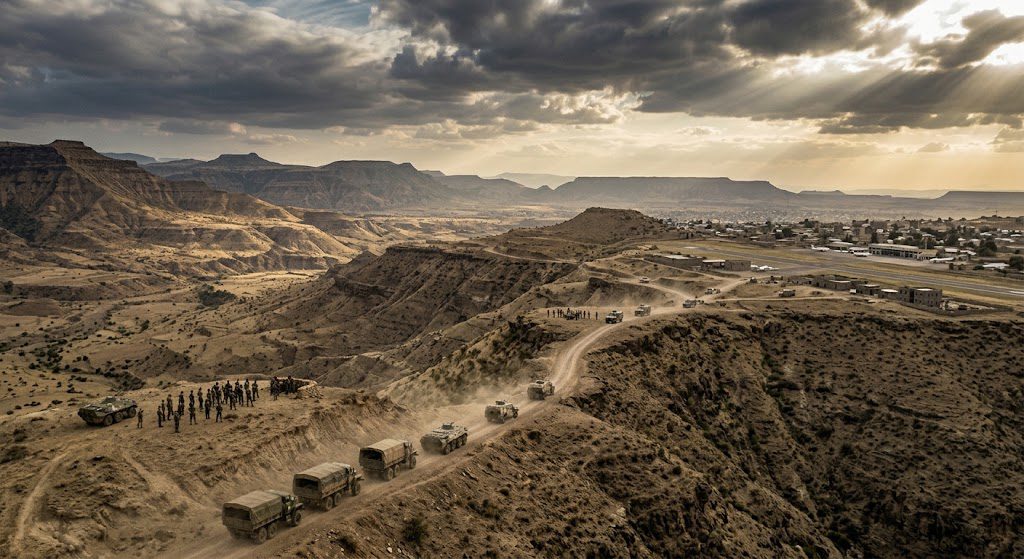
Ethiopia’s Tigray region has entered a new and dangerous phase of conflict.
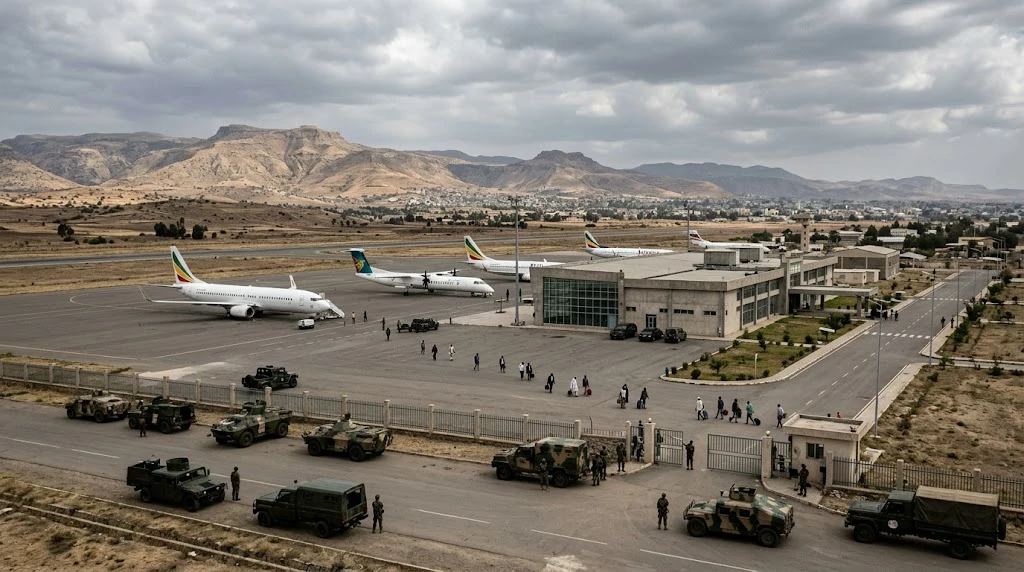
On September 23, 2026, Tigrayan forces took control of three civilian airports in northern Ethiopia as fighting spread into neighboring Afar and Amhara regions. Ethiopian Airlines suspended flights to Mekelle, Axum and Shire, while the African Union called for immediate de-escalation and a return to direct talks.
The escalation comes less than four years after the November 2022 Pretoria peace agreement ended the devastating Tigray War.
The latest fighting does not automatically mean Ethiopia has returned to the scale of the 2020–2022 war. But the combination of new military clashes, political alliances and unresolved territorial disputes has raised serious concerns about whether the fragile peace process can hold.
What Happened in Tigray?
The latest escalation became visible on Wednesday, September 23.
According to ACLED, Tigray Defense Forces (TDF), led politically by the Tigray People’s Liberation Front (TPLF), seized control of airports in Mekelle, Axum and Shire.
ACLED also reported clashes between Ethiopian federal forces and joint TDF-Amhara Fano forces around the Kobo-Tumuga direction, as well as fighting along several areas near the Tigray-Amhara and Tigray-Afar borders.
Ethiopian Airlines subsequently suspended flights to the three Tigray airports, saying the decision was due to the “current situation” in the region.
The African Union confirmed that the airports had been seized and said federal personnel had been detained.
The organization called for restraint and an immediate end to actions that could further escalate the crisis.
Why the Pretoria Peace Agreement Matters
The current crisis is closely connected to the peace agreement signed in Pretoria on November 2, 2022.
The agreement ended the major phase of the Tigray War, which had begun in November 2020.
The conflict involved the TPLF, Ethiopian federal forces and allied regional forces, including Eritrean troops. It produced enormous civilian suffering and displacement.
The African Union’s current position is important: it has not declared the Pretoria Agreement dead.
Instead, on September 23, the African Union Commission said the agreement remains the “cornerstone” of sustainable peace, stability and reconciliation in Ethiopia. It also called for renewed direct talks under the framework of the agreement.
That distinction matters.
Some analysts and news reports describe the latest fighting as evidence that the agreement is collapsing. But the diplomatic position of the African Union is that the framework still provides the basis for resolving the crisis.
The latest seizure of civilian airports, however, is clearly being treated by the AU as inconsistent with commitments under the agreement.
The New Alliance Behind the Escalation
Another major development came only days before the latest fighting.
On September 20, seven Ethiopian armed and political groups announced a new coalition known as the Ethiopian Peoples’ Forces Alliance for Survival.
The alliance includes the TPLF, the Amhara Fano National Movement, the Oromo Liberation Army, the Ogaden National Liberation Front, the Afar Revolutionary Democratic Unity Front, the Benishangul Peoples’ Liberation Front and the Gumuz Peoples’ Democratic Movement.
The groups share opposition to the federal government, although their political interests and regional priorities are not necessarily identical.
The alliance is particularly significant because some of its members were previously on opposing sides of Ethiopia’s conflicts.
The TPLF and Amhara Fano forces, for example, fought on opposing sides during the 2020–2022 Tigray War.
Their current cooperation represents a major change in Ethiopia’s political and military landscape.
ACLED said the formation of the alliance was followed by actions involving the TPLF and Fano and raised concerns that violence could spread across multiple regions.
However, ACLED also cautioned that not every member of the alliance necessarily has the capacity or organization to open a major new front.
That makes the situation serious, but still fluid.
Fighting Spreads Beyond Tigray
The most important development may be that the fighting is no longer confined to Tigray itself.
Reports on September 23 described clashes in Afar, including around Abala and Erebti.
There were also reports of fighting near the Tigray-Amhara border.
ACLED reported clashes along the Kobo-Tumuga direction involving Ethiopian National Defense Force troops and joint TDF-Fano forces.
Al Jazeera and AFP also reported fighting in parts of Afar and described an offensive against federal positions according to an adviser to Prime Minister Abiy Ahmed. Tigray authorities, however, presented the situation differently, accusing federal forces of attacking the region and describing their own military response as defensive.
Those competing accounts are important.
Information from active conflict zones can be incomplete or difficult to independently verify, particularly during the first hours of major fighting.
The clearest independently reported development is that armed clashes have expanded across several areas and that civilian air connections to Tigray have been suspended.
A New Humanitarian Warning
The renewed fighting comes as Tigray is still recovering from the previous war.
The 2020–2022 conflict caused mass displacement, severe damage to infrastructure and a major humanitarian emergency.
The African Union mediator estimated that approximately 600,000 people died during the conflict, although estimates of wartime casualties vary depending on methodology and period measured.
The region has also continued to deal with displacement and incomplete implementation of the peace agreement.
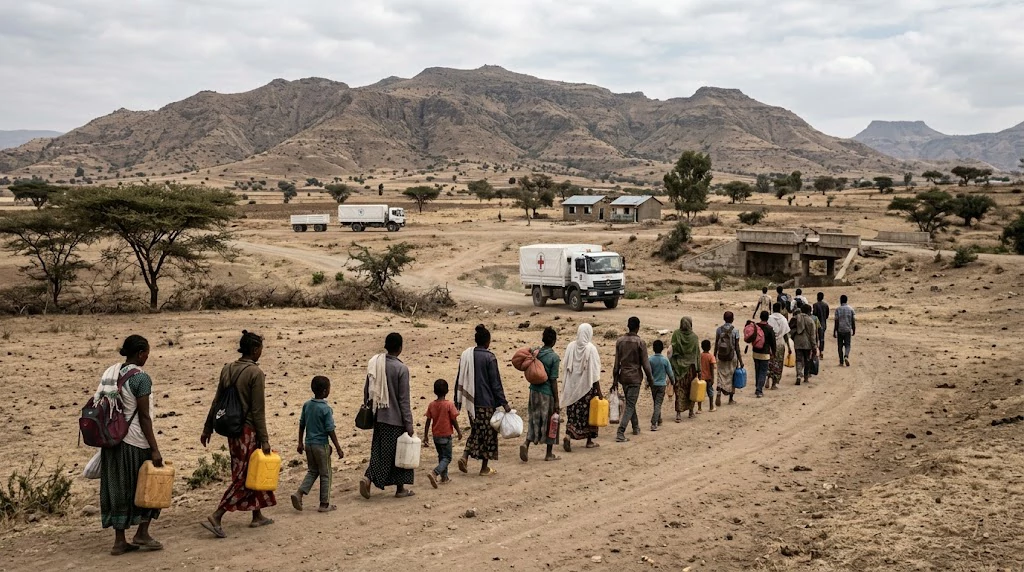
The latest disruption to airports could make humanitarian access more difficult.
Flights connecting Tigray with the rest of Ethiopia have been suspended, while renewed fighting around roads and border areas could complicate the movement of food, medicine and other essential supplies.
For civilians, the biggest concern is therefore not only the military situation.
It is whether another prolonged conflict could interrupt the recovery process that began after 2022.
The Eritrea Question
Eritrea is another reason the latest developments are being watched closely.
During the 2020–2022 Tigray War, Eritrean forces fought alongside Ethiopian federal forces against the TPLF.
Relations between Ethiopia and Eritrea have since deteriorated.
The Ethiopian government has accused Eritrea of supporting armed groups opposed to Addis Ababa. Eritrea has denied such accusations.
Reuters reported this week that the Ethiopian government accused the new opposition alliance of receiving support from Eritrea, while Eritrea denied the claim.
At this stage, claims about external military support should be treated carefully unless independently verified.
Still, Eritrea’s proximity to Tigray means developments along the border could have consequences far beyond Ethiopia’s internal politics.
A wider regional escalation could also affect the already fragile security environment around the Horn of Africa and Red Sea.
Drone Strikes Add to the Tension
The latest ground fighting followed days of reported drone attacks.
On September 22, authorities in Tigray said a drone strike in Alamata, in southern Tigray, killed at least 14 people and injured 22 others.
Local officials told the BBC that multiple drones and a fighter jet were involved and accused federal forces of striking locations that included schools.
The BBC reported that it could not independently verify those allegations and that the federal government had not publicly commented on them at the time.
That uncertainty is important.
During an active conflict, casualty figures and responsibility for individual attacks can change as additional information becomes available.
The U.S. State Department’s Bureau of African Affairs also condemned a separate reported drone strike involving a convoy of Catholic vehicles carrying food aid and called for an investigation and dialogue.
Why This Matters Beyond Ethiopia
The Tigray conflict is not simply a local Ethiopian story.
Ethiopia is one of Africa’s largest countries by population and plays an important role in the Horn of Africa.
Its borders connect the country to Eritrea, Sudan, South Sudan, Kenya, Djibouti and Somalia.
A prolonged conflict could therefore affect:
- Cross-border trade
- Humanitarian operations
- Regional security
- Refugee movements
- Relations with Eritrea and Sudan
- Red Sea security
- International diplomatic efforts in East Africa
The situation also comes at a time when several conflicts are already affecting the broader Red Sea and Horn of Africa region.
For readers following international developments, QayQay’s global news coverage provides additional context on geopolitical and economic developments around the world.
What Happens Next?
The next few days will be critical for determining whether the latest fighting remains geographically limited or develops into a wider confrontation.
Several developments will be worth watching.
1. Will the fighting continue around Afar and Amhara?
The expansion of clashes beyond Tigray would make the crisis significantly more complicated.
2. Will the airports reopen?
Mekelle, Axum and Shire are important civilian connections for the region.
The longer flights remain suspended, the greater the potential disruption to civilians, businesses and humanitarian organizations.
3. Will the African Union succeed in restarting talks?
The AU has already called for immediate de-escalation and asked its High Representative for the Horn of Africa, former Nigerian President Olusegun Obasanjo, to engage the parties.
4. Will the new alliance remain united?
The seven-group coalition is politically significant, but its members have different regional interests.
Whether they can coordinate effectively remains uncertain.
5. Will Eritrea become more directly involved?
This could become one of the most important questions for the entire Horn of Africa.
At present, allegations of outside support remain contested.
The Bigger Picture
The latest Tigray escalation is a warning that the end of major fighting in 2022 did not resolve all of Ethiopia’s underlying political and territorial disputes.
The Pretoria Agreement stopped the main war, but several difficult issues remained.
Those include the status of disputed territories, regional autonomy, disarmament, political representation and relations between the federal government and regional authorities.
The September 2026 fighting shows how quickly unresolved disputes can turn into a security crisis.
But it is also too early to know whether the latest escalation will become another full-scale civil war.
The situation remains fluid.
The African Union is calling for restraint and renewed talks. Federal and Tigrayan authorities are presenting sharply different accounts of how the fighting began. Independent conflict monitors are documenting clashes across multiple areas.
For now, the most important fact is simple:
Fighting has returned to northern Ethiopia, civilian air services have been disrupted, and the peace process is facing its most serious test since the 2022 agreement.
What the Tigray Conflict Means for the Region
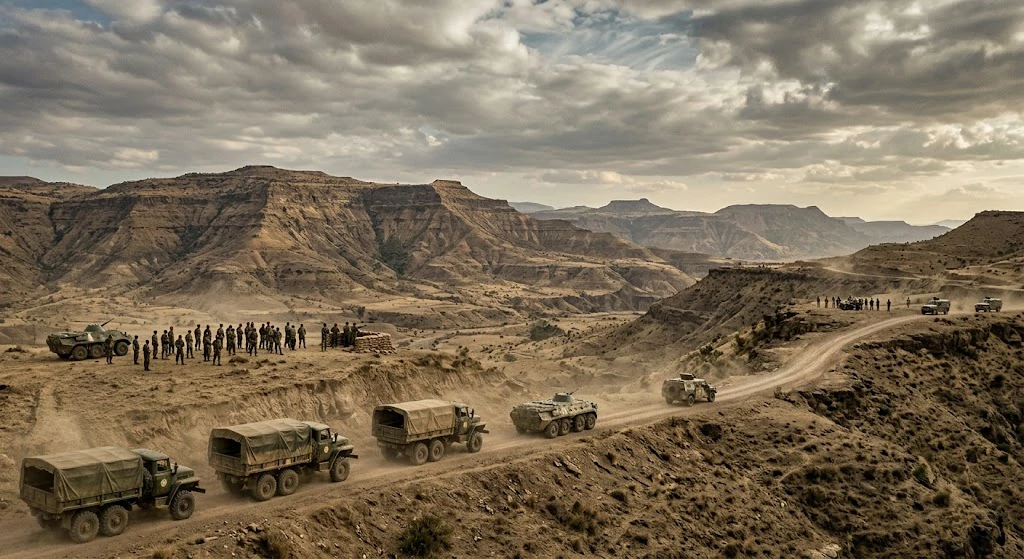
Ethiopia’s latest crisis is unfolding at a sensitive moment for East Africa.
The country already faces armed conflicts and insurgencies in several regions, while relations with neighboring states remain complicated.
A prolonged Tigray conflict could therefore create additional pressure on Ethiopia’s federal government and humanitarian organizations.
It could also increase concern among neighboring countries about refugees, border security and cross-border armed activity.
The international response will likely focus on preventing the conflict from expanding.
The African Union has already made clear that it wants the parties back at the negotiating table rather than moving deeper into military confrontation.
For now, however, events on the ground will determine whether diplomacy gets enough space to work.
Frequently Asked Questions
Is the Tigray conflict happening again in 2026?
Fighting has resumed in northern Ethiopia, including Tigray and neighboring Afar and Amhara areas. The scale and duration of the new conflict remain uncertain.
What happened in Tigray on September 23, 2026?
Tigrayan forces took control of airports in Mekelle, Axum and Shire, while clashes were reported in Tigray, Afar and along parts of the Tigray-Amhara border. Ethiopian Airlines suspended flights to the three Tigray airports.
What is the Pretoria Agreement?
The Pretoria Agreement, signed on November 2, 2022, ended the main phase of the Tigray War and established a framework for a permanent cessation of hostilities.
Is the Pretoria Agreement officially over?
Not according to the African Union. On September 23, 2026, the AU described the agreement as the cornerstone of sustainable peace and called for renewed talks within its framework.
How many people died in the Tigray War?
The African Union mediator estimated that around 600,000 people died during the 2020–2022 conflict. Exact casualty estimates vary because of the difficulty of documenting deaths during the war.
Why is Eritrea important to the crisis?
Eritrean forces fought alongside Ethiopian federal troops during the previous Tigray War. Current allegations that Eritrea supports Ethiopian opposition groups are disputed, making its role an important issue to monitor.
Are flights operating to Tigray?
Ethiopian Airlines suspended flights to Mekelle, Axum and Shire on September 23 because of the security situation.
More QayQay Global News
If you’re following how conflicts and geopolitical developments connect with wider economic and international trends, explore more QayQay coverage:
- Today’s Global News Briefing: Strategic Shifts, Politics, and Climate Focus — Global geopolitical, economic and international developments.
- Why Inflation Is Still One of America’s Biggest Political Issues — Background on how global energy and economic developments can affect U.S. consumers.
Sources & Further Reading
- African Union — Statement on Northern Ethiopia
- ACLED — Ethiopia Conflict Alert
- Reuters — Tigray Offensive and Ethiopian Airlines Suspension
- Al Jazeera — Tigray Forces Launch Offensive
- Associated Press — Ethiopian Airlines Cancels Tigray Flights