



Finding enjoyable activities for babies doesn’t require expensive toys, complicated schedules, or a room full of equipment. Your face, voice, a book, and safe floor space can offer plenty of play opportunities.
Babies explore the world through sight, sound, touch, and movement. They also learn from how you respond to them. However, each child develops at a different pace.
Rather than rushing milestones, try short play sessions when your child is awake and curious.
Below, you’ll find 12 easy ideas for roughly birth through 12 months, plus ways to adapt them and keep play safe. The age ranges are flexible starting points, not deadlines.
Why Everyday Baby Play Matters
Play helps infants notice people, explore objects, and practice new movements. For example, a baby may watch your mouth while you speak, reach toward a toy, or smile when you repeat a familiar sound.
Meanwhile, a warm response helps turn these small moments into a two-way exchange. Your attention matters more than expensive toys.
The CDC’s developmental milestone guides describe how children’s skills in movement, communication, play, and social interaction change during the first year. However, milestone lists aren’t a scorecard.
Choose games that fit what your baby can comfortably do today. If your child turns away, fusses, or seems tired, pause and try again another time.
Activities for Babies from Birth to 3 Months
In the earliest weeks, try talking, gentle movement, and looking at faces. Even a quiet moment can be enough.
1. Have a Face-to-Face Chat
Hold your baby securely or settle beside them on a safe play surface. Then bring your face into view and speak in a calm, friendly voice. Say your baby’s name or describe your day.
Pause now and then. Your baby might look toward you, move their mouth, or make a small sound. As a result, you can respond naturally and create the beginnings of a back-and-forth exchange.
Try this: Copy a gentle coo if your baby makes one. Then wait to see what happens next. There’s no need to insist on a response.
2. Sing a Familiar Song
Your voice is a simple tool for shared play. For example, sing during a diaper change, after a nap, or while holding your baby comfortably. Choose a short song and repeat it if your baby seems interested.
You can gently sway while holding your baby with full head and neck support. However, never shake, bounce roughly, or use fast movements to make the activity more exciting.
Try this: Repeat a favorite phrase softly and pause before the last word. Older babies may eventually smile, gesture, or make a sound during that pause.
3. Make Tummy Time a Short Game
Place your awake baby on their tummy on a firm, flat floor mat while you stay close and watch. Get down at eye level so your face becomes part of the activity. At first, a brief attempt may be enough.
The American Academy of Pediatrics’ tummy-time guidance recommends beginning with two or three supervised sessions of about three to five minutes a day after coming home from the hospital. Gradually add time as your baby grows and tolerates it.
Try this: Talk or sing from in front of your baby. If they become upset, take a break rather than forcing a longer session.
Importantly, tummy time is for awake, supervised play only. Always place your baby on their back for sleep.
4. Show Simple High-Contrast Pictures
Hold a large, baby-safe picture card or soft book where your baby can comfortably see it. Simple shapes and strong contrast can give young infants something to look at while their vision develops.
If your baby seems interested, move the picture slowly. Never shine bright lights toward their eyes.
Try this: Show one image briefly, then replace it with your face. This keeps the game personal and easy to stop.
For more information, read our guide to https://qayqay.com/family-communication-activities/

Activities for Babies from 3 to 6 Months
As your baby becomes more interested in reaching, looking around, and responding to sounds, you can add a little variety. However, remember that these age ranges overlap. Babies can enjoy some of the same games well before or after this period.
5. Offer a Toy to Reach For
Place a large, lightweight, age-appropriate toy within comfortable reach while your baby lies awake on a safe mat. Let them look, stretch, and explore without pulling their hands toward the object.
Offer the toy closer if your baby wants it. Eventually, they may try to touch or grasp it.
Try this: Celebrate the attempt rather than whether the baby grabs the toy. Also, stop when their attention moves elsewhere.
6. Play With a Baby-Safe Mirror
Sit with your baby on your lap or place a shatter-resistant baby mirror securely in front of them during supervised floor time. Point to the reflection and say simple things like, “There’s your nose!” or “Look at that smile.”
Babies may enjoy the moving face and your voice without recognizing themselves.
Try this: Make one gentle expression, then wait to see whether your baby watches or reacts. Choose mirrors made specifically for infant use, without loose parts or sharp edges.
7. Explore One Safe Texture at a Time
Offer a clean, intact, oversized soft washcloth or an age-rated textured baby toy while you sit close by. Let your baby pat, rub, or hold it as they choose.
You can describe the feeling using plain words: “soft,” “bumpy,” or “smooth.” Switch textures slowly to avoid overwhelming your child.
Try this: Compare the feel of a smooth baby blanket under your hand with a textured toy your child can safely grasp. Keep loose blankets away from the face and out of the sleep space.
Avoid loose grains, beads, water beads, small fabric scraps, long ribbons, and anything that can break into choking-sized pieces.
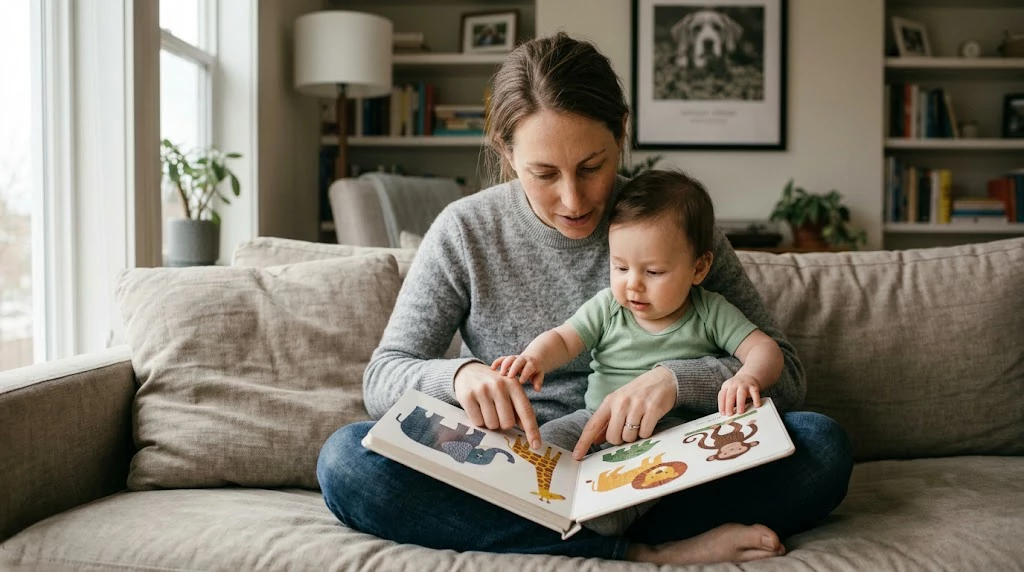
8. Read a Tiny Picture Book Together
Rest your baby securely on your lap and open a sturdy board book or washable cloth book. Then name one object on each page, point to a picture, or use a playful voice.
You don’t need to finish the story; following one picture is enough.
The American Academy of Pediatrics encourages reading with babies from birth, with short, responsive sessions that follow the child’s interest.
Try this: Repeat an animal sound or point to a familiar object. Later, your child may look, touch, or vocalize when they recognize the picture.
Activities for Babies from 6 to 12 Months
As babies grow, many enjoy exploring objects and repeating actions. Still, every child develops differently, so offer choices without pushing skills.
9. Play Peekaboo With Your Face
Cover your own face briefly with your hands, then reveal it with a warm smile and a gentle “Peekaboo!” Pause to see whether your baby wants another turn.
An older baby might eventually laugh or reach for your hands.
Try this: Slow the game down if your baby startles easily. Keep all fabric and coverings away from the baby’s nose and mouth.
10. Put Big Objects In and Take Them Out
Set a few large, baby-safe soft blocks in a wide, stable container with smooth edges. Show your baby how to remove one block, then place it back. Afterward, let them explore the same action at their own pace.
The game lets infants explore cause and effect. Meanwhile, add words such as “in,” “out,” and “all done.”
Try this: Use just two or three objects to begin. Avoid any item small enough to fit in your child’s mouth or with parts that could come loose.
11. Roll a Soft Ball Back and Forth
When your baby can sit comfortably with the support they need, sit facing them on the floor. Slowly roll a large, lightweight, baby-safe ball toward their hands. Then let them touch it, push it, or watch it move.
Instead of expecting a game of catch, focus on taking turns.
Try this: Say “my turn” and “your turn” as you roll. Keep the ball large enough to avoid choking risks and never prop a baby into a position they cannot manage safely.
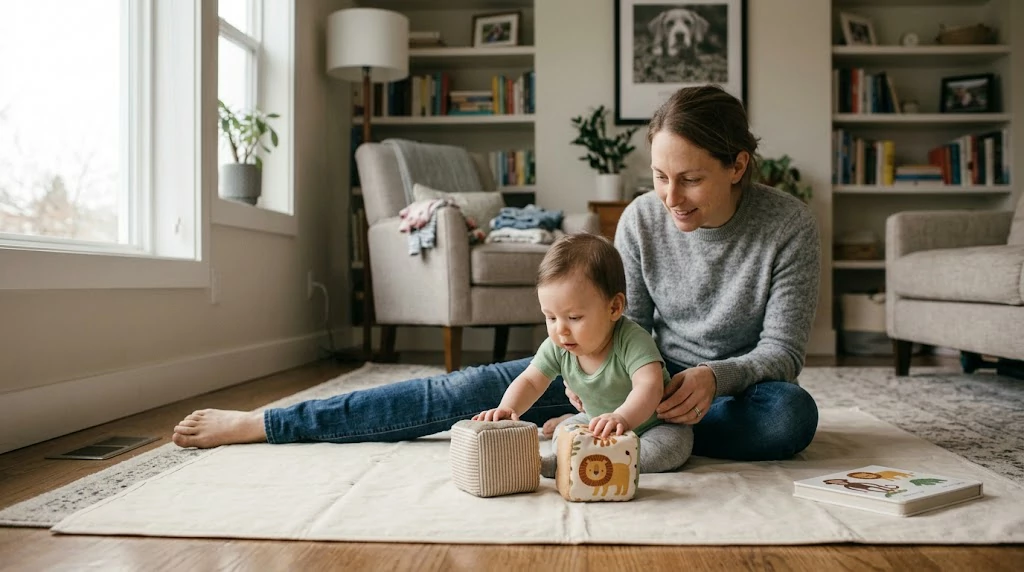
12. Make a Safe Floor Exploration Space
Clear a clean floor area and place one or two age-appropriate toys within your baby’s view. Let them roll, reach, scoot, crawl, or move in their own way. Stay close, and keep pathways free from cords, sharp corners, and small objects.
If your child reaches toward a toy, you can move it slightly. However, never force crawling or pull their arms.
Try this: Follow the direction your baby chooses rather than arranging an obstacle course they must complete. The activity should feel like an invitation to explore.
For more information, read our guide to https://qayqay.com/family-communication-activities/
How to Choose Activities That Match Your Baby
Choose activities for babies based on their interest and alertness, not just age.
Watch your baby’s response: interest, reaching, or smiles may invite more play. On the other hand, turning away, stiffening, crying, or repeatedly fussing may signal that they need less stimulation, a feed, a diaper change, or rest.
Repetition can also help. Your baby may enjoy the same song or board book again and again.
Essential Safety Tips for Baby Play
Safety matters more than novelty. Always supervise infant play, especially when toys or textured materials are involved. In addition, check toys regularly for wear and remove anything damaged.
The American Academy of Pediatrics’ toy safety guidance advises caregivers to follow age labels and avoid small parts, loose magnets, and button batteries. Keep older siblings’ tiny toys out of reach, too.
Use a clean floor surface and keep plastic bags, strings, and water beads away. Never leave a baby alone on a changing table, sofa, or other raised surface, even briefly.
Finally, protect sleep routines. Use a separate safe sleep space and place babies on their backs to sleep. Play mats, activity gyms, and tummy time are for awake supervision, not unsupervised naps.
A Simple Play Routine for Busy Days
Instead of planning lessons, use short moments in your usual routine.
After a diaper change, you might sing for a minute or try a brief supervised tummy-time session. Later, show a picture book or chat while your baby looks at your face. Older babies may enjoy rolling a ball or exploring a safe floor area.
On busy days, feeding, comforting, and rest may fill your time. That’s normal.
When to Talk With Your Pediatrician
Children reach milestones at different times. However, it’s worth sharing concerns if your baby seems to lose a skill, rarely responds to sound or social interaction, or struggles with movements that worry you.
Use the CDC’s age-based milestone resources as a conversation starter, not as a way to diagnose a delay. If your baby arrived early or has a medical condition, ask their pediatrician how to adapt activities and interpret milestones.
You don’t need to wait for a scheduled visit to raise a concern.
Frequently Asked Questions About Baby Play
What are the best activities for a newborn?
Face-to-face talking, gentle singing, simple pictures, and short, supervised tummy time are practical starting points. Above all, follow your newborn’s comfort and alertness rather than a strict plan.
How long should a baby play at one time?
There is no single ideal length for every baby. Young infants may enjoy only a few minutes before needing a break. Therefore, watch for signs of tiredness and end the activity when interest fades.
Do babies need expensive sensory toys?
No. Your face, voice, baby-safe books, and a clear floor space can offer many play opportunities. However, check the safety and age suitability of anything your child handles.
When can I start tummy time?
For many healthy babies, the AAP recommends starting after arriving home from the hospital. Keep sessions short, always supervise, and put your baby on their back for every sleep. Ask your pediatrician for individualized advice when needed.
Is it okay if my baby doesn’t enjoy an activity?
Yes. Try a different game or wait until another time. For example, a baby who dislikes a mirror today may enjoy a song instead. Never force participation.
Can play help my baby reach milestones faster?
Play offers useful chances to explore and practice emerging skills, but it cannot guarantee faster development. In addition, children vary widely. If you have concerns, speak with a pediatrician rather than increasing stimulation.
How can I tell when my baby needs a break?
Watch for turning away, fussing, crying, or becoming less engaged. Then lower the noise, stop the game, and offer comfort or rest. A calm break often matters more than finishing an activity.
Final Thoughts
Simple activities for babies work best when they fit everyday life. A soft song, a few minutes on a play mat, or a favorite picture book can turn an ordinary moment into shared attention and discovery.
However, no special game can guarantee a developmental result, and every baby follows their own pace. Choose safe, age-appropriate ideas, respond to your child’s cues, and ask a pediatrician when a concern comes up.
Most importantly, enjoy the time together without turning play into a test.