

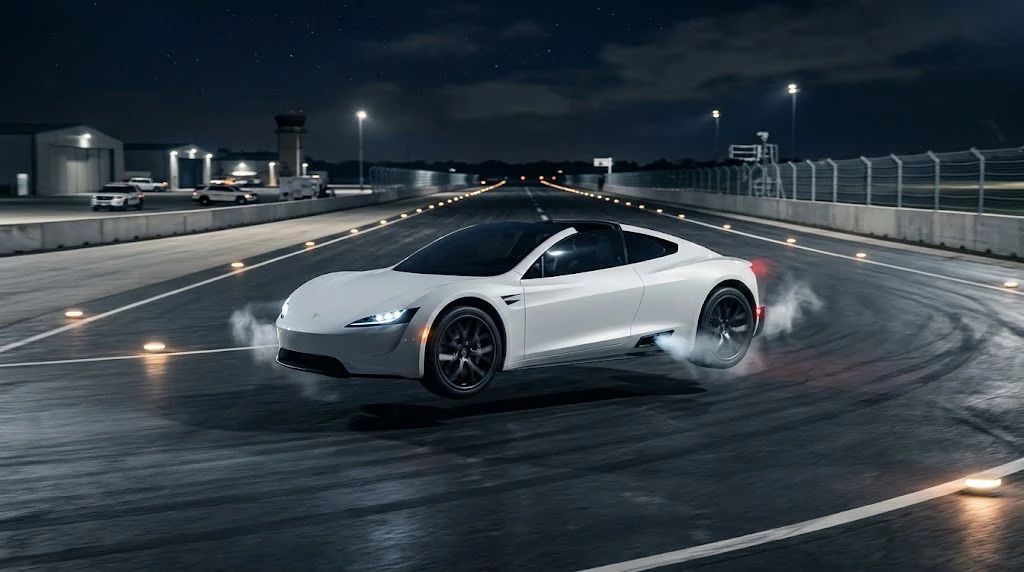
The Flying Tesla Roadster has moved from years of speculation to a dramatic public demonstration. On October 15, 2026, Elon Musk presented Tesla’s redesigned second-generation Roadster at a SpaceX testing facility in Texas. During the event, a prototype used powered fans, ground suction, and cold-gas thrusters to perform airborne maneuvers.
First, the car climbed a curved ramp and held its position upside down. It then rotated in the air and landed on the ground. In another demonstration, the prototype cleared several Tesla vehicles. For safety, Tesla operated it remotely during the most extreme maneuver. TechCrunch covered the event.
However, the word “flying” needs context. Tesla has not presented a conventional passenger aircraft or a vehicle for everyday vertical takeoff. Instead, the most extreme features belong to an invitation-only, single-seat Rocket version. Tesla’s current Roadster page says regulators have not approved that version for public-road use.
The Roadster therefore remains an electric hypercar with aerospace-inspired systems, not a practical airborne commuter vehicle. Although the demonstration attracted attention, questions remain about certification, repeatability, pricing, safety, and production readiness.
What Tesla Unveiled in Texas
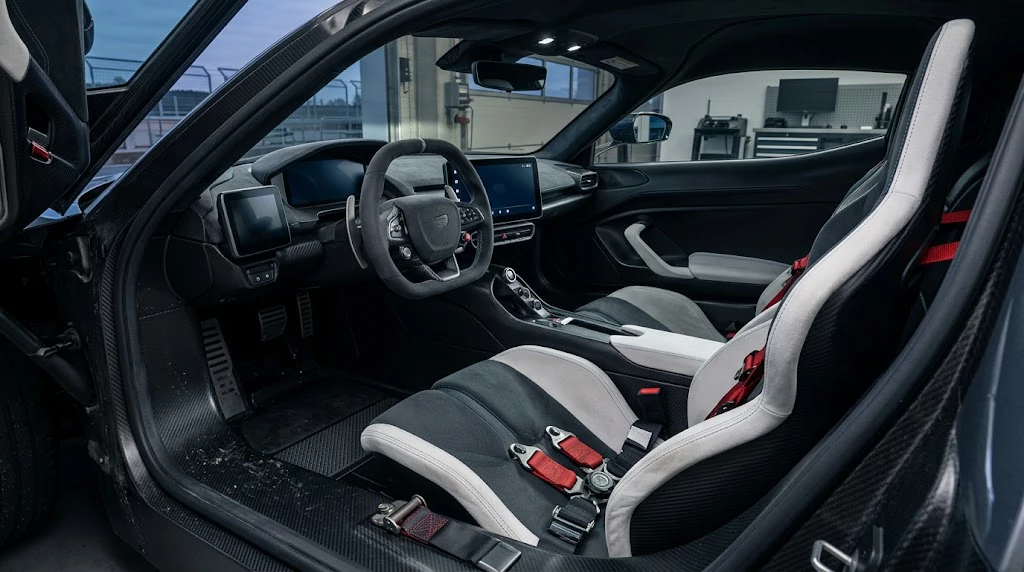
Tesla revealed a substantially redesigned Roadster rather than simply updating the red prototype from 2017. The new design includes sharper bodywork, a minimalist cabin, steer-by-wire controls, active aerodynamic elements, and lightweight materials. In addition, Tesla chose a fixed-seat approach to reduce mass.
The event took place at a SpaceX facility outside Waco, Texas. Through that setting, Tesla highlighted the link between automotive and aerospace engineering, including pressure vessels, precision actuators, and cold-gas propulsion.
The presentation focused on three performance concepts:
- Maintaining downforce at very low or zero speed.
- Using rear thrusters to improve straight-line acceleration.
- Using multiple perimeter thrusters for upward movement and rotation.
Tesla also calls the Roadster a “pilot’s car.” In other words, the company emphasizes manual control and extreme performance rather than the autonomous-driving focus of some of its other projects. In effect, the model serves as a halo vehicle: a low-volume car intended to display engineering capabilities and strengthen Tesla’s brand.
How the Flying Tesla Roadster Works
The Flying Tesla Roadster combines two systems with different jobs: a multi-mode suction system and cold-gas thrusters. Together, they help explain how the prototype performed its unusual maneuvers.
The Multi-Mode Suction System
According to Tesla, powered fans remove air from beneath the car while a ground-sealing system limits incoming air from the sides. As a result, the pressure drops beneath the vehicle, producing downforce even when the car stands still.
Traditional aerodynamic wings generally need forward speed to create substantial downforce. By contrast, Tesla designed its fan-assisted system to produce grip without depending entirely on airflow over the body.
Tesla says the suction force can even hold the car against an inverted surface while stationary. Meanwhile, active wings can adjust the balance between downforce and aerodynamic drag. However, independent testing of the final production system will be necessary to confirm those manufacturer claims.
The Cold-Gas Thrusters
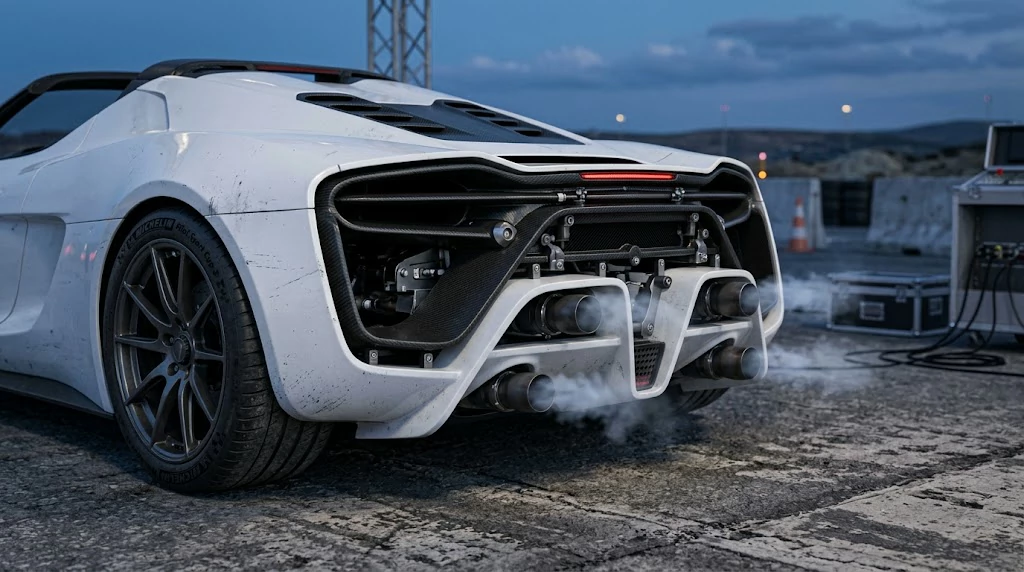
Tesla says the Roadster’s thrusters use stored, highly compressed air rather than combustion-based rocket fuel. When the system releases air through controlled nozzles, it produces short bursts of thrust.
Tesla engineering representatives said the prototype uses ten thrusters and approximately 600 liters of compressed-air storage. They also said the pressure vessels occupy available spaces throughout the vehicle. In addition, Tesla plans a system that can recharge the compressed-air supply.
Rear-facing thrusters can add force during straight-line acceleration. Meanwhile, nozzles around the vehicle can provide upward force or control rotation in midair.
Still, this technology cannot bypass the laws of physics. Every burst consumes stored pressure, and the hardware adds weight and complexity. Moreover, engineers must consider noise, debris, nearby pedestrians, recharge time, inspections, and emergency behavior.
In short, compressed-gas bursts can support acceleration and help stabilize the Rocket variant during brief airborne maneuvers.
Three Roadster Versions: Performance, Thrust, and Rocket
Tesla has outlined three Roadster configurations. However, their capabilities differ substantially, and not every version can leave the ground.
Performance
Tesla presents Performance as the road-oriented version. According to the company, this two-seat model includes:
- Active aerodynamics.
- A multi-mode suction system.
- Road and track capability.
- No complete perimeter flight system.
Therefore, Performance focuses on high cornering and braking capability while remaining closer to a conventional electric supercar.
Thrust
The limited-release Thrust model adds rear-mounted cold-gas thrusters. Tesla says this setup can help the car accelerate from 0 to 60 mph in less than one second.
Like Performance, Thrust keeps two seats. However, Tesla describes it as “race ready,” not “air ready.”
The sub-one-second figure comes from Tesla’s controlled demonstration. So far, the company has not published independent acceleration results, repeatability data, final tire specifications, surface conditions, or production-vehicle weight. Consequently, buyers should treat the claim as a manufacturer target rather than a confirmed production result.
Rocket
Rocket is the model behind the “flying car” description. Tesla expects this configuration to offer:
- One seat.
- Thrusters around the vehicle.
- Forward and upward thrust.
- Lateral and rotational control.
- A complete flight-oriented system.
- Invitation-only availability.
Unlike the other versions, Rocket aims to perform controlled airborne maneuvers. Nevertheless, Tesla says regulators have not approved it for public-road use. Regional laws may also prevent the company from offering it in some markets.
Performance Claims and Specifications
At the reveal, Tesla announced a top speed above 230 mph and an estimated range of approximately 300 miles. It also claimed a 0-to-60-mph time of less than one second for the thruster-equipped configuration. Meanwhile, the company set 2028 as its production target.
However, these figures come from Tesla rather than independent tests of a final production car. Readers should therefore treat them as announced specifications, not guaranteed results.
Several details still need clarification:
- Final curb weight.
- Battery capacity.
- Usable thruster duration.
- Time required to restore air pressure.
- Number of consecutive maneuvers.
- Tire and wheel specifications.
- Cooling requirements.
- Crash protection for pressure vessels.
- Final range during aggressive use.
- Service and inspection intervals.
Tesla has also displayed different specifications on regional Roadster pages over time. For example, older pages mentioned approximately 620 miles of range and four seats. By contrast, Tesla describes the redesigned 2026 car as a two-seat or one-seat vehicle, depending on the version.
For this reason, buyers should approach older product pages, archived reservation materials, and unofficial comparison charts with caution. In particular, the Rocket configuration favors low mass and direct control over passenger capacity.
Is the Flying Tesla Roadster Really a Flying Car?
Whether the Flying Tesla Roadster qualifies as a flying car depends on the definition being used.
The Rocket prototype demonstrated that it could leave the ground, rotate, and return to a landing area. Tesla also says its perimeter thrusters provide upward, forward, and lateral movement. In that limited sense, the vehicle performs controlled airborne maneuvers. TechCrunch
However, the public demonstration does not establish that the Roadster can operate like a conventional aircraft or modern electric vertical-takeoff vehicle.
A practical passenger aircraft would normally require evidence concerning:
- Sustained flight duration
- Operational altitude
- Stable takeoff and landing without a ramp
- Range while airborne
- Redundant flight-control systems
- Emergency landing procedures
- Airworthiness certification
- Pilot licensing or automated control requirements
Tesla has not publicly provided a complete aviation specification covering those areas.
A more technically accurate description would therefore be a thruster-assisted electric hypercar capable of controlled airborne stunts. The phrase “flying car” is effective for headlines, but it should not imply that the Roadster is ready to operate as routine air transportation.
Why the New Roadster Matters for Tesla
The Roadster is unlikely to become Tesla’s highest-volume product. Its value is strategic.
First, it gives Tesla a new performance flagship. The company’s original Roadster, launched in 2008, helped demonstrate that an electric vehicle could be fast and desirable. The second-generation model was first shown in 2017 but experienced repeated delays before the 2026 redesign. TechCrunch
Second, the project creates a visible connection between Tesla and SpaceX engineering. Pressure vessels, precision actuators, lightweight materials, and thruster control allow the company to present the car as more than another battery-powered supercar.
Third, the Roadster changes the competitive discussion. Most electric hypercars compete through motor output, battery performance, aerodynamics, and weight reduction. Tesla is introducing an additional category: stored thrust that can supplement the limits of tire grip.
Nevertheless, the vehicle’s commercial importance may be smaller than its publicity value. A complex, expensive, low-volume car can generate attention without contributing significantly to total vehicle deliveries.
For more information, read our guide to https://qayqay.com/elon-musk-ex-wife-children-mothers-breeders/
Safety and Legal Challenges
The Roadster’s most unusual systems also create its most difficult regulatory questions.
Tesla states that the Rocket model is not approved for public-road use. Its availability will depend on regional laws, and the company’s current public material notes that the vehicle may be offered only in left-hand-drive form. Tesla
Regulators may need to evaluate issues that conventional vehicle testing does not normally cover:
- High-pressure storage vessels
- Sideways or upward thruster discharge
- Heat, noise, and air pressure near bystanders
- Loose debris accelerated by exhaust flow
- Stability after a partial system failure
- Crash behavior involving pressurized components
- Use of airborne systems outside controlled facilities
It is not yet clear whether the Rocket version would be regulated solely as a track vehicle, as specialized experimental equipment, or under some combination of automotive and aviation rules.
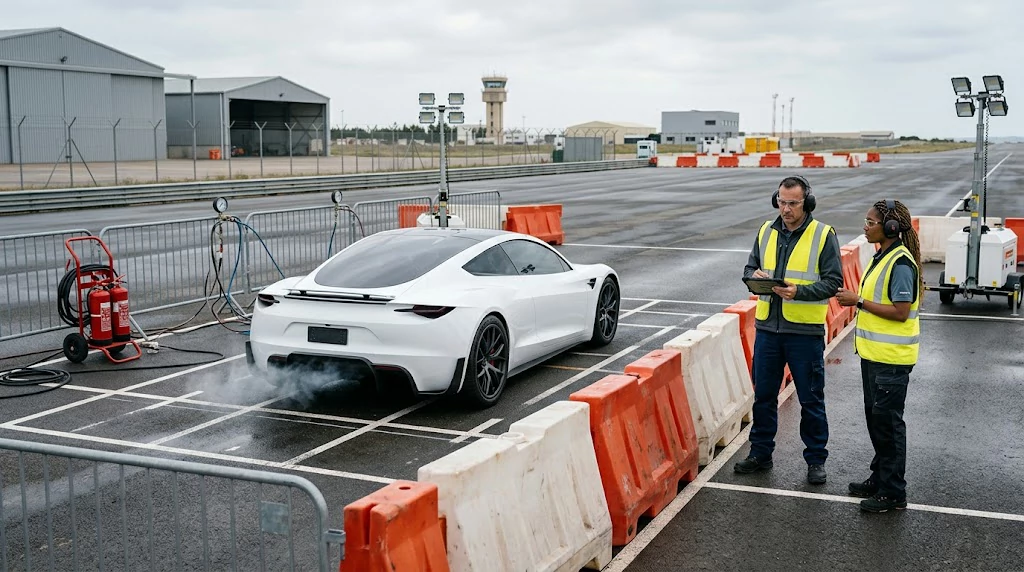
The demonstration itself was remotely controlled during the inverted and airborne sequence. That does not mean a final vehicle will always be operated remotely, but it illustrates how different a controlled engineering event is from normal consumer use. The Guardian
Roadster Release Date, Price, and Reservations
Tesla says Roadster production is planned for 2028. That timeline comes after the second-generation model’s original 2017 reveal and several previous delays, so the target should be treated as a plan rather than a guaranteed delivery date. TechCrunch
Current reports indicate that Tesla is accepting reservations with different deposit levels:
- Approximately $50,000 for the Performance version
- Approximately $250,000 for the Thrust version
- Invitation-only access for the Rocket version
A final retail price for every version was not clearly announced during the reveal. Deposit amounts should not automatically be interpreted as final purchase prices. Reservation terms, refund conditions, regional availability, taxes, and delivery timing should be reviewed directly before any payment is made. TechCrunch
What Potential Buyers Should Watch
Before treating the new Roadster as a production-ready vehicle, buyers and enthusiasts should monitor several milestones.
A Final Production Specification
Tesla needs to publish a stable specification sheet covering battery capacity, vehicle mass, dimensions, range, speed, acceleration, charging, and thruster performance.
Independent Performance Testing
Manufacturer demonstrations can establish that a concept works under selected conditions. Independent testing is needed to evaluate repeatability, braking, range, track performance, and system limitations.
Regulatory Approval
The Performance and Thrust versions may face different approval paths from the Rocket model. Buyers should verify exactly which systems are legal to use in their country or state.
Service and Maintenance Requirements
A vehicle containing high-pressure storage vessels, active aero, fan systems, and multiple thrusters will require specialized inspection and servicing procedures.
Final Reservation Terms
Customers should examine:
- Whether the deposit is refundable
- Which version the deposit applies to
- Whether the price is locked
- Delivery-region restrictions
- Transferability
- Cancellation rules
For more information, read our guide to https://qayqay.com/elon-musk-ex-wife-children-mothers-breeders/
Frequently Asked Questions About the Flying Tesla Roadster
Did Tesla actually demonstrate a flying Roadster?
Tesla demonstrated a Roadster prototype leaving the ground, rotating in the air, clearing vehicles, and landing. The demonstration used a combination of a ramp, suction technology, and cold-gas thrusters. TechCrunch
Can the Tesla Roadster fly like an airplane?
Tesla has not demonstrated sustained airplane-style flight. The prototype performed short, controlled airborne maneuvers rather than extended transportation through the air.
Which Roadster version can fly?
Tesla attributes the full airborne capability to the single-seat Rocket version. The Performance version focuses on active aerodynamics and suction, while the Thrust version adds rear thrusters for acceleration.
Is the Rocket Roadster street legal?
No. Tesla states that the Rocket version is not approved for public-road use, and availability depends on regional laws. Tesla
How fast is the new Tesla Roadster?
Tesla claims the Thrust version can accelerate from 0 to 60 mph in under one second. Event figures also indicated a top speed above 230 mph. These figures have not yet been independently verified on a final production vehicle. TechCrunch
What is the Roadster’s estimated range?
Tesla presented an estimated range of approximately 300 miles for the redesigned vehicle. Older Tesla materials showed higher figures, so readers should use the latest production specification when it becomes available. TechCrunch
When will the new Tesla Roadster enter production?
Tesla currently targets 2028. Because the project has experienced repeated delays, that date may change. TechCrunch
How much will the Flying Tesla Roadster cost?
Tesla has not clearly confirmed a complete final price list. Reports show reservation deposits of about $50,000 for Performance and $250,000 for Thrust, while Rocket is invitation-only.
Final Thoughts
The Flying Tesla Roadster is one of the most unusual automotive prototypes Tesla has presented. Its combination of fan-generated downforce, active aerodynamics, compressed-air thrusters, and electric performance pushes the Roadster beyond the conventional hypercar formula.
The demonstration showed genuine airborne movement, but it did not establish the car as a practical replacement for an aircraft. The Rocket version remains invitation-only, is not approved for public roads, and still faces substantial technical and regulatory questions.
For now, the new Roadster should be viewed as an ambitious engineering showcase with a planned 2028 production date—not as a fully certified flying vehicle ready for everyday use.