


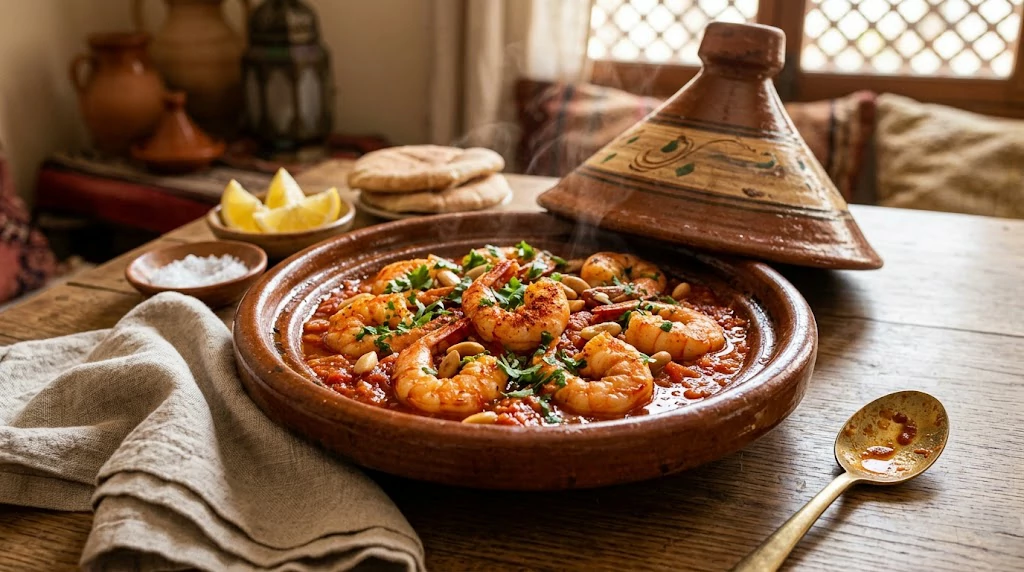
Shrimp Tagine brings tender seafood, juicy tomatoes, garlic, and warm spices together in one comforting dish. Inspired by the flavors of Morocco’s coastal kitchens, this recipe creates a fragrant sauce that tastes special without requiring complicated techniques or expensive equipment.
Although a traditional tagine is a clay cooking vessel with a cone-shaped lid, you can prepare this version in a covered skillet. Either way, the key is to simmer the tomato sauce first and add the shrimp near the end. As a result, the sauce develops flavor while the seafood stays tender.
This guide includes clear ingredients, step-by-step instructions, useful substitutions, serving ideas, and food-safety advice. You’ll also learn how to avoid the common mistake that makes shrimp tough: cooking it for too long.
What Is Shrimp Tagine?
A tagine refers both to a North African cooking vessel and to the slow-simmered dishes traditionally prepared in it. Moroccan seafood versions often pair tomatoes and garlic with paprika, cumin, parsley, and cilantro. Depending on the cook, the sauce may also include lemon, hot pepper, or other seasonings.
For this home-friendly recipe, the sauce cooks before the shrimp goes into the pan. That order matters because raw shrimp cooks much faster than tomatoes soften. Instead of simmering seafood for half an hour, you’ll give it only the time it needs at the end.
The finished dish is saucy rather than soupy. Therefore, crusty bread works particularly well for serving, although couscous or rice also fits a weeknight dinner.
Why This Shrimp Tagine Works for Weeknight Cooking
The ingredients are easy to find in many American supermarkets. In addition, you don’t need a special pot: a wide skillet with a lid gives the sauce enough room to thicken and the shrimp enough space to cook evenly.
Another advantage is flexibility. You can use fresh tomatoes when they’re flavorful or canned crushed tomatoes when they’re not. Meanwhile, spices provide a warm, savory character without requiring a long ingredient list.
For a lighter plate, serve a moderate portion of bread or grains with extra vegetables on the side. However, the meal’s overall nutritional profile depends on your ingredients, serving size, and sides, not on the word “tagine” itself.
Ingredients for Four Servings
Recipe at a glance: Approximately 15 minutes to prepare, 20–25 minutes to cook, and 35–40 minutes total. Serves four as a main dish.
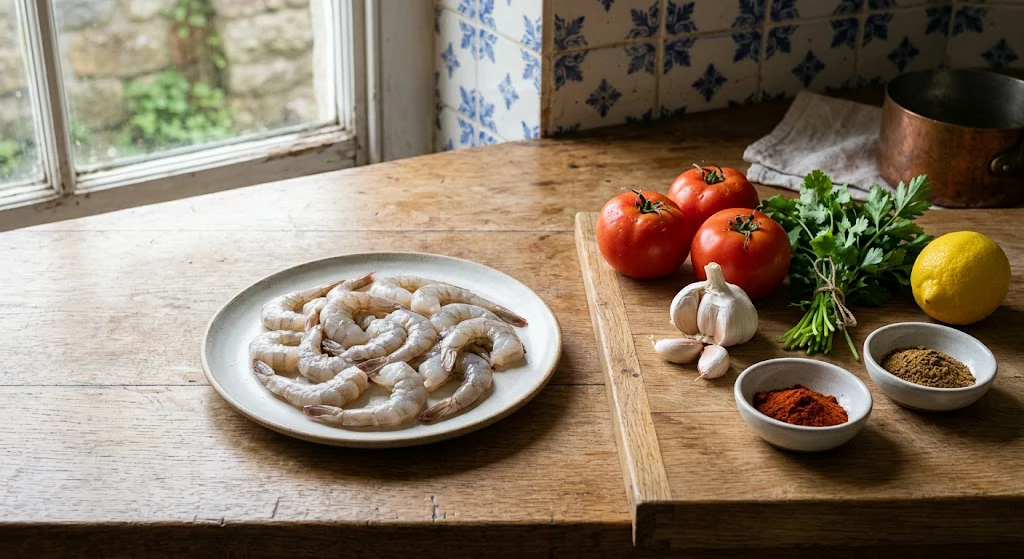
- 1¼ pounds raw large shrimp, peeled and deveined, fresh or fully thawed.
- 2 tablespoons olive oil for the sauce.
- 1 small yellow onion, finely chopped (optional but useful for sweetness).
- 4 garlic cloves, minced.
- 1½ pounds ripe tomatoes, grated, or one 14- to 15-ounce can of crushed tomatoes for a slightly smaller sauce yield.
- 1 tablespoon tomato paste, especially helpful with canned tomatoes.
- 1 teaspoon sweet paprika and ¾ teaspoon ground cumin.
- ¼ teaspoon ground turmeric, optional, plus ¼ teaspoon black pepper.
- A pinch of cayenne pepper, optional, for gentle heat.
- ½ teaspoon salt to start, then adjust to taste.
- ¼ cup chopped fresh cilantro and ¼ cup chopped flat-leaf parsley, divided.
- 1 tablespoon lemon juice, plus lemon wedges to serve.
- 2–4 tablespoons water, only if the sauce needs loosening.
Choosing Shrimp That Cooks Well
Large shrimp are convenient because they remain easy to see and turn in the sauce. Choose raw rather than pre-cooked shrimp for the best control over texture. Also, remove the shells unless you prefer a more hands-on meal; leaving the tails on is optional.
Frozen shrimp works well after safe thawing. According to the FDA’s seafood selection and handling advice, seafood should smell mild, not sour or ammonia-like. Avoid damaged frozen packages, and thaw shrimp in the refrigerator rather than on the counter.
How to Make Shrimp Tagine Step by Step
Step 1: Prepare the Shrimp and Tomatoes
Pat the thawed shrimp dry with paper towels, then keep it refrigerated while you make the sauce. If using fresh tomatoes, cut them in half and grate the flesh into a bowl; discard the skins. Alternatively, open the can of crushed tomatoes and measure the other ingredients.
Prepare the herbs and garlic before turning on the heat. This makes the cooking process smoother because shrimp needs your attention once it enters the hot sauce.
Step 2: Soften the Onion and Garlic
Warm the olive oil in a wide skillet over medium heat. Add the onion and stir for four to five minutes, until it softens without browning deeply. Next, add the garlic and cook for about 30 seconds, just until fragrant.
If you skip the onion, start with the garlic over medium-low heat. Watch carefully because burnt garlic can give the entire sauce a bitter taste.
Step 3: Bloom the Spices
Stir in paprika, cumin, turmeric if using, black pepper, and a pinch of cayenne. Cook for about 20–30 seconds, stirring constantly. As a result, the spices mix evenly with the oil and release their aroma.
Don’t let the powder scorch. Instead, add the tomatoes promptly if the pan seems too hot.
Step 4: Simmer the Tomato Sauce
Add the tomatoes and tomato paste, then stir until smooth. Bring the mixture to a gentle bubble and reduce the heat. Let it simmer for approximately 12–15 minutes, stirring now and then, until it thickens and loses its raw-tomato taste.
Next, mix in about half the cilantro and parsley. If the sauce becomes too thick, add a tablespoon or two of water. Taste and adjust salt gradually; you can add more later, but you cannot easily remove it.
Step 5: Cook the Shrimp Gently
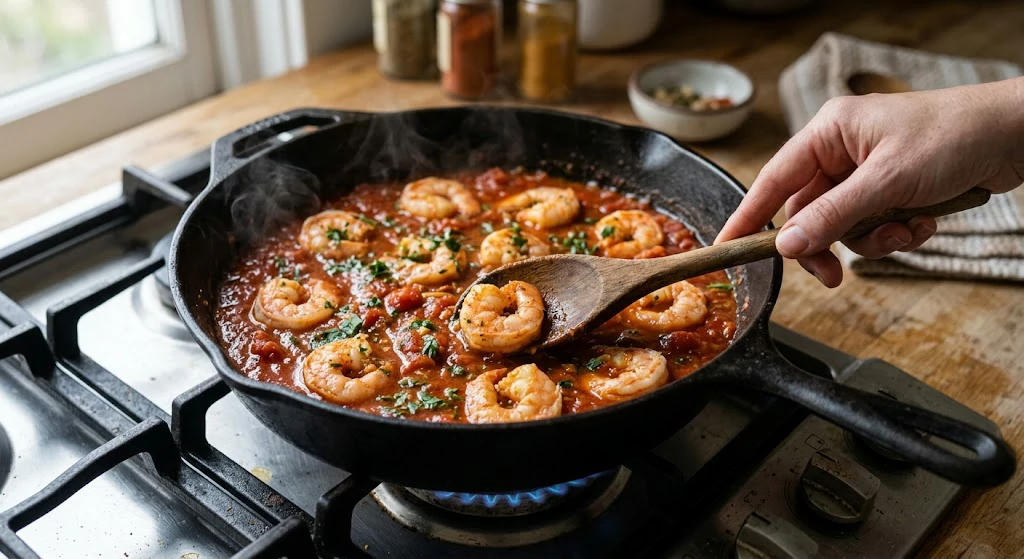
Spread the shrimp in the sauce in a mostly even layer. Cover and simmer gently for about four to six minutes, turning once if needed; thickness and pan temperature will affect the timing. The shrimp should become firm, pearly, and opaque throughout, without translucent centers.
The FDA describes these appearance changes as practical signs that shrimp has cooked through and advises cooking most seafood to 145°F. Avoid prolonged boiling after the shrimp is done, since additional heat can make it chewy.
Step 6: Finish With Herbs and Lemon
Turn off the heat and stir in the lemon juice and remaining herbs. Taste a small spoonful of sauce, then add a little more lemon or black pepper if needed. Finally, serve immediately in the skillet or a suitable serving dish.
If you own a traditional clay tagine, follow its manufacturer’s heating instructions. Some clay vessels need a heat diffuser and cannot tolerate direct high heat or sudden temperature changes.
For more information, read our guide to https://qayqay.com/spicy-asian-garlic-shrimp/
Tips for Tender Shrimp and a Rich Sauce
Reduce the tomato sauce first. Watery sauce can dilute the spices, especially when you use very juicy tomatoes. Therefore, give tomatoes enough uncovered simmering time before adding the seafood.
Keep the heat moderate. A hard boil can cook shrimp unevenly and make it rubbery. Instead, use a gentle simmer and check the thickest pieces for doneness.
Add herbs in two stages. Herbs simmered briefly in the sauce contribute flavor. Meanwhile, a final handful offers a fresher finish.
Balance spice with acid. If the tomato sauce seems heavy, add a little lemon after turning off the heat. However, avoid adding so much that it overwhelms the seafood.
Use a broad pan. Crowding the shrimp into a small pot can lengthen the cooking time. A wide pan makes it easier to see when each piece changes color and texture.
Shrimp Tagine Variations to Try
Add More Vegetables
For extra produce, add diced bell pepper with the onion or stir thin zucchini slices into the tomato sauce. Cook the vegetables until tender before introducing the shrimp. Otherwise, the shrimp may finish before the vegetables soften.
Turn Up the Heat
Add a little extra cayenne or a spoonful of harissa if you enjoy spicy food. Start with a small amount because harissa brands vary in heat and salt content. Then taste the sauce before adding more.
Try Preserved Lemon
Finely chop a small amount of rinsed preserved lemon rind and stir it into the finished sauce. It adds a distinctive salty citrus note, so reduce the added salt first. Fresh lemon remains an easy alternative.
Make a More Herb-Forward Sauce
Increase the parsley and cilantro slightly for a brighter flavor. At the same time, keep the paprika and cumin balanced rather than adding many unrelated seasonings. The shrimp should remain the central ingredient.
What to Serve With Moroccan Shrimp
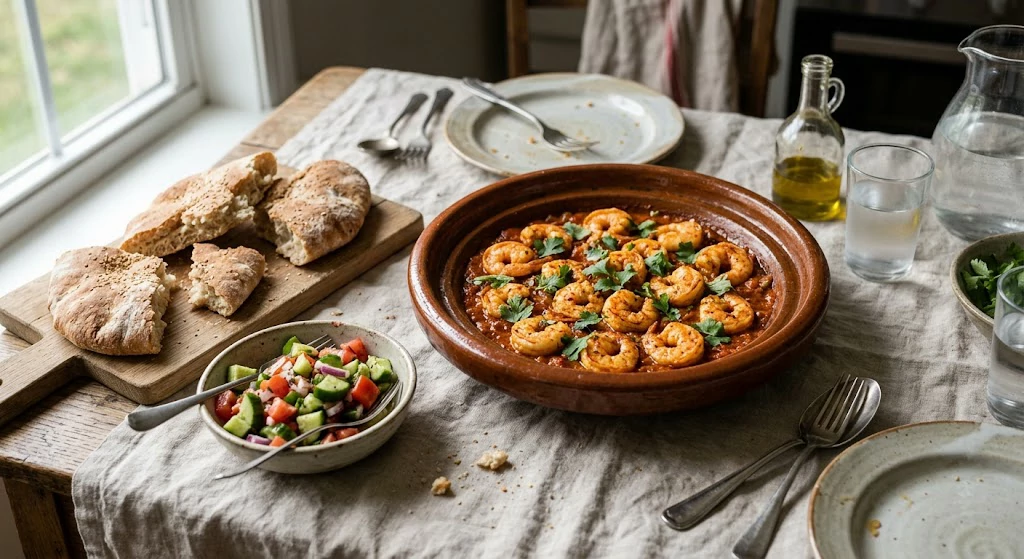
Crusty Moroccan-style bread or another sturdy loaf is a natural partner because it absorbs the tomato sauce. Alternatively, serve the shrimp over a small portion of couscous, rice, or quinoa.
For balance and color, add a simple cucumber-and-tomato salad, roasted carrots, or steamed green beans. Moreover, a lemon wedge at the table lets everyone adjust the acidity to taste.
If you’re serving guests, place the hot dish in the center and offer the bread separately. Just make sure the serving vessel is stable and safe to touch; clay and metal can remain hot after cooking.
For more information, read our guide to https://qayqay.com/spicy-asian-garlic-shrimp/
Is Shrimp Tagine a Balanced Meal?
Shrimp contributes protein, while tomatoes, herbs, and other vegetables add flavor and variety. In fact, USDA MyPlate lists shrimp among seafood choices in the protein foods group. Olive oil provides fat, and bread or grains can make the meal more filling.
However, no single recipe automatically qualifies as healthy for everyone. Your serving size, sodium needs, food allergies, and side dishes all affect whether the meal suits you. For example, salty preserved lemon, packaged broth, or generous bread portions can change the overall balance.
This version uses measured olive oil and lets you control the salt. Still, nutritional amounts vary with shrimp size, brands, and any additions; without a calculated ingredient analysis, exact calories or sodium figures would be guesses.
Food Safety, Allergies, and Leftovers
Raw seafood needs careful handling. Follow FoodSafety.gov’s clean, separate, cook, and chill guidance: wash hands and kitchen tools after handling shrimp, keep it away from ready-to-eat produce, and refrigerate it promptly. Never leave the cooked dish at room temperature for more than two hours, or one hour above 90°F.
Refrigerate leftovers in shallow, covered containers at 40°F or below. As a practical rule, use cooked leftovers within three to four days and reheat them thoroughly to 165°F. However, shrimp can become firm when reheated, so warm the sauce gently while making sure the food reaches a safe temperature.
Shrimp is a crustacean shellfish allergen. The FDA’s guide to major food allergens identifies shrimp as a major allergen, so people with a shellfish allergy should avoid this recipe and prevent cross-contact. Cooking does not make an allergen safe.
Common Mistakes to Avoid
Adding shrimp too early is the biggest texture problem. Instead, finish cooking the tomatoes and spices first. Then let the shrimp simmer only until opaque.
Another mistake is rushing the sauce. Tomatoes need enough time to thicken, but the pan shouldn’t dry out. Add small splashes of water as necessary rather than thinning everything at once.
Finally, avoid putting an unfamiliar clay tagine over high direct heat. A regular skillet is the safer choice when you don’t know the vessel’s heat limits. Flavor comes from good cooking, not from owning special equipment.
Frequently Asked Questions About Shrimp Tagine
Can I make this recipe without a tagine pot?
Yes. A covered, heavy-bottomed skillet or Dutch oven works well. In fact, either lets you simmer tomatoes first and then cook the shrimp quickly.
Can I use frozen shrimp?
Yes, provided you thaw it safely. Use the refrigerator overnight, or use a sealed bag in cold water and cook immediately afterward. Never thaw shrimp on the kitchen counter.
How long does shrimp take to cook in tomato sauce?
Large, raw, thawed shrimp often takes about four to six minutes at a gentle simmer. However, timing varies, so rely on firm, pearly, opaque flesh rather than the clock alone.
Is this dish very spicy?
Not unless you make it so. Paprika and cumin add warmth without strong heat. For a mild version, skip cayenne and harissa entirely.
Can I make the tomato sauce ahead of time?
Yes. Cook and cool the sauce, refrigerate it promptly, then bring it back to a simmer before adding fresh raw shrimp. This method helps prevent overcooking the seafood during reheating.
What can I serve instead of bread?
Couscous, rice, quinoa, or roasted vegetables all work. For example, steamed green beans and a small serving of couscous create a simple dinner plate.
How do I know when the shrimp is done?
Look for flesh that is firm, pearly, and opaque all the way through. In addition, avoid leaving cooked shrimp bubbling in the sauce for a long time, as that can toughen it.
Final Thoughts
Shrimp Tagine is a practical way to bring Moroccan-inspired flavors to the dinner table. Tomatoes, garlic, herbs, and spices create the sauce, while a brief final simmer keeps the shrimp from becoming chewy.
However, good results depend on fresh or properly stored seafood, careful cooking, and attention to allergies. Start with the simple recipe, choose the sides you enjoy, and adjust the heat or lemon to suit your taste.