


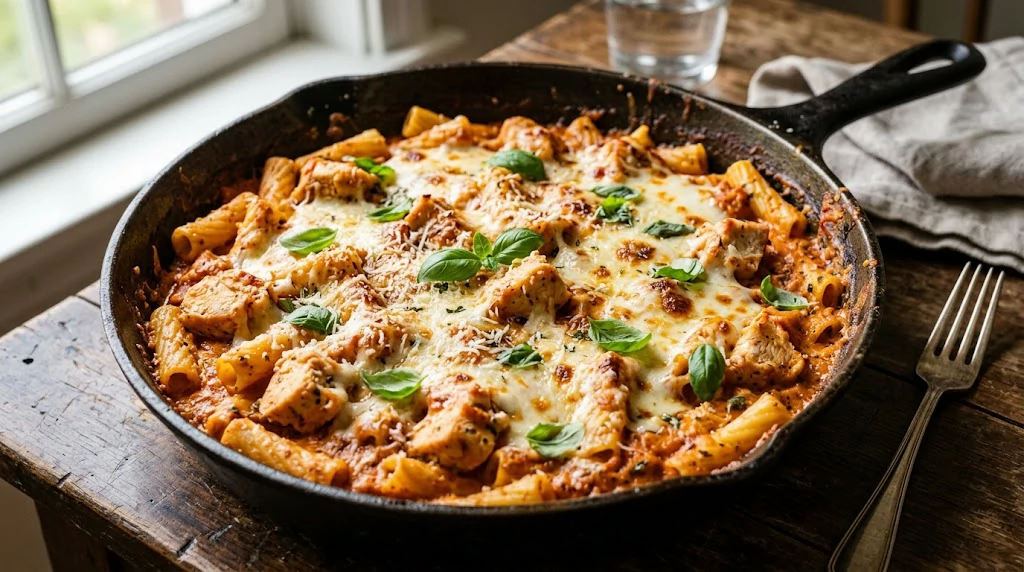
Tomato Chicken Pasta is the kind of dinner that solves several weeknight problems at once: it is creamy, cheesy, filling, family-friendly, and made in a single oven-safe pot. Tender pieces of chicken cook with garlic, tomatoes, pasta, and herbs before everything is finished with a bubbling layer of mozzarella and Parmesan.
Unlike a traditional pasta bake that requires separate pots for boiling pasta, cooking the sauce, and assembling the casserole, this version keeps the process streamlined. The pasta cooks directly in the tomato sauce and broth, which also helps it absorb more flavor.
The recipe can also be adjusted to fit different eating preferences. You can add spinach or zucchini, use whole-wheat pasta, reduce the cheese, or choose a lower-sodium broth. Those changes do not magically make one dish “healthy,” but they can help the meal fit more easily into an overall balanced eating pattern.
Best of all, the result still feels like comfort food: creamy tomato sauce, juicy chicken, tender pasta, and golden melted cheese in every serving.
Why This Tomato Chicken Pasta Works So Well
A good weeknight pasta bake needs more than melted cheese. The sauce has to stay creamy without becoming watery, the pasta needs to cook evenly, and the chicken should remain tender.
This recipe handles those elements in stages while still using only one pot.
First, browning the chicken creates flavor in the bottom of the pan. Onion, garlic, tomato paste, and Italian seasoning then build the sauce directly over those browned bits.
Next, dry pasta simmers in crushed tomatoes and chicken broth. Instead of draining pasta water away, the starch released from the pasta remains in the pot and helps thicken the sauce.
Finally, a modest amount of cream and cheese rounds out the acidity of the tomatoes and gives the dish its creamy texture.
The short oven finish is mainly for melting and browning the cheese. Therefore, you are not relying on a long bake to finish raw pasta or chicken.
Ingredients You’ll Need
This recipe makes about 6 servings.
For the chicken and pasta
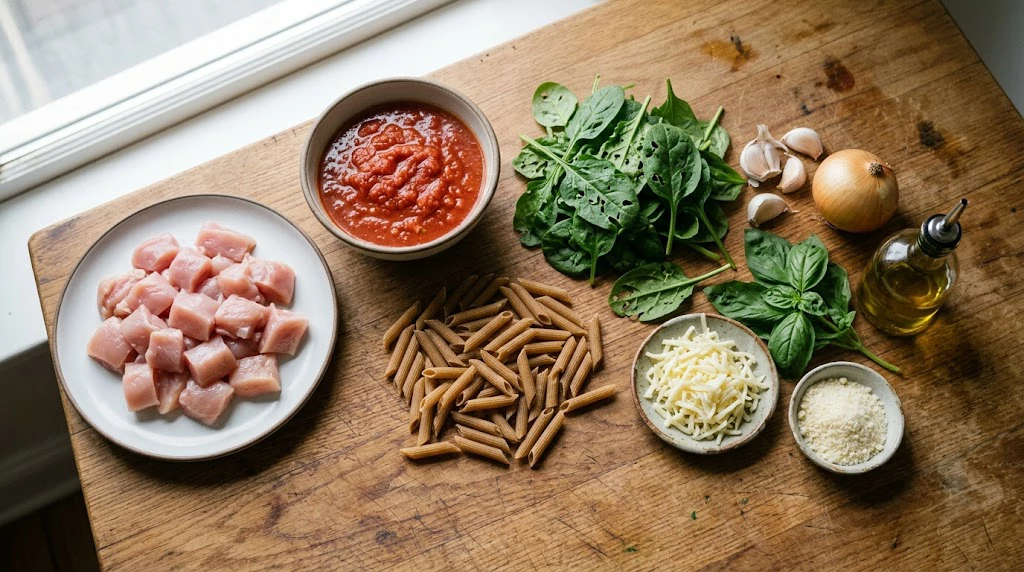
- 1 tablespoon olive oil
- 1¼ pounds boneless, skinless chicken breast or chicken thighs, cut into bite-size pieces
- ½ teaspoon kosher salt, plus more to taste
- ½ teaspoon black pepper
- 1 teaspoon Italian seasoning
- 1 small yellow onion, finely diced
- 3 garlic cloves, minced
- 2 tablespoons tomato paste
- 1 can (28 ounces) crushed tomatoes
- 2 cups low-sodium chicken broth, plus a splash more if needed
- 12 ounces penne, rigatoni, or another short pasta
- ½ teaspoon smoked paprika
- ¼ teaspoon red pepper flakes, optional
For the creamy finish
- ¾ cup half-and-half
- 1 cup shredded mozzarella cheese
- ¼ cup finely grated Parmesan cheese
- 2 cups baby spinach, optional
- Fresh basil or parsley for serving
Using low-sodium broth gives you greater control over the final seasoning. Cheese, broth, and canned tomato products can all contribute sodium, so tasting before adding extra salt is useful.
The current Dietary Guidelines for Americans, 2025–2030 recommend that most people age 14 and older keep sodium below 2,300 mg per day. Dietary Guidelines for Americans, 2025–2030
How to Make Creamy Tomato Chicken Pasta in One Pot
1. Brown the chicken
Heat the oven to 425°F.
Use a large oven-safe Dutch oven, deep cast-iron skillet, or heavy sauté pan with a lid.
Heat the olive oil over medium-high heat. Add the chicken, salt, pepper, and about half of the Italian seasoning.
Cook for roughly 4 to 6 minutes, stirring occasionally, until the outside develops some color.
The chicken does not need to be completely cooked at this stage because it will continue cooking in the sauce.
Transfer it temporarily to a clean plate if your pan feels crowded. Otherwise, you can leave it in the pan while building the sauce.
2. Build the tomato base
Reduce the heat to medium.
Add the onion and cook for about 3 minutes until it begins to soften. Stir in the garlic, tomato paste, remaining Italian seasoning, smoked paprika, and red pepper flakes.
Cook for another 30 to 60 seconds.
This short step helps toast the tomato paste and spices before the liquid goes into the pot.
3. Add tomatoes, broth, and pasta
Pour in the crushed tomatoes and chicken broth.
Scrape the bottom of the pan with a wooden spoon to loosen any browned pieces left from the chicken.
Bring the mixture to a gentle simmer, then stir in the dry pasta.
If you removed the chicken earlier, return it to the pot now.
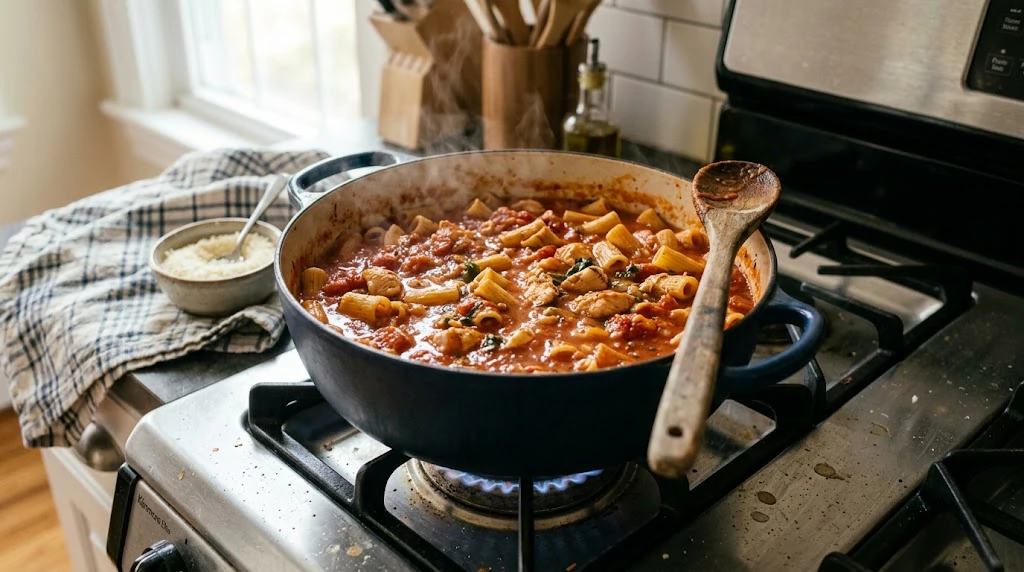
Cover and cook over medium-low heat for about 10 to 13 minutes, stirring every few minutes so the pasta does not stick to the bottom.
Different pasta shapes absorb liquid at different rates. Therefore, add a small splash of broth or water if the mixture becomes too thick before the pasta is almost tender.
4. Make it creamy
Once the pasta is almost al dente, reduce the heat to low.
Stir in the half-and-half. If using spinach, add it at this stage and fold it into the hot sauce until wilted.
Taste the sauce before adding more salt.
The consistency should be creamy but slightly looser than you ultimately want because the pasta will continue absorbing liquid in the oven.
5. Add the cheese and bake
Sprinkle mozzarella evenly over the surface, followed by Parmesan.
Move the uncovered pan to the oven and bake for 8 to 10 minutes, or until the cheese has melted and the sauce is bubbling gently around the edges.
For more browning, broil for 1 to 2 minutes at the end, watching carefully.
Let the pasta rest for about 5 minutes before serving. This gives the sauce time to thicken slightly.
Finish with basil or parsley.
A Food-Safety Step You Should Not Skip
Chicken needs to reach a safe internal temperature rather than simply looking cooked.
The USDA Food Safety and Inspection Service recommends cooking all poultry to a minimum internal temperature of 165°F (73.9°C) measured with a food thermometer. USDA guidance on safe poultry temperatures
Check a few of the larger chicken pieces before serving.
Also avoid placing cooked chicken back onto a plate or cutting board that held raw poultry unless it has been thoroughly washed first. Good separation between raw and ready-to-eat foods helps reduce cross-contamination.
For more information, read our guide to:
https://qayqay.com/high-protein-high-fiber-foods/
How to Make Tomato Chicken Pasta Lighter Without Losing the Creaminess
“Creamy” does not have to mean using several cups of heavy cream.
The tomato base already gives the dish body, while the starch from the pasta thickens the sauce naturally. That means a relatively small amount of dairy can create a creamy finish.
A few practical adjustments include:
- Use half-and-half instead of heavy cream.
- Choose reduced-fat mozzarella if you prefer it.
- Add spinach, mushrooms, zucchini, or bell peppers.
- Use whole-wheat pasta for a higher-fiber option.
- Choose low-sodium broth.
- Serve slightly smaller pasta portions alongside vegetables or salad.
USDA MyPlate guidance encourages variety across vegetables, grains, protein foods, fruits, and dairy, and recommends making at least half of grain choices whole grains. USDA MyPlate healthy eating guidance
Still, there is no need to force every recommendation into one casserole. A meal can also become more balanced through what you serve beside it.
Best Pasta Shapes for a One-Pot Bake
Short pasta works much better than spaghetti or linguine in this recipe.
Good options include:
- Penne
- Rigatoni
- Ziti
- Rotini
- Cavatappi
- Medium shells
These shapes are easier to stir while they simmer and tend to distribute evenly throughout the sauce.
Rigatoni and shells are especially good if you like sauce trapped inside the pasta.
Cooking time matters more than the exact shape. Start checking the pasta a few minutes before the package’s suggested cooking time because it will continue cooking during the oven finish.
Easy Variations
The basic Tomato Chicken Pasta recipe is flexible enough for several variations.
Add more vegetables
Try adding:
- Sliced mushrooms with the onion
- Diced zucchini during the last few minutes of simmering
- Chopped bell peppers
- Baby spinach
- Kale with the stems removed
Vegetables can increase variety and add texture without requiring another side dish.
USDA guidance recognizes fresh, frozen, canned, and cooked vegetables as valid options within the vegetable food group. USDA MyPlate vegetable guidance
Make it spicy
Add extra red pepper flakes, diced jalapeño, or a small amount of Calabrian chile paste.
Start conservatively. You can always add heat at the table.
Use chicken thighs
Boneless, skinless chicken thighs tend to stay especially juicy. They can replace chicken breast in the same quantity.
Just make sure the finished poultry reaches 165°F.
Change the cheese
Mozzarella provides melt, while Parmesan adds a sharper savory flavor.
You could also use:
- Provolone
- Fontina
- Monterey Jack
- A small amount of ricotta dolloped over the top
Avoid adding too many strongly flavored cheeses at once because they can overpower the tomato sauce.
What to Serve With Creamy Tomato Chicken Pasta
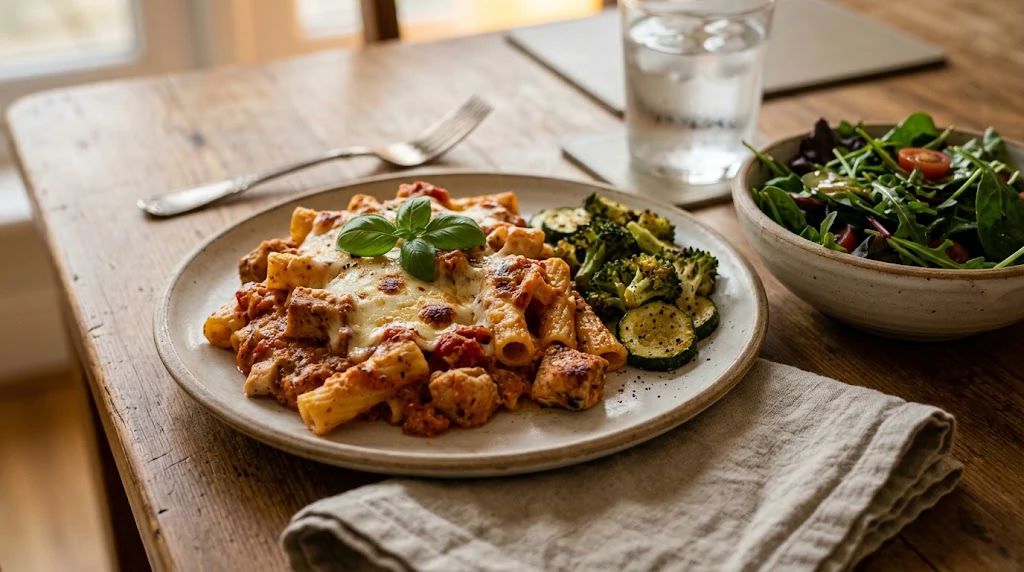
Because the pasta already contains grains, protein, dairy, and tomato sauce, simple sides usually work best.
Try it with:
- Roasted broccoli
- Green beans
- A mixed green salad
- Roasted zucchini
- Steamed asparagus
- Cucumber and tomato salad
A vegetable side can also add contrast to a rich pasta dinner.
For bread, garlic bread is delicious, although it makes the meal more carbohydrate-heavy. If that matters to you, serve a smaller piece or skip it in favor of vegetables.
For more information, read our guide to:
https://qayqay.com/crispy-chicken-parm-recipe/
Common Mistakes to Avoid
Adding too much liquid at once
One-pot pasta requires enough liquid to cook the noodles, but too much can leave you with soup instead of sauce.
Start with the listed amount and add extra broth only when needed.
Forgetting to stir the pasta
Pasta sitting directly against the bottom of a hot Dutch oven can stick.
Stir every few minutes during the stovetop simmer.
Fully cooking the pasta before baking
The pasta should be just shy of fully tender when it enters the oven.
Otherwise, it may become too soft by the time the cheese melts.
Overcooking the chicken
Small pieces of chicken cook quickly. Browning them aggressively at the beginning and then simmering them for too long can make chicken breast dry.
Brown the exterior first, then allow the pieces to finish gently in the sauce.
Adding dairy over very high heat
Extremely high heat can cause some dairy sauces to separate.
Lower the heat before stirring in the half-and-half, then transfer the dish to the oven.
Can You Make It Ahead?
Yes, although the texture is best when served shortly after cooking.
For advance preparation, cook the dish through the stovetop stage but stop while the pasta is still quite firm. Cool it promptly, cover, and refrigerate.
When ready to serve, add a splash of broth, top with cheese, and bake until thoroughly heated.
Keep in mind that pasta continues absorbing sauce while refrigerated, so leftovers will be thicker than the freshly made dish.
How to Store and Reheat Leftovers
Allow leftovers to cool promptly and transfer them to a covered container.
Refrigerate and use within a few days.
For reheating, add a tablespoon or two of water, broth, or milk before warming. This loosens the sauce as the pasta heats.
Microwave individual servings in short intervals, stirring when practical, or reheat larger portions covered in the oven.
The USDA recommends reheating leftovers containing poultry to 165°F.
Frequently Asked Questions About Tomato Chicken Pasta
Can I use uncooked pasta directly in the sauce?
Yes. This recipe is specifically designed for dry pasta to cook in the tomato sauce and broth. Stir it several times while simmering so it cooks evenly.
Can I make this without cream?
Yes. You can omit the half-and-half for a more tomato-forward sauce. The pasta starch will still provide some body, although the result will not be as creamy.
Can I use milk instead?
Whole milk can work, but the sauce may be slightly thinner. Add it over low heat and avoid prolonged boiling after the milk goes into the pan.
What cheese melts best on a pasta bake?
Low-moisture mozzarella is reliable because it melts evenly without releasing as much moisture as some fresh mozzarella. Parmesan adds flavor and browning.
Can I use whole-wheat pasta?
Yes. Whole-wheat pasta works, although it may need a slightly different amount of liquid and cooking time. Check frequently during simmering.
Can I add vegetables?
Absolutely. Spinach, zucchini, mushrooms, and bell peppers all work well. Add dense vegetables earlier and quick-cooking greens near the end.
How do I know when the chicken is safe to eat?
Use a food thermometer. The USDA recommends a minimum internal temperature of 165°F for poultry.
Can I freeze the finished pasta?
Yes, but creamy pasta sauces can change texture slightly after freezing and thawing. Freeze individual portions in airtight containers and reheat gently with a splash of liquid.
Final Thoughts
This Tomato Chicken Pasta delivers what a practical weeknight meal should: familiar ingredients, one-pot cleanup, plenty of flavor, and enough flexibility to adapt to your household.
The tomato sauce and pasta starch create most of the body, while chicken adds protein and a measured amount of cream and cheese provides the comforting finish.
It is still a creamy, cheesy pasta bake, so portion size and the rest of your meal matter if you are trying to limit saturated fat or sodium. However, using low-sodium broth, adding vegetables, and choosing whole-grain pasta are simple ways to modify the recipe without changing its basic character.
Most importantly, do not rush the safety step: verify that the chicken reaches 165°F before serving.