


Protein and fiber are two of the most important nutrients to consider when building filling, nutrient-dense meals. While protein is widely associated with muscle maintenance and recovery, dietary fiber supports digestion, fullness, and overall dietary quality.
Choosing foods that naturally provide both protein and fiber can make everyday meals more satisfying while helping you add more nutrient-dense whole foods to your diet.
Whether you’re interested in healthy meal prep, plant-based nutrition, gut health, or simply looking for foods that keep you full longer, these 15 high-protein, high-fiber foods are practical options to add to your grocery list.
For more ideas, explore our guide to healthy foods for a healthier diet.
Note: Nutritional values can vary depending on preparation, serving size, and product. The figures below are approximate values based on standard food data.
Key Takeaways
- Foods containing both protein and fiber can help create more filling meals.
- Legumes, seeds, nuts, whole grains, and certain fruits are useful sources of these nutrients.
- Lentils, black beans, chickpeas, edamame, and tempeh are particularly versatile options.
- Increasing fiber gradually can help reduce digestive discomfort.
- Drinking enough water is important when increasing dietary fiber intake.
The Power of Pairing Protein and Fiber
Protein and fiber play different roles in the diet, but combining them in meals can make it easier to build satisfying, nutrient-dense food choices.
Protein provides amino acids needed for maintaining and building body tissues. Fiber, meanwhile, contributes to digestive health and can slow digestion, helping meals provide longer-lasting fullness.
Soluble fiber can absorb water and form a gel-like substance during digestion, while insoluble fiber contributes bulk to the digestive tract.
Protein and fiber have also become an increasingly important part of modern nutrition discussions, particularly as more people focus on foods that support fullness and overall dietary quality.
When foods containing both nutrients are included regularly, they can become an effective foundation for balanced meals.
Why the Combination Can Be Useful
Protein may help:
- Support muscle maintenance
- Increase feelings of fullness
- Provide essential amino acids
- Support recovery after physical activity
Fiber may help:
- Support normal digestion
- Increase meal volume
- Support healthy gut bacteria
- Slow the absorption of carbohydrates
The result is a simple nutritional strategy: build meals around whole foods that provide meaningful amounts of both nutrients.
15 High-Protein, High-Fiber Foods for Your Diet
1. Edamame
Approximate nutrition per 1 cup cooked:
- Protein: 18.4 g
- Fiber: 8.1 g
- Calories: 188
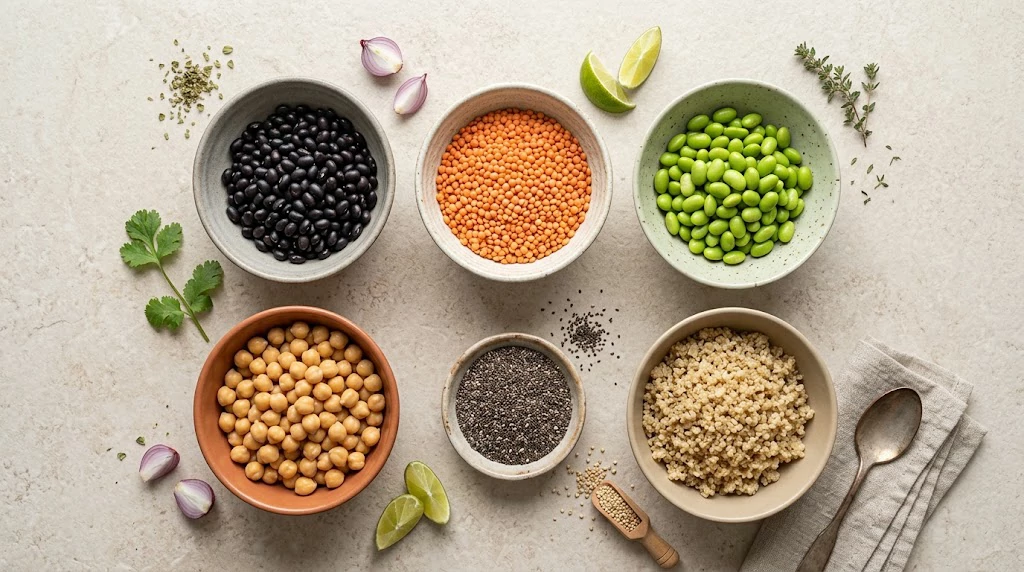
Edamame, or young green soybeans, is one of the most protein-rich plant foods on this list. It also provides fiber, making it an easy addition to meals and snacks.
Edamame contains all nine essential amino acids and provides nutrients including folate, vitamin K, and manganese.
How to Eat It
Steam frozen edamame and season it with a small amount of salt and black pepper. Shelled edamame can also be added to grain bowls, salads, noodles, or rice dishes.
2. Black Beans
Approximate nutrition per 1 cup cooked:
- Protein: 15.2 g
- Fiber: 15.0 g
- Calories: 227
Black beans provide an impressive combination of plant protein and dietary fiber. Their dark color also comes from naturally occurring antioxidant compounds.
They work particularly well in Mexican-inspired meals, salads, soups, wraps, and grain bowls.
How to Eat Them
Combine black beans with garlic, cumin, vegetables, and herbs for a simple side dish. They can also be blended into a fiber-rich dip.
3. Red and Green Lentils
Approximate nutrition per 1 cup cooked:
- Protein: 17.9 g
- Fiber: 15.6 g
- Calories: 230
Lentils are affordable, versatile, and easy to prepare. Unlike many dried beans, lentils generally don’t require soaking before cooking.
Green and brown lentils tend to hold their shape, making them useful for salads and bowls. Red lentils become softer and work particularly well in soups, curries, and sauces.
How to Eat Them
Use red lentils in soups or tomato-based sauces, or replace part of the ground meat in tacos and other dishes with cooked lentils.
4. Chickpeas
Approximate nutrition per 1 cup cooked:
- Protein: 14.5 g
- Fiber: 12.5 g
- Calories: 269
Chickpeas are a staple in Mediterranean and Middle Eastern cuisines. They provide both protein and fiber and are extremely versatile.
They can be used in hummus, salads, curries, soups, grain bowls, and roasted snacks.
How to Eat Them
Roast drained chickpeas with olive oil, paprika, and seasonings until crispy. They make a crunchy alternative to traditional snack foods.
5. Chia Seeds
Approximate nutrition per 2 tablespoons (28 g):
- Protein: 4.7 g
- Fiber: 9.8 g
- Calories: 138
Chia seeds are especially notable for their high fiber content. When mixed with liquid, they absorb water and develop a gel-like texture.
They can be incorporated into breakfast bowls, smoothies, yogurt, and overnight recipes.
How to Eat Them
Mix chia seeds with milk or an unsweetened milk alternative and let the mixture sit overnight. Add berries and sliced almonds before serving.
For more breakfast inspiration, see our guide to high-protein breakfast ideas.

6. Green Peas
Approximate nutrition per 1 cup cooked:
- Protein: 8.6 g
- Fiber: 8.8 g
- Calories: 134
Green peas are technically legumes and provide more protein and fiber than many people realize.
They are easy to add to soups, pasta dishes, salads, rice, and vegetable bowls.
How to Eat Them
Blend cooked peas with lemon juice, fresh mint, and a little parmesan to create a colorful spread for whole-grain toast.
7. Pumpkin Seeds
Approximate nutrition per 1/4 cup (30 g):
- Protein: 9.2 g
- Fiber: 3.0 g
- Calories: 180
Pumpkin seeds, also known as pepitas, provide plant protein alongside minerals such as magnesium, zinc, and iron.
They are especially convenient because they can be eaten without cooking.
How to Eat Them
Add pumpkin seeds to oatmeal, salads, soups, yogurt, grain bowls, or homemade trail mixes.
8. Navy Beans
Approximate nutrition per 1 cup cooked:
- Protein: 15.0 g
- Fiber: 19.1 g
- Calories: 255
Navy beans are particularly rich in dietary fiber. Their mild flavor makes them easy to incorporate into many different recipes.
They can add creaminess and body to soups without requiring large amounts of dairy.
How to Eat Them
Mash cooked navy beans with garlic and herbs to make a simple white-bean dip, or add them to vegetable soups.
9. Quinoa
Approximate nutrition per 1 cup cooked:
- Protein: 8.1 g
- Fiber: 5.2 g
- Calories: 222
Quinoa is technically a seed but is commonly prepared and eaten like a grain. It provides protein and fiber and is naturally gluten-free.
It also works well as a base for meal-prep bowls.
How to Eat It
Cook quinoa in vegetable or chicken broth, then combine it with cucumbers, tomatoes, parsley, and lemon dressing.
10. Hulled Barley
Approximate nutrition per 1 cup cooked:
- Protein: 3.5 g
- Fiber: 6.0 g
- Calories: 193
Hulled barley retains more of the grain’s outer layers than more heavily processed forms of barley.
It is particularly useful for adding fiber and texture to soups and grain bowls.
How to Eat It
Cook hulled barley in vegetable broth and serve it as a base for grain bowls or add it to vegetable and mushroom soups.
11. Hemp Seeds
Approximate nutrition per 3 tablespoons (30 g):
- Protein: 9.5 g
- Fiber: 1.2 g
- Calories: 166
Hemp hearts are the shelled inner portion of hemp seeds and are particularly rich in plant protein.
Because the seeds are small and mild in flavor, they can easily be incorporated into everyday meals.
How to Eat Them
Sprinkle hemp hearts over smoothies, oatmeal, yogurt, avocado toast, or grain bowls.
12. Tempeh
Approximate nutrition per 3 oz (85 g):
- Protein: 17.0 g
- Fiber: 6.0 g
- Calories: 160
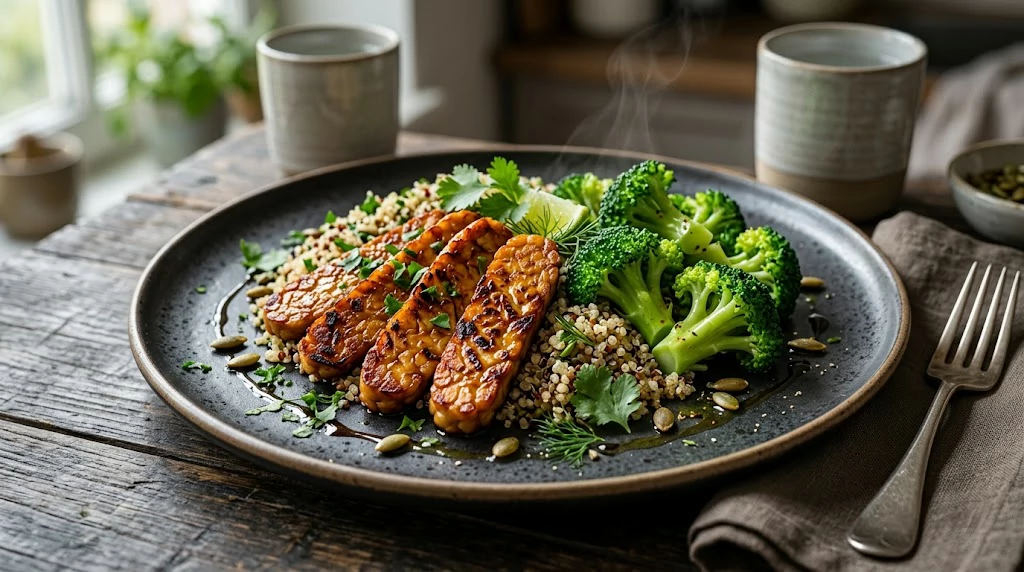
Tempeh is made by fermenting whole soybeans into a firm cake. Because it uses whole soybeans, it retains dietary fiber alongside its protein.
Its firm texture makes it particularly useful as a meat alternative in stir-fries, bowls, sandwiches, and salads.
How to Eat It
Slice tempeh and marinate it with low-sodium soy sauce and seasonings before pan-searing until golden brown.
For another protein-focused meal idea, readers can also explore our Crispy Chicken Parm recipe.
13. Almonds
Approximate nutrition per 1/4 cup (30 g):
- Protein: 6.0 g
- Fiber: 3.5 g
- Calories: 164
Almonds combine plant protein, dietary fiber, and unsaturated fats in a convenient snack.
Keeping the skin on provides additional naturally occurring plant compounds.
How to Eat Them
Keep a small portion of almonds available as a snack, or chop them and add them to oatmeal, yogurt, salads, and breakfast bowls.
14. Guava
Approximate nutrition per 1 cup fresh:
- Protein: 4.2 g
- Fiber: 8.9 g
- Calories: 112
Guava stands out among fruits because it provides a meaningful amount of protein for a fruit while also being rich in dietary fiber.
It is also an excellent source of vitamin C.
How to Eat It
Eat fresh guava on its own, or blend it into a smoothie with Greek yogurt and leafy greens.
15. Ethiopian Teff
Approximate nutrition per 1 cup cooked:
- Protein: 9.8 g
- Fiber: 7.1 g
- Calories: 255
Teff is an ancient grain traditionally used in the Horn of Africa. Its tiny seeds are naturally nutrient-dense and provide protein, fiber, and minerals.
It can be prepared as a warm breakfast grain or incorporated into other meals.
How to Eat It
Cook teff with water or milk until creamy, then top it with berries, nuts, or seeds.
How to Add More Protein and Fiber to Your Meals
You don’t need complicated recipes to increase your intake of protein and fiber.
A simple approach is to combine a protein-and-fiber-rich food with vegetables, whole grains, healthy fats, or fruit.
If you’re looking for simple ways to improve your everyday eating habits, try these simple food swaps for a healthier diet.
Breakfast
Try:
- Chia seed pudding with berries and almonds
- Teff porridge with seeds
- Greek yogurt with chia seeds and fruit
Lunch
Try:
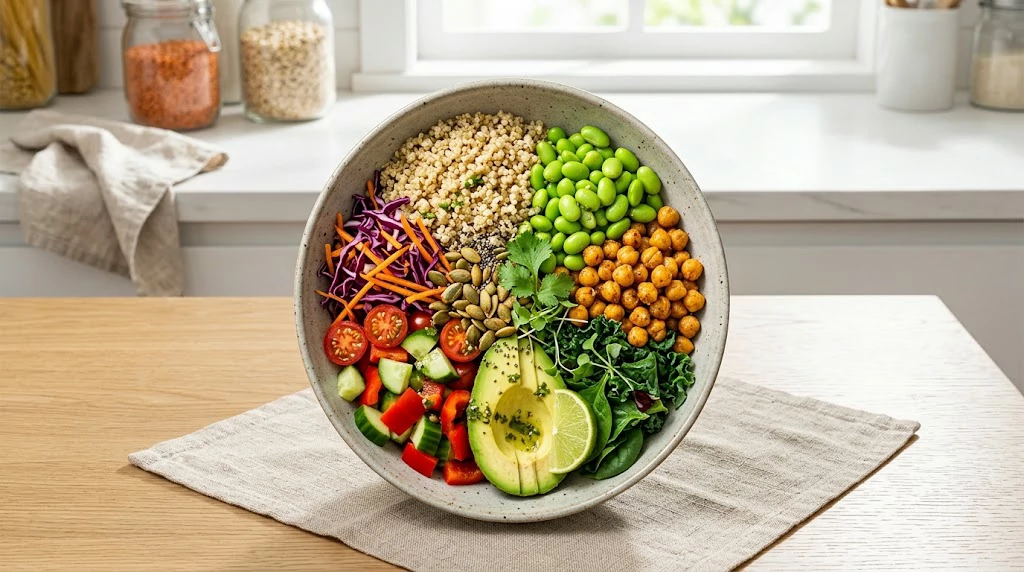
- Quinoa with edamame and chickpeas
- Black bean grain bowls
- Lentil salads with vegetables
Snacks
Try:
- Roasted chickpeas
- Almonds
- Fresh guava
- Pumpkin seeds
Dinner
Try:
- Lentil curry
- Tempeh with quinoa and vegetables
- Navy bean soup
- Black bean and vegetable bowls
Meal-Prepping Tips
1. Batch-Cook Whole Foods
Prepare larger batches of quinoa, lentils, barley, or beans so they can be quickly added to meals throughout the week.
2. Increase Fiber Gradually
If your current diet is relatively low in fiber, increase your intake gradually rather than making a sudden large change.
A gradual increase can give your digestive system time to adapt.
3. Drink Enough Water
When increasing fiber intake, make sure you’re also drinking enough fluids throughout the day.
For additional information about foods and digestive wellness, read our guide on gut health through everyday foods.
Frequently Asked Questions
What are the benefits of high-protein, high-fiber foods?
Foods containing both protein and fiber can make meals more filling while providing important nutrients. Protein supports muscle maintenance, while fiber supports digestion and contributes to a healthy dietary pattern.
Can high-protein, high-fiber foods help with weight management?
They can be useful as part of a balanced eating pattern because protein and fiber are both associated with increased fullness. However, overall diet, portions, physical activity, and individual needs also matter.
How much fiber should adults get each day?
The Dietary Guidelines for Americans recommend approximately 25 to 38 grams of fiber per day depending on age and sex.
For current U.S. dietary guidance, readers can consult the Dietary Guidelines for Americans from the U.S. Department of Agriculture and U.S. Department of Health and Human Services.
What are the best plant-based foods for protein and fiber?
Some useful options include:
- Lentils
- Black beans
- Chickpeas
- Edamame
- Tempeh
- Chia seeds
- Pumpkin seeds
- Quinoa
Do animal foods contain dietary fiber?
No. Dietary fiber naturally occurs in plant foods. Meat, fish, poultry, eggs, and dairy provide protein but do not naturally provide dietary fiber.
How can I avoid bloating when increasing fiber?
Increase fiber gradually and drink enough water. Rinsing canned beans and properly cooking dried legumes may also help improve tolerance for some people.
Final Thoughts
Adding more protein and fiber to your diet doesn’t have to mean following a complicated meal plan.
Simple foods such as lentils, black beans, chickpeas, edamame, quinoa, chia seeds, tempeh, and almonds can make everyday meals more nutrient-dense and satisfying.
The easiest strategy is to choose a few favorites from this list and incorporate them consistently into breakfast, lunch, snacks, and dinner.
Small food swaps can add up to meaningful changes in the overall quality of your diet.
For more ideas, explore QayQay’s guide to healthy foods for a healthier diet and discover additional ways to build a nutrient-dense eating pattern.