


Netflix has brought one of America’s most famous murder mysteries back into the spotlight with Monster: The Lizzie Borden Story.
The fourth season of Ryan Murphy and Ian Brennan’s Monster anthology follows the story of Lizzie Borden, played by Ella Beatty. The series explores the 1892 murders of Andrew Borden and his wife, Abby Borden, in Fall River, Massachusetts.
However, there is an important difference between the Netflix drama and the historical record.
Lizzie Borden faced accusations that she killed her father and stepmother with a hatchet. Police arrested her, and prosecutors later took her to trial in 1893. The jury found her not guilty on June 20, 1893.
More than 130 years later, no one has been convicted for the murders of Andrew and Abby Borden. As a result, the central mystery remains unresolved: Who really killed the Borden couple?
This guide looks at the real Lizzie Borden story, explains what happened in 1892 and 1893, and separates the documented facts from the fictional elements in Netflix’s Monster: The Lizzie Borden Story.
Key Takeaways
- Monster: The Lizzie Borden Story is a scripted drama based on a real 1892 murder case.
- Andrew and Abby Borden died in their Fall River home on August 4, 1892.
- Police arrested Lizzie Borden one week later.
- Prosecutors accused Lizzie of killing her father and stepmother.
- A jury found her not guilty in 1893.
- Historical records do not prove that Lizzie committed the murders.
- Several relationships and events in the Netflix series differ from the historical record.
- The real case remains unresolved more than a century later.
Table of Contents
- What Is Monster: The Lizzie Borden Story About?
- What Really Happened to Andrew and Abby Borden?
- Why Did Police Suspect Lizzie Borden?
- What Happened at the Lizzie Borden Trial?
- Did Lizzie Borden Really Kill Her Parents?
- What Did Netflix Change About the True Story?
- Who Was Bridget Sullivan?
- Why Does the Lizzie Borden Mystery Still Matter?
- Why Is Netflix Revisiting Lizzie Borden?
- What Does the Netflix Series Get Right?
- What Should Viewers Treat With Caution?
- The Real Mystery Has No Definitive Ending
- The Bottom Line
- Frequently Asked Questions
What Is Monster: The Lizzie Borden Story About?
Monster: The Lizzie Borden Story is the fourth season of Netflix’s Monster anthology.
Ryan Murphy and Ian Brennan created the series. Ella Beatty plays Lizzie Borden, while the cast also includes Vicky Krieps, Charlie Hunnam, Rebecca Hall, Jessica Barden, Billie Lourd and Sarah Paulson.
The series focuses on Lizzie, her family and the events surrounding the Borden murders.
However, viewers should remember that the show is a scripted drama. It does not present every scene as a verified historical event.
That distinction matters because the real Borden case contains many unanswered questions.
The historical record tells us that Andrew and Abby Borden died in 1892. It also tells us that police arrested Lizzie and that prosecutors later put her on trial.
However, the historical record does not prove that Lizzie committed the murders.
Netflix uses those unanswered questions to build a larger story about Lizzie, her family and the society around her.
Why Does the Story Remain So Popular?
The Lizzie Borden case has attracted public attention for more than a century.
The murders shocked Fall River and quickly became a major news story. Newspapers covered the investigation and the trial. Later, books, films and television programs kept the case alive.
Today, Netflix has introduced the story to another generation.
The combination of a famous historical case, an acquittal and unanswered questions makes the story especially interesting to modern audiences.
What Really Happened to Andrew and Abby Borden?
On August 4, 1892, someone killed Andrew Borden and Abby Borden inside their home in Fall River, Massachusetts.
Andrew was Lizzie Borden’s father. Abby was her stepmother.
The murders quickly became the focus of a major investigation.
According to historical records, police arrested Lizzie Borden on August 11, 1892, just one week after the killings.
Lizzie was 32 years old at the time.
Because she lived in the Borden household, investigators paid close attention to her movements and statements on the day of the murders. They also questioned people who had contact with the family.
The investigation took place long before modern forensic science.
Police did not have DNA testing or many of the crime-scene tools investigators use today. Instead, they relied heavily on witness statements, physical evidence and interviews.
What Happened After the Murders?
The investigation quickly focused on Lizzie.
Police questioned her about what she had done that morning. They also examined her statements and her behavior after the murders.
At the same time, newspapers followed the case closely.
As public interest grew, Lizzie became one of the most recognizable suspects in American criminal history.
However, suspicion alone could not establish guilt.
The prosecution eventually had to prove its case in court.
Why Did Police Suspect Lizzie Borden?
Police focused on Lizzie for several reasons.
First, she lived in the same house as the victims. Second, investigators had questions about her movements and statements on the day of the murders.
Finally, the investigation failed to produce a simple explanation that clearly identified another killer.
The case therefore centered heavily on Lizzie.
Still, prosecutors faced a difficult challenge.
They had to convince a jury that Lizzie committed the murders. The evidence also had to meet the legal standard required for a conviction.
The surviving historical material shows how investigators tried to build their case.
The Fall River Historical Society holds Borden-related documents, including witness statements and other investigation records. These materials give researchers a closer look at the original case.
For modern readers, these records are especially useful because they show what investigators and witnesses actually reported.
They also help separate historical evidence from stories that appeared much later.
What Happened at the Lizzie Borden Trial?
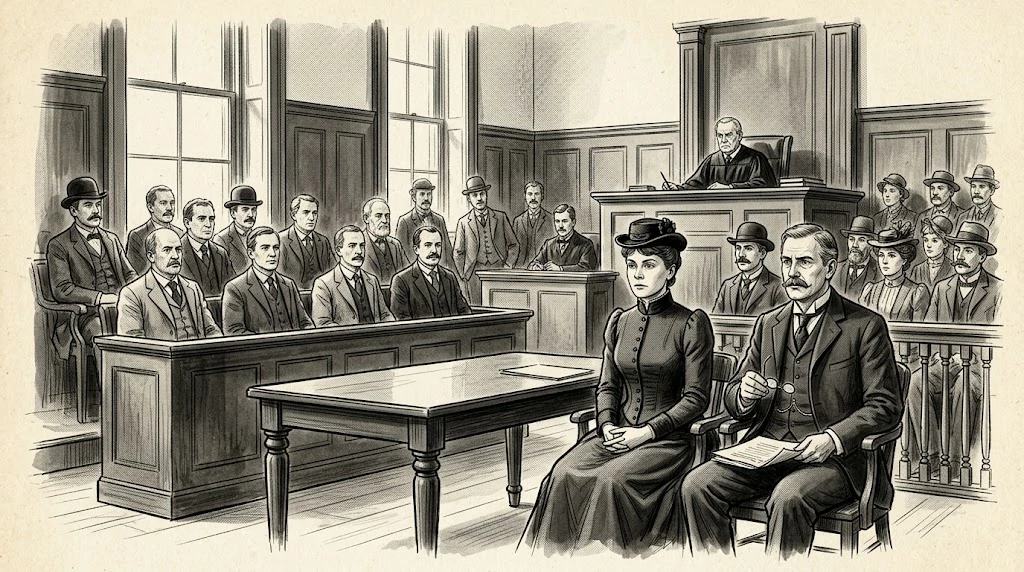
The Lizzie Borden trial began in June 1893 in New Bedford, Massachusetts.
The trial attracted widespread attention.
Newspapers followed the proceedings, and Lizzie’s name became famous across the United States.
According to historical records, the trial began on June 5, 1893.
Then, on June 20, the jury found Lizzie Borden not guilty.
That verdict remains one of the most important facts in the entire case.
Lizzie Borden was legally acquitted.
In other words, the court did not convict her of killing Andrew and Abby Borden.
However, an acquittal does not identify another killer.
It also does not answer every historical question about the case.
Instead, the verdict means that the prosecution did not convince the jury that Lizzie was guilty under the legal standard required at the time.
What Happened After the Acquittal?
Lizzie returned to Fall River after the trial.
However, the public continued to associate her with the murders.
The acquittal ended the criminal case against Lizzie, but it did not end the public debate.
Over the years, writers and researchers developed different theories about what may have happened.
Still, no later conviction solved the murders of Andrew and Abby Borden.
Did Lizzie Borden Really Kill Her Parents?
The most accurate answer is simple: the historical record does not prove it.
Lizzie Borden faced serious accusations. Police arrested her, and prosecutors took her to trial.
However, a jury found her not guilty.
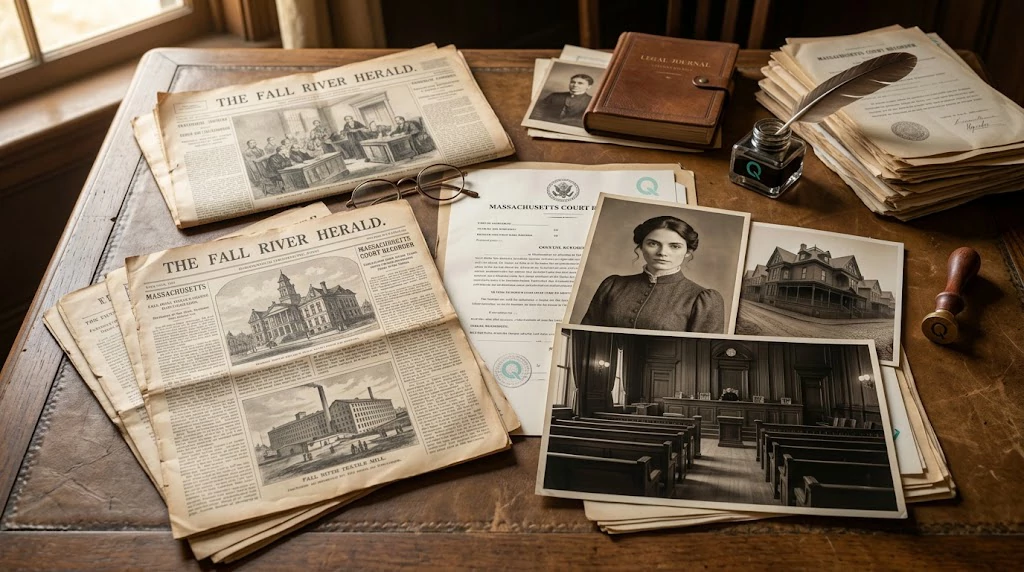
The Library of Congress has preserved historical material about the case, including newspaper coverage from the period. These records show how the investigation and trial developed.
There are different theories about the case, but theories are not the same as proven facts.
Some people believe Lizzie committed the murders and escaped conviction because prosecutors could not prove their case.
Others have suggested that another person killed Andrew and Abby.
The available evidence does not provide a final answer that a court has accepted.
What We Know for Certain
The documented facts include:
- Andrew Borden died on August 4, 1892.
- Abby Borden also died that day.
- Police investigated Lizzie Borden.
- Police arrested Lizzie on August 11, 1892.
- Prosecutors put her on trial in 1893.
- A jury found her not guilty.
- No later conviction established who killed Andrew and Abby.
These facts provide a much clearer picture than the legends that grew around the case.
What Did Netflix Change About the True Story?
This is one of the most important questions for viewers.
Monster: The Lizzie Borden Story uses real people and historical events. However, the writers also created or changed elements of the story for dramatic purposes.
Therefore, viewers should separate documented history from scenes created for television.
Lizzie Borden and Bridget Sullivan
Bridget Sullivan was a real person.
She worked as a live-in maid for the Borden family and lived in the household.
She also became an important witness during the investigation.
However, the romantic relationship between Lizzie and Bridget shown in the Netflix series does not have firm historical support.
The show uses that relationship as part of its dramatic story.
Therefore, viewers should not treat the romance as an established historical fact.
The Bertha Manchester Story
The Netflix series also connects Lizzie to the murder of Bertha Manchester.
However, historical records do not establish that Lizzie killed Manchester.
Bertha Manchester died in May 1893, while Lizzie was already in custody and awaiting trial.
Historical accounts identify Jose Correa de Mello as the person responsible for Manchester’s death. He confessed and later received a life sentence.
As a result, the Netflix storyline differs sharply from the historical record on this point.
Nance O’Neil
The series also features actress Nance O’Neil.
Nance O’Neil was a real actress who later became associated with Lizzie Borden.
However, the timing and nature of their relationship in the series do not fully match the historical record.
The show changes the timeline to create a stronger dramatic connection.
Aileen Wuornos
Sarah Paulson plays Aileen Wuornos in the series.
Wuornos was a real American serial killer. However, she lived decades after Lizzie Borden and had no documented historical relationship with her.
Netflix uses Wuornos as part of the show’s larger storytelling approach.
Therefore, this connection belongs to the drama rather than the historical record.
What the Netflix Series Changes From the Real Story
The Netflix series uses many real people and historical events. However, some parts of the story are dramatized or changed for television.
Here are the main differences viewers should know:
- Andrew and Abby Borden: Their murders in 1892 are real historical events.
- Lizzie Borden: She really became a suspect, was arrested and later acquitted at trial.
- Bridget Sullivan: She really worked as a maid for the Borden family and gave information to investigators.
- Lizzie and Bridget: The romantic relationship shown in the series is not firmly supported by historical evidence.
- Bertha Manchester: Historical evidence does not establish that Lizzie killed her. The Netflix storyline dramatizes this part of the story.
- Nance O’Neil: She was a real actress who later became associated with Lizzie Borden, but the series changes aspects of their timeline and relationship.
- Aileen Wuornos: She lived decades after Lizzie Borden and had no documented historical connection to her. Her appearance belongs to the show’s fictional storytelling.
Because of these changes, viewers should treat Monster: The Lizzie Borden Story as a historical drama rather than a documentary.
The real case provides the foundation, while Netflix adds fictional scenes and relationships to build its narrative.
Who Was Bridget Sullivan?
Bridget Sullivan played a real role in the Borden household.
She worked as a live-in maid for the family.
On the morning of the murders, Bridget was at the house. She later gave information to investigators about what she had been doing that day.
According to historical accounts, Bridget said she was washing windows and did not hear the murders.
Her testimony became part of the investigation.
However, much less information exists about Bridget’s personal life than the Netflix drama suggests.
That gap gives television writers room to create scenes and relationships.
For viewers, the important point is simple: Bridget Sullivan was real, but not every part of her Netflix storyline comes from historical evidence.
The Fall River Historical Society preserves documents connected to the Borden investigation. Those records offer a valuable way to compare the television version with the original evidence.
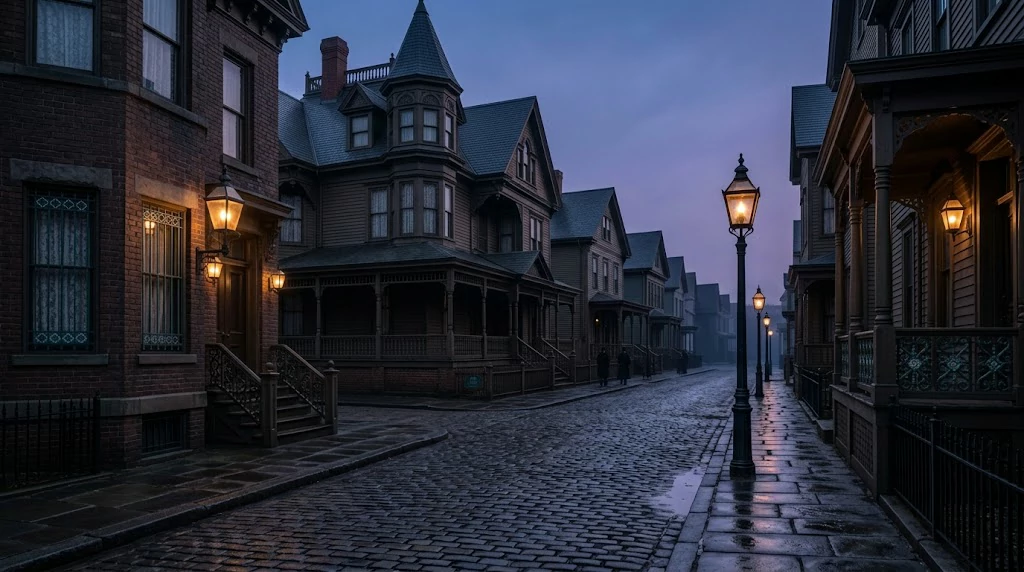
Why Does the Lizzie Borden Mystery Still Matter?
More than 130 years have passed since the Borden murders.
Yet the story continues to attract readers and viewers.
There are several reasons for that lasting interest.
1. The Central Suspect Was Acquitted
First, Lizzie Borden went on trial and the jury found her not guilty.
That outcome left the central mystery unresolved.
2. Newspapers Made the Case Famous
Second, newspapers gave the murders enormous attention.
The Library of Congress has preserved historical newspaper coverage from the period, including material about Lizzie’s arrest and trial.
As a result, people today can still examine how Americans reacted to the case in the 1890s.
3. The Case Has Unanswered Questions
Third, the evidence leaves room for debate.
People continue to ask:
- What was Lizzie doing during the murders?
- Did investigators miss important evidence?
- Could another person have committed the killings?
- Why did the jury acquit Lizzie?
- What really happened inside the Borden home?
These questions have helped keep the story alive.
4. Lizzie Became Part of American Folklore
Finally, the case moved beyond the courtroom.
The famous rhyme about Lizzie Borden helped turn the case into folklore.
However, the rhyme gives a much simpler version of the story than the historical record.
The real case involved investigations, witness statements, courtroom arguments and unanswered questions.
Why Is Netflix Revisiting Lizzie Borden?
Netflix’s new season arrives at a time when historical crime stories remain popular with streaming audiences.
The Monster anthology has already explored several notorious criminal cases.
This season takes a different approach because it focuses on Lizzie Borden and the social world around her.
The creators have also used the story to explore issues involving women, family life and social expectations in 19th-century America.
However, viewers should separate those themes from the basic historical question.
The historical question is:
Who killed Andrew and Abby Borden?
The Netflix drama asks a broader question:
Why did Lizzie Borden become such a lasting figure in American culture?
Those two questions overlap, but they are not identical.
What Does the Netflix Series Get Right?
The show keeps the main historical framework.
Andrew and Abby Borden died in 1892.
Lizzie became the main suspect.
Police arrested her.
Prosecutors brought her to trial.
The jury acquitted her.
Those events form the foundation of the real story.
Netflix also uses real historical figures, including Bridget Sullivan and Nance O’Neil.
However, the series changes some timelines and relationships.
Therefore, the show works best as historical drama rather than a documentary.
What Should Viewers Treat With Caution?
If you’re watching Monster: The Lizzie Borden Story because you want to learn about the real case, keep one rule in mind:
A scene in a scripted drama is not automatically historical evidence.
In particular, viewers should be cautious about:
- Private conversations that no one recorded.
- Romantic relationships without strong historical evidence.
- Characters’ thoughts and motivations.
- Events that happen outside the documented timeline.
- Connections between people who never actually met.
- Dramatic explanations for unanswered questions.
Television must fill historical gaps.
History cannot always do that.
For example, if historians do not know exactly what two people said to each other inside a private home, a television writer can create a conversation.
That scene may feel realistic.
However, it remains fiction unless reliable historical evidence supports it.
The Real Mystery Has No Definitive Ending
There is no final historical discovery that tells us exactly who killed Andrew and Abby Borden.
Lizzie Borden was acquitted in 1893.
No alternative suspect later received a conviction for the murders.
Therefore, the case remains unresolved.
The Fall River Historical Society continues to preserve material connected to the Borden investigation. Meanwhile, the Library of Congress preserves newspaper coverage from the period.
Together, these sources allow modern readers to examine the case without relying only on television adaptations.
The historical record may not provide the dramatic ending that a TV series can create.
Still, the unanswered questions are part of what makes the Borden case so unusual.
The Bottom Line
Monster: The Lizzie Borden Story brings a famous American mystery back to Netflix.
The real story is already dramatic.
On August 4, 1892, someone killed Andrew and Abby Borden in their Fall River home. Police later arrested Lizzie Borden and prosecutors accused her of the murders.
However, the jury found Lizzie not guilty in 1893.
More importantly, no later conviction solved the murders.
So, did Lizzie Borden kill her father and stepmother?
The historical record does not provide a definitive answer.
Netflix’s series adds fictional relationships, events and dramatic connections to explore the mystery from a modern storytelling perspective.
Therefore, viewers who want the real Lizzie Borden story should use the show as a starting point, not as a complete historical record.
The most important fact remains clear:
Lizzie Borden was accused of killing Andrew and Abby Borden, but she was never convicted of their murders.
More than a century later, the mystery remains unresolved.
Frequently Asked Questions
Is Monster: The Lizzie Borden Story based on a true story?
Yes. The Netflix series takes inspiration from the real Lizzie Borden case. Andrew and Abby Borden died in Fall River, Massachusetts, in 1892, and police later arrested Lizzie. However, the series adds fictional scenes, relationships and events for dramatic purposes.
Did Lizzie Borden kill her father and stepmother?
Historical records do not prove that Lizzie killed Andrew and Abby Borden. Police arrested her, and prosecutors took her to trial in 1893. However, the jury found her not guilty. The murders remain unresolved.
Why was Lizzie Borden acquitted?
The jury found Lizzie Borden not guilty after her 1893 trial. In simple terms, prosecutors did not convince the jury that she was guilty under the legal standard required for a conviction.
Was Bridget Sullivan really Lizzie Borden’s lover?
There is no firm historical evidence that Lizzie Borden and Bridget Sullivan had the romantic relationship shown in the Netflix series. Bridget was a real Borden family maid and an important witness in the investigation.
Did Lizzie Borden kill Bertha Manchester?
Historical evidence does not show that Lizzie killed Bertha Manchester. Manchester died in 1893 while Lizzie was already in custody. Historical accounts identify Jose Correa de Mello as the person responsible for Manchester’s death.
Is Aileen Wuornos connected to Lizzie Borden?
No documented historical connection exists between Lizzie Borden and Aileen Wuornos. Wuornos lived decades later. Her appearance in the Netflix series forms part of the show’s fictional storytelling.
Where did the Lizzie Borden murders happen?
Andrew and Abby Borden died inside their home in Fall River, Massachusetts, on August 4, 1892. The case later became one of America’s best-known historical murder mysteries.
Is Monster: The Lizzie Borden Story a documentary?
No. The Netflix production is a scripted drama. It uses real people and historical events, but it also changes relationships, timelines and other details to create its story.
Sources & Further Reading
- Library of Congress — Chronicling America: Lizzie Borden
- Fall River Historical Society — Lizzie Borden Collections
- Fall River Historical Society — Hilliard Papers
- Library of Congress — The Borden murder trial
- Netflix Tudum — The True Story That Inspired Monster: The Lizzie Borden Story