


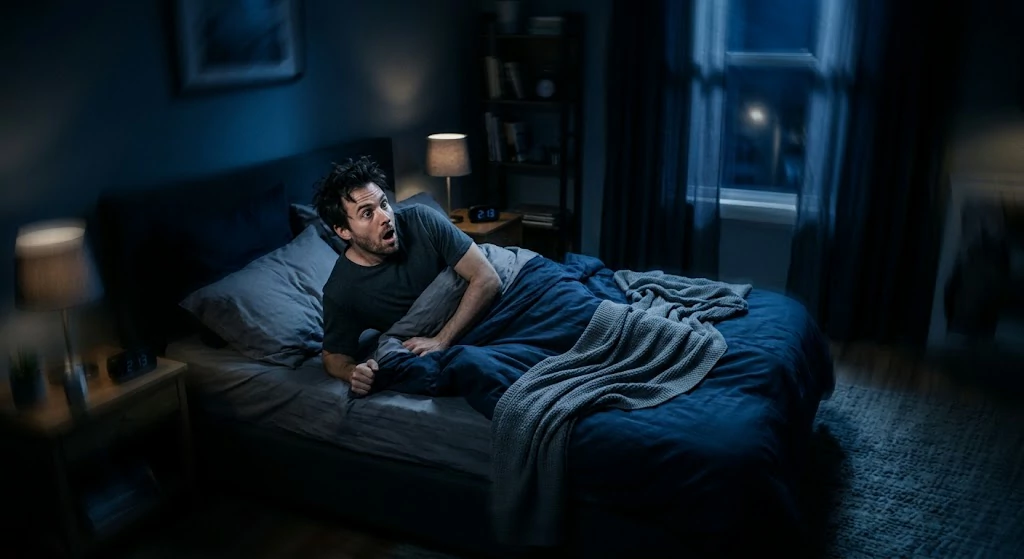
Have you ever been drifting peacefully toward sleep when suddenly you feel as if you are falling off a cliff, missing a step, or dropping through the bed?
Your body jerks. Your heart may race for a moment. And suddenly, you are completely awake.
This startling experience is usually called a hypnic jerk, also known as a sleep start or hypnagogic jerk. It is a brief, involuntary muscle contraction that most often occurs during the transition from wakefulness into light sleep. In otherwise healthy people, occasional hypnic jerks are considered a normal form of physiological myoclonus. Sleep Foundation
But why does your brain create such a convincing sensation of falling?
What Is a Hypnic Jerk?
A hypnic jerk is a sudden, involuntary contraction of one or more muscles as you begin falling asleep.
It may involve:
- one leg suddenly kicking
- an arm twitching
- the entire body jolting
- a sensation of falling
- a brief dreamlike image
- a sudden feeling of being startled
The event usually occurs during the earliest stage of non-REM sleep, when your body is transitioning from wakefulness into light sleep. During this stage, breathing, heart rate, eye movements, and brain activity begin slowing down. Sleep Foundation
Many people experience hypnic jerks at least occasionally, and they are generally considered harmless. Sleep Foundation
What Is Actually Happening in Your Brain?
Researchers do not yet have a single definitive explanation for why hypnic jerks happen.
One leading theory focuses on the nervous system’s transition from wakefulness to sleep.
As you begin to fall asleep, your muscles gradually relax and your nervous system changes its pattern of activity.
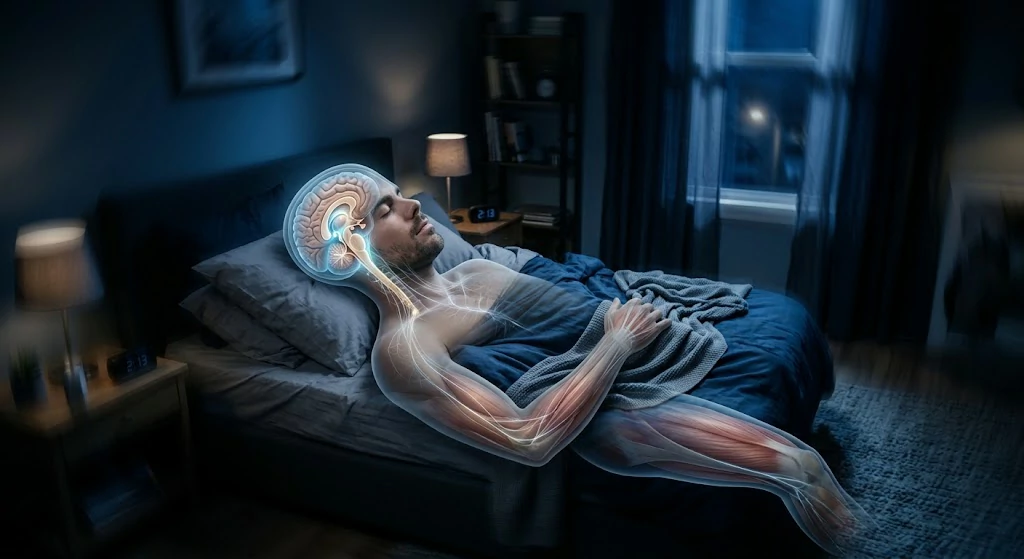
During this transition, scientists suspect that signals involving areas of the brainstem responsible for movement and the startle response can occasionally produce a brief burst of motor activity.
That burst may cause your arm, leg, or entire body to jerk suddenly. Sleep Foundation
In other words, your brain is not literally detecting that you are falling.
Rather, a temporary mismatch during the transition into sleep may create both the muscle movement and the strange sensation accompanying it.
Why Does It Feel Like You Are Falling?
This is one of the most interesting parts of the phenomenon.
When you begin falling asleep, muscle tone decreases.
At approximately the same time, your brain may generate short dreamlike imagery or sensations.
One proposed theory is that the brain interprets sudden muscle relaxation as if the body were losing balance or falling.
The nervous system then produces a rapid muscular reaction resembling a startle response. Cleveland Clinic describes this as one possible explanation rather than a proven mechanism. Cleveland Clinic
That may explain why people sometimes experience an extremely vivid impression of:
falling → sudden jerk → immediate awakening
The perception can feel completely real even though the body has never moved from the bed.
Why Does Your Body Jerk at the Same Time?
The movement itself is a form of myoclonus.
Myoclonus is the medical term for a brief, shock-like muscle contraction.
Not all myoclonus indicates disease.
The Merck Manual classifies the jerks that occur while falling asleep as a form of physiological myoclonus, meaning they can occur normally in healthy individuals. Merck Manuals
The jerk may affect only one muscle group or several parts of the body simultaneously.
Sometimes it is so subtle that you never notice it.
Other times it is strong enough to wake you instantly.
Why Do Hypnic Jerks Happen More Often When You Are Stressed?
Stress keeps the nervous system more alert.
When your mind remains highly active near bedtime, the transition from wakefulness to sleep may become less smooth.
Sleep specialists report that stress and anxiety can increase the likelihood of hypnic jerks, particularly when they interfere with normal sleep. Sleep Foundation
You may therefore notice them more often during periods involving:
- work pressure
- exams
- emotional stress
- disrupted sleep
- major lifestyle changes
- anxiety before bedtime
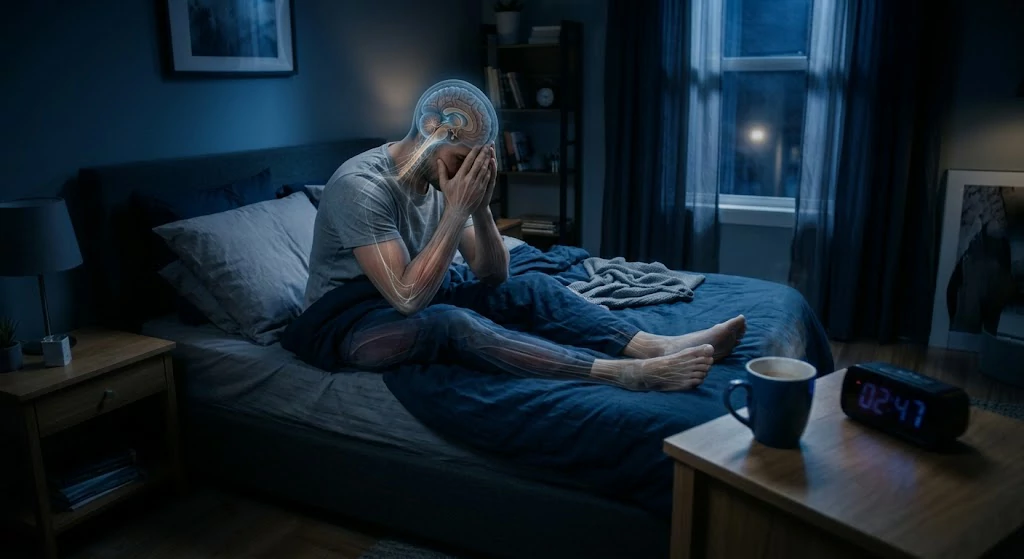
Interestingly, worrying about the jerk itself can sometimes make sleep more difficult, creating a cycle of poor sleep and increased nighttime twitching.
Can Caffeine Trigger a Hypnic Jerk?
Yes, caffeine may make these events more likely.
Caffeine stimulates the central nervous system and can interfere with falling asleep, particularly when consumed later in the day.
Sleep Foundation lists excessive caffeine use among the factors associated with increased hypnic jerks. Sleep Foundation
Coffee is not the only possible source.
Caffeine can also be present in:
- energy drinks
- tea
- cola
- pre-workout products
- chocolate
- some medications
Someone who experiences frequent sleep starts may therefore benefit from examining how much caffeine they consume and how late they consume it.
Does Sleep Deprivation Make It Worse?
It can.
Lack of sleep appears to increase the likelihood of hypnic jerks. Sleep Foundation
This may seem paradoxical.
You might expect extreme tiredness to make falling asleep easier.
But an overtired nervous system can produce less stable transitions between wakefulness and sleep.
This is why hypnic jerks may become noticeable after:
- several late nights
- jet lag
- irregular work schedules
- studying until early morning
- insomnia
- very demanding periods of life
Improving sleep consistency may reduce their frequency.
Can Exercise Cause Hypnic Jerks?
Exercise generally benefits sleep.
However, very intense exercise close to bedtime may temporarily keep the body more activated.
Sleep Foundation notes vigorous nighttime exercise as a possible factor associated with hypnic jerks in some people. Sleep Foundation
That does not mean exercise should be avoided.
Instead, people who notice a pattern may experiment with finishing intense workouts earlier and choosing gentler evening activities.
Are Hypnic Jerks Dangerous?
For most people, occasional hypnic jerks are harmless.
They are considered a normal phenomenon associated with falling asleep rather than a disease by themselves. Sleep Foundation
They generally do not damage the brain.
They do not mean that your heart stopped.
And an occasional sleep start is not, by itself, evidence of epilepsy or another neurological disease.
The situation becomes more relevant medically when the movements behave differently from a typical hypnic jerk.
When Should You Talk to a Doctor?
Consider medical evaluation if the movements:
- occur repeatedly throughout the night
- also happen frequently while you are awake
- are becoming increasingly severe
- consistently prevent you from sleeping
- involve loss of consciousness
- are associated with significant weakness or other neurological symptoms
- are very different from a brief jerk occurring while falling asleep
Frequent repetitive movements during sleep can have causes other than ordinary hypnic jerks, including certain sleep-related movement disorders. Sleep Foundation
A clinician can distinguish these conditions based on symptoms, medical history, and, when necessary, additional testing.
How Can You Reduce Hypnic Jerks?
You cannot necessarily eliminate them completely.
However, several habits may reduce common triggers.
1. Get enough sleep
Maintain a reasonably consistent bedtime and wake time.
2. Reduce caffeine later in the day
Especially if you notice a relationship between caffeine intake and nighttime twitching.
3. Manage stress before bed
Quiet activities, relaxation techniques, reading, or a calmer pre-sleep routine may help.
4. Avoid becoming severely sleep deprived
Regular sleep can make transitions between sleep stages more stable.
5. Consider moving intense workouts earlier
Especially if nighttime exercise appears to trigger the problem.
These measures also improve sleep quality more generally. Sleep Foundation
Frequently Asked Questions About Hypnic Jerks
Is a hypnic jerk normal?
Yes. Occasional hypnic jerks are generally considered a normal physiological phenomenon during the transition into sleep. Merck Manuals
Why do I feel like I am falling before I fall asleep?
The exact mechanism is not fully established. One theory is that muscle relaxation and changing nervous-system activity during early sleep can be interpreted alongside dreamlike sensations as falling, leading to a sudden startle-like muscle contraction. Cleveland Clinic
Can anxiety cause hypnic jerks?
Stress and anxiety can make them more frequent, particularly when they contribute to poor sleep. Sleep Foundation
Can caffeine make hypnic jerks worse?
Yes. Excessive or late caffeine intake can disrupt sleep and is associated with increased sleep starts. Sleep Foundation
Is a hypnic jerk a seizure?
A typical occasional hypnic jerk while falling asleep is considered physiological myoclonus and is not the same thing as a seizure. Persistent or unusual movements should, however, be medically evaluated. Merck Manuals
Why does my heart race after I suddenly wake up?
Being abruptly startled can activate the body’s normal alert response, which may temporarily make the heartbeat feel faster or stronger.
Final Thoughts
That sudden sensation of falling just as you drift off to sleep usually has a surprisingly ordinary explanation.
It is most likely a hypnic jerk—a brief involuntary muscle contraction occurring while your brain and body transition from wakefulness into sleep.
Scientists are still investigating exactly why the brain sometimes pairs these jerks with such a vivid sensation of falling. What is clear is that occasional hypnic jerks are common and generally harmless, while stress, caffeine, fatigue, and sleep deprivation can make them more noticeable. Sleep Foundation
So the next time your brain suddenly convinces you that you are falling through space while lying safely in bed, the explanation is probably much less mysterious than the sensation itself.