



Finding meaningful family communication activities does not require expensive trips or carefully planned weekends. Often, the best conversations happen while cooking dinner, taking a walk, or playing a simple game together.
However, busy schedules, schoolwork, and screens can make it hard to connect. Although family members may share the same home, they do not always get enough time to listen to one another.
Fortunately, better conversations do not have to begin with serious questions. For example, shared activities can help children, teens, and adults feel more comfortable speaking, listening, and working together.
The following 10 ideas are easy to adapt to different ages and routines. Start with one that suits your household, then build from there.
Why Family Communication Activities Matter
Healthy communication means more than sharing news or giving instructions. It also means noticing feelings, asking questions, and making space for different opinions.
The American Academy of Pediatrics’ advice on family communication encourages parents to give children full attention and listen carefully. In addition, Harvard University’s Center on the Developing Child explains how responsive, back-and-forth interactions support young children’s early learning and development.
These ideas also apply beyond early childhood. For example, a shared task or game can help everyone take turns.
Regular family communication activities can offer chances to:
- Listen without interrupting.
- Share feelings and everyday experiences.
- Learn about another person’s point of view.
- Solve small problems as a team.
- Enjoy time together without pressure.
Still, no game can fix every relationship problem. What matters is how family members treat one another.
Family Communication Activities at Home: Ideas 1–3
1. Try a Device-Free Dinner Check-In
A family meal can become a simple time to reconnect after a busy day. First, set phones aside and let each person share one part of their day.
You might ask:
- What made you smile today?
- Was anything difficult?
- What are you looking forward to tomorrow?
Younger children may talk about recess. Meanwhile, teens may prefer to discuss friends, hobbies, or plans for the weekend.
Listen before offering advice. For example, if your child says school was stressful, ask what happened instead of immediately suggesting a solution.
Why it helps: As a result, a familiar routine creates regular chances to practice listening and speaking.
If daily dinners are not possible, try one or two meals each week. The goal is connection, not a perfect schedule.
2. Make a Family Conversation Jar
A conversation jar is a low-cost game that gives everyone something new to talk about. Simply write questions on small slips of paper and place them in a jar.
For example, let someone choose a question after dinner. Try these prompts:
- What made you laugh this week?
- What new skill would you love to learn?
- What family tradition should we start?
- When do you feel most appreciated?
- What is something adults should understand about kids?
Then let each person answer, if they want to. Avoid pushing anyone to reveal private feelings.
Why it helps: As a result, open questions invite longer answers than simple yes-or-no questions.
For younger children, use pictures or easy prompts. You can also ask teens to add their own questions so the game feels more personal.
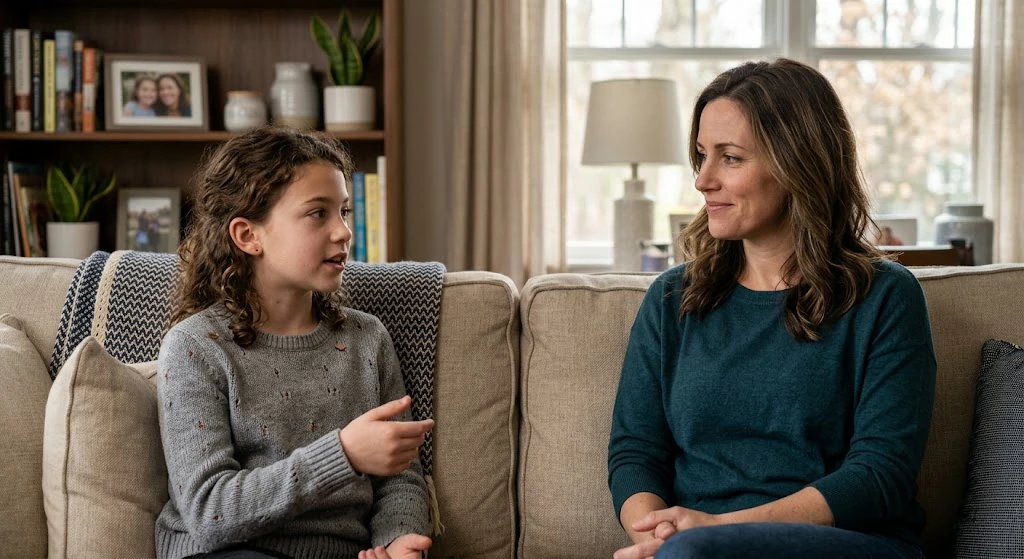
3. Play the Two-Minute Listening Game
In this game, two people take turns speaking and listening. One person talks for two minutes about an everyday experience while the other listens without interrupting.
Next, the listener repeats the main idea in their own words. For instance, they might say, “You felt left out when the plans changed. Is that right?”
After that, switch roles. Keep the tone friendly and choose simple topics at first.
The CDC’s guidance on active listening suggests giving children full attention and reflecting back what they say.
Why it helps: Everyone gets to practice hearing another person’s message before replying.
If eye contact feels uncomfortable, play while sitting side by side.
Creative Family Activities That Encourage Teamwork: Ideas 4–6
4. Cook a Meal Together
Cooking gives family members a shared goal and many small decisions to make. Choose an easy recipe, such as homemade pizza, tacos, or pasta.
To begin, divide the work into safe, age-appropriate tasks. For example, one person can wash vegetables, another can mix ingredients, and someone else can set the table.
As you work, ask simple questions:
- What should we do first?
- How can we share the work fairly?
- What would you change next time?
Why it helps: Cooking creates real chances to ask for help, explain ideas, and make choices together.
However, the meal does not need to look perfect. Enjoy the process, even if the kitchen gets messy.
Adults should always supervise sharp tools, hot pans, and other hazards when children are helping.
5. Tell a Story One Sentence at a Time
Storytelling can turn an ordinary evening into a fun group activity. Start with a line such as, “One morning, we found a mysterious box outside our door.”
The next person adds a sentence. Then the story moves around the group until everyone has helped create an ending.
You can include silly characters, strange adventures, or surprising problems. However, each person should build on what the last speaker said rather than start a completely different story.
Why it helps: Players must listen, remember details, and leave room for other people’s ideas.
Afterward, ask how a character might have felt or what they could have said differently. This also opens the door to gentle talks about empathy without asking anyone to share a personal problem.
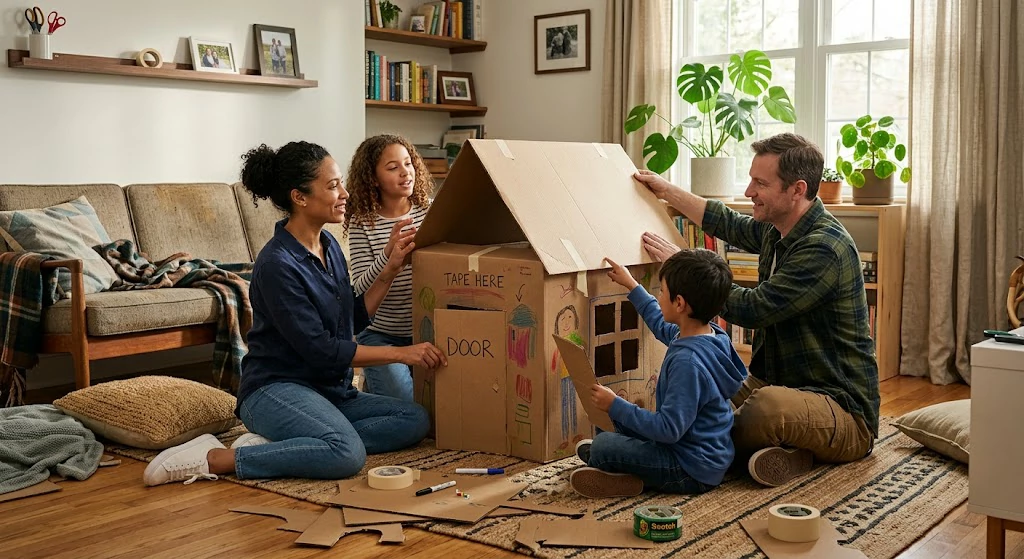
6. Build Something as a Team
Try making a blanket fort, cardboard house, block tower, or model neighborhood. Instead of competing for the best design, give the whole family one shared project.
First, ask everyone to suggest an idea. Next, agree on a simple plan and share the materials.
As you build, practice helpful phrases such as, “Can you hold this piece?” or “Could we try another way?” These requests are easier to work with than blame or harsh criticism.
Why it helps: A shared project lets family members practice giving clear directions, listening to suggestions, and making compromises.
In fact, the finished project matters less than the teamwork. Even when a tower falls, you can laugh, talk about what happened, and try again.
For more information, read our guide to https://qayqay.com/irregular-sleep-schedule-heart-brain-health/
Outdoor Family Communication Activities: Ideas 7–9
7. Go on a Walk-and-Talk Adventure
A walk can make conversation feel easier because nobody has to sit face to face. Choose a park, a quiet street, or another familiar outdoor spot.
While you walk, notice things around you and ask gentle questions. For example:
- What was the best part of your week?
- Is there something new you want to try?
- Where should we go on our next family outing?
Younger children may enjoy looking for birds or interesting leaves. On the other hand, teens may like a calm, side-by-side chat without many questions.
Why it helps: Walking gives the family a shared experience and space for natural conversation.
Do not worry if some of the walk is quiet. Comfortable silence can be part of spending time together, too.
8. Hold a Short Weekly Family Meeting
A family meeting gives everyone a chance to share plans and raise small concerns. Pick a regular time, such as Sunday afternoon, and aim for 15 to 20 minutes.
Keep the agenda simple:
- Share one good thing from the week.
- Discuss a household problem without blaming anyone.
- Review upcoming plans or tasks.
- Choose something fun to do together.
For example, children can help decide which game to play or how to divide a simple chore.
The American Academy of Pediatrics also discusses family rituals and shared routines as ways to support family life.
Why it helps: Regular meetings show that each person’s ideas deserve attention.
Still, personal or sensitive problems may be better discussed privately. Keep the meeting short enough that younger children can stay engaged.
9. Start an Appreciation Circle
An appreciation circle is a chance to notice something kind or helpful that another person did. Sit together and invite everyone to share one specific example.
You could say, “Thanks for helping me with my school project,” or “I appreciated how patiently you listened yesterday.”
Specific praise often feels more meaningful than a vague compliment. Also, it helps people see the small efforts that might otherwise go unnoticed.
Why it helps: The activity offers practice in saying thank you and recognizing other people’s contributions.
However, nobody should be forced to give praise or hide a real concern. Families can appreciate one another while still having disagreements.
If speaking aloud feels awkward, try writing short thank-you notes instead.
A Lasting Family Tradition: Idea 10
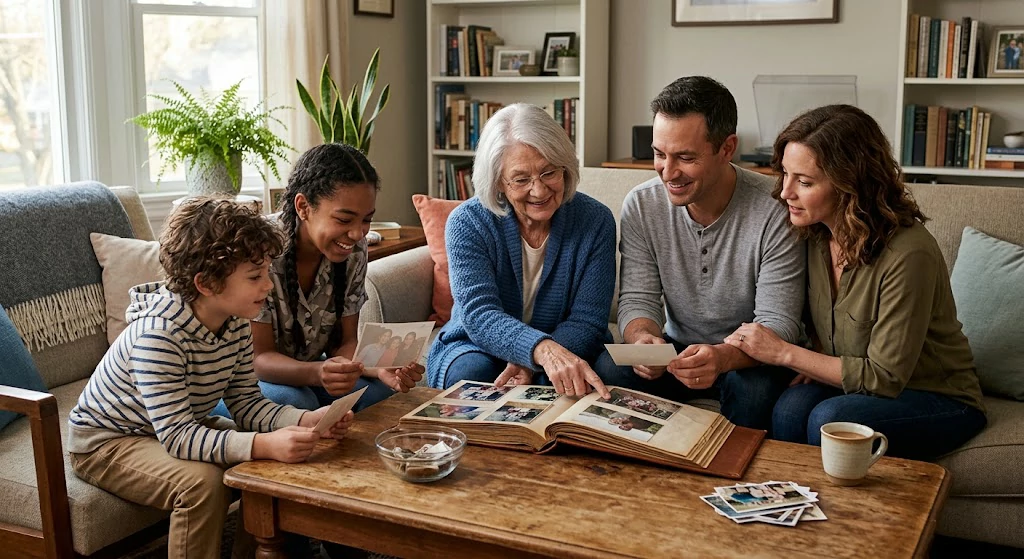
10. Create a Family Memory Project
A memory project combines stories, pictures, and shared family history. For instance, you could make a scrapbook, gather favorite photos, or fill a box with drawings and notes.
Invite everyone to add something meaningful. Then choose a time to look through the collection together.
Try asking:
- What do you remember most about this day?
- What was your favorite tradition growing up?
- Which family moment would you like to repeat?
Older relatives may enjoy sharing stories from the past. Meanwhile, children can talk about their favorite moments or draw scenes they remember.
Why it helps: Memories offer an easy starting point for learning about different experiences and points of view.
Before recording stories or sharing photos online, ask permission. That way, everyone can enjoy the project while keeping personal boundaries in mind.
How to Make Family Communication Activities Stick
The best routine is one your family can actually keep. Instead of planning a big event every weekend, begin with a few minutes of shared time.
Start small. Try a 10-minute chat, a short walk, or one question from the conversation jar. Once it feels natural, add more time if everyone wants to.
Give everyone a choice. Let children and teens help pick the game or activity. As a result, they may feel more involved in the plan.
Respect different styles. Some people enjoy talking, while others prefer drawing, writing, or working side by side. Each approach can open the door to connection.
Keep it low-pressure. If someone is tired or does not want to answer a question, let them pass. Trust grows more easily when personal limits are respected.
Finally, use moments you already share, such as meals, chores, or weekend errands. This makes connection easier to fit into a busy week.
For more information, read our guide to https://qayqay.com/irregular-sleep-schedule-heart-brain-health/
Common Mistakes That Can Stop Good Conversations
However, even a fun activity can become stressful if every answer leads to a lecture. Before giving advice, try to understand what the other person means.
Another mistake is letting one person do all the talking. Instead, invite quieter family members to join while allowing them to pass when they prefer.
Avoid teasing someone about a sensitive topic or sharing their story without permission. Also, try not to compare children with their siblings or dismiss feelings as unimportant.
If a disagreement starts, stay calm and return to the issue when everyone is ready. A family activity should never become a test that someone has to pass.
Important: Games and routines cannot solve every family problem. If conflict is ongoing, frightening, or emotionally harmful, a qualified family counselor or mental health professional may be able to help.
Frequently Asked Questions About Family Communication Activities
What are the best family activities for better communication?
For example, try shared meals, story games, walks, cooking, or team projects. The best activity is one that gives everyone a chance to take part without feeling pushed.
How can parents help teenagers talk more openly?
Start with relaxed, everyday conversations rather than a long list of questions. In addition, listen without rushing to correct them and respect their privacy.
How often should families try these activities?
There is no fixed rule. For example, a brief daily chat or a weekly activity may fit your household better than a strict schedule. Regular, comfortable moments matter more than length.
Can family games teach children communication skills?
Yes, games can give children chances to practice listening, taking turns, and sharing ideas. However, the way adults respond during the game matters more than the game itself.
What are some free family bonding ideas?
Walks, conversation jars, storytelling, family meetings, and simple crafts can cost little or nothing. You can also cook together using ingredients already at home.
What if someone does not want to join?
Offer a different activity or a shorter session, and allow them to say no. Sometimes, one-on-one time works better.
How can busy families find time to connect?
Instead, use time already in your day, such as meals, car rides, or chores. Even a short chat can create a useful chance to listen.
Final Thoughts
Better communication grows through everyday moments, not perfect plans. Cooking together, sharing stories, taking walks, and listening with care can all help families make space for one another.
These family communication activities are starting points, not guaranteed solutions. Every household has its own needs, and some concerns require more support than a game or group outing can provide.
Choose one simple idea that fits your family. Then pay attention to what feels comfortable, keep the conversation open, and adjust as you go.