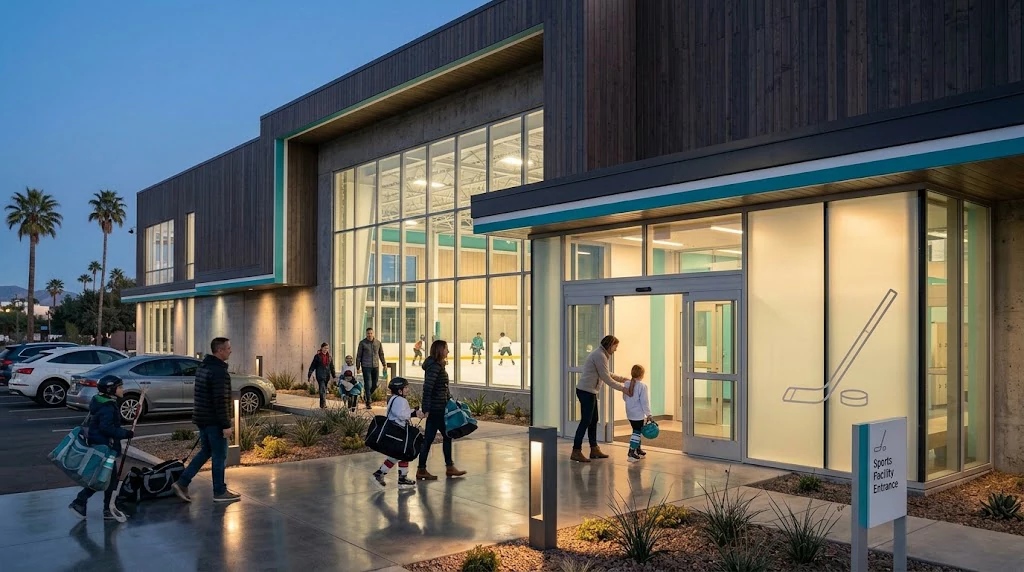
American hockey is having a moment. The kind that doesn’t come around often.
In February 2026, both the U.S. men’s and women’s Olympic hockey teams won gold medals in Milan-Cortina, with each team defeating Canada in overtime on the same day. For the men’s team, it was the first Olympic title since the “Miracle on Ice” in 1980 — ending a 46-year wait.
At the same time, participation is reaching record levels. USA Hockey membership reached an all-time high of 586,002 players during the 2025-26 season, while female participation surpassed 100,000 for the first time.
From Olympic success and youth participation to girls’ hockey, the American Development Model, the rise of hockey in warm-weather states, and the launch of a new Development League, several major trends are reshaping American hockey.
Key Takeaways
- Olympic gold has created new momentum for American hockey.
- USA Hockey reached a record 586,002 registered players in 2025-26.
- Female participation surpassed 100,000 players for the first time.
- The American Development Model continues to influence how young players learn the game.
- Hockey is expanding rapidly in non-traditional markets such as Texas, Florida, Arizona and Utah.
- A new USA Hockey Development League is scheduled to launch in 2026-27.
- Cost remains one of the biggest challenges for families entering competitive hockey.
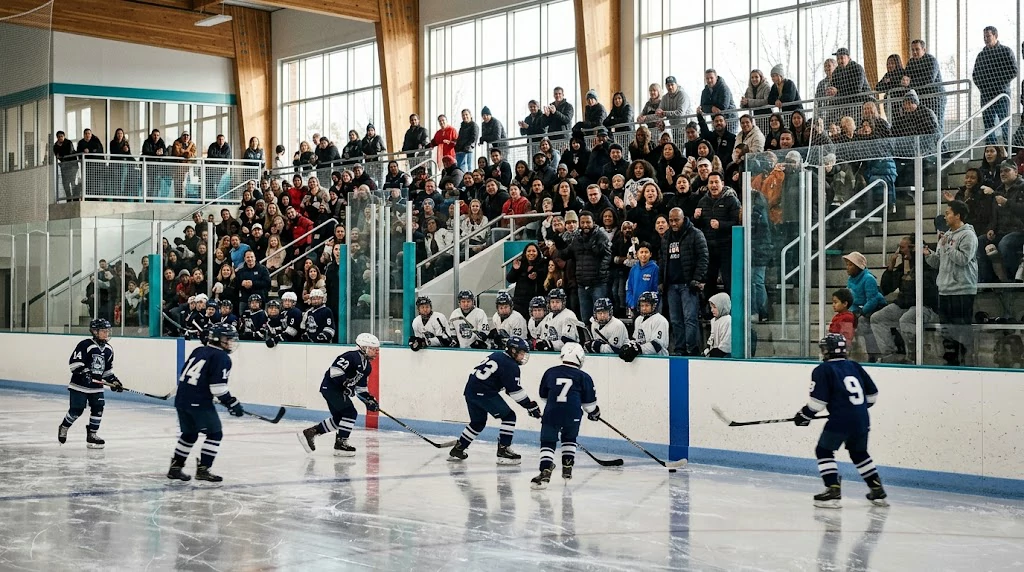
The Olympic Gold Effect: Why 2026 Changed Everything
When the United States defeated Canada in overtime in the men’s Olympic final, the moment immediately became one of the defining events in modern American hockey.
The comparison with the 1980 “Miracle on Ice” is unavoidable. That victory helped transform American hockey and inspired a generation of young players.
The 2026 Olympic tournament was different. This time, NHL professionals were competing on the world’s biggest international stage, and the United States defeated Canada in a dramatic gold-medal game.
The potential impact on youth participation is significant.
When children see American players competing successfully at the highest level, hockey becomes more visible and more aspirational. The difference in 2026 is that the country now has a much larger infrastructure capable of turning that interest into participation.
The American Development Model has been operating since 2009, USA Hockey has established learn-to-play programs, and hockey has expanded well beyond traditional markets in the Northeast and Midwest.
The key question now is whether the hockey system can absorb the additional interest generated by Olympic success.
External authority link: Add the USA Hockey or BBC Sport source to the phrase “first Olympic title since 1980”.
Record Participation: The Numbers Behind the Boom
USA Hockey’s 2025-26 membership figures show that American hockey has reached another important milestone.
The organization reported 586,002 players, the highest membership total in its history.
Female participation also reached a historic milestone, exceeding 100,000 registered players for the first time.
Membership increased year over year for the fourth consecutive season. Youth hockey accounted for a significant portion of the increase, while the 8-and-under age group continued to reach participation records.
This growth is important because the youngest players represent the foundation of the future hockey pipeline.
You can learn more about youth hockey participation in our upcoming Qayqay coverage of youth sports participation trends in the United States.
External authority link: Link the phrase “586,002 players” to the official USA Hockey participation report.
The growth story, however, comes with an important caveat.
Hockey remains an expensive youth sport. Equipment, ice time, coaching, tournaments and travel can quickly increase the cost of participation, especially when families move from recreational programs into travel hockey.
That makes affordable community programs and beginner-friendly initiatives particularly important for sustaining participation.
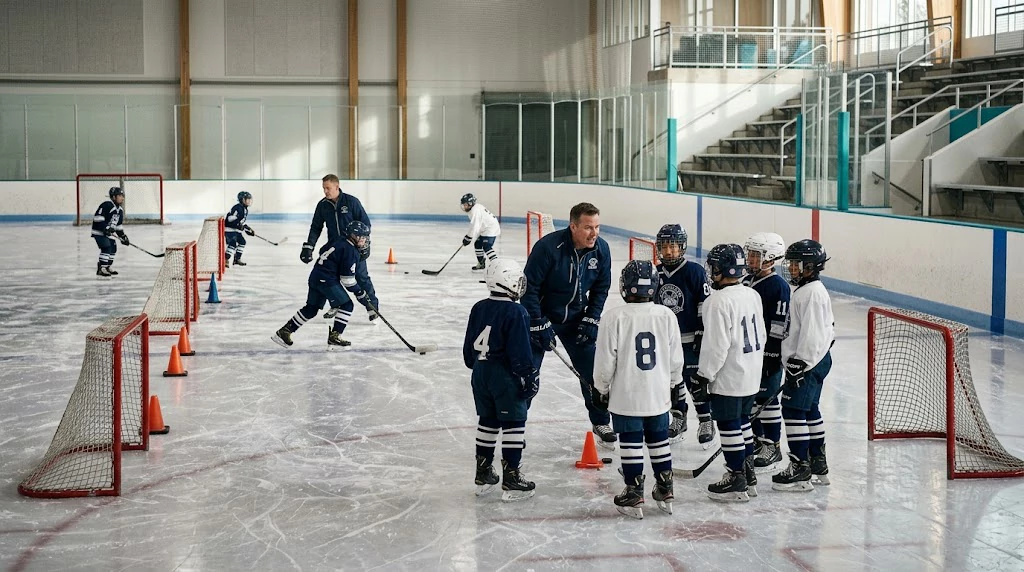
Girls’ and Women’s Hockey: A Major Growth Story
One of the clearest trends in American hockey is the growth of girls’ and women’s participation.
Female membership surpassed 100,000 players during the 2025-26 season, reaching 103,324 registrations.
The increase reflects years of investment in girls’ hockey development, greater visibility for women’s hockey and the emergence of professional role models.
The growth of the Professional Women’s Hockey League has also given young players a clearer professional pathway.
Olympic success has added another layer of visibility.
Caroline Harvey’s 2026 season provides a striking example. Harvey was named IIHF Female Player of the Year after helping Team USA win Olympic gold. She also helped Wisconsin win an NCAA championship and received the Patty Kazmaier Award.
Her individual achievements illustrate how many stages of the American women’s hockey pathway now connect together — youth hockey, college hockey, international competition and professional opportunities.
For young players watching from the stands, the pathway is much easier to see than it was a generation ago.
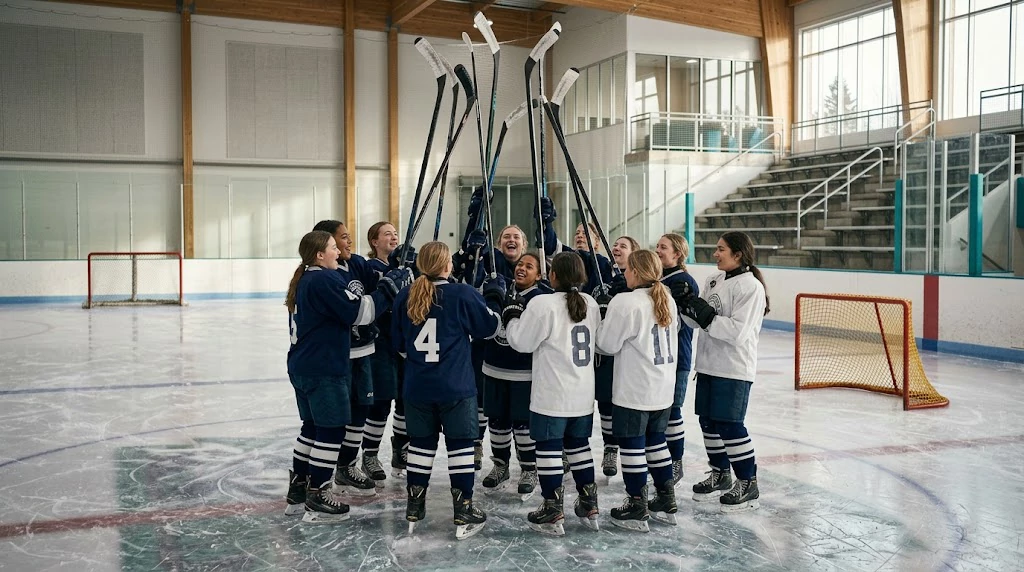
The American Development Model: How the Game Got Smarter
The American Development Model was introduced by USA Hockey in 2009 and changed the way many young American players learn the game.
Instead of focusing primarily on winning games at very young ages, the model emphasizes long-term development, skill repetition, age-appropriate competition and more opportunities for players to interact with the puck.
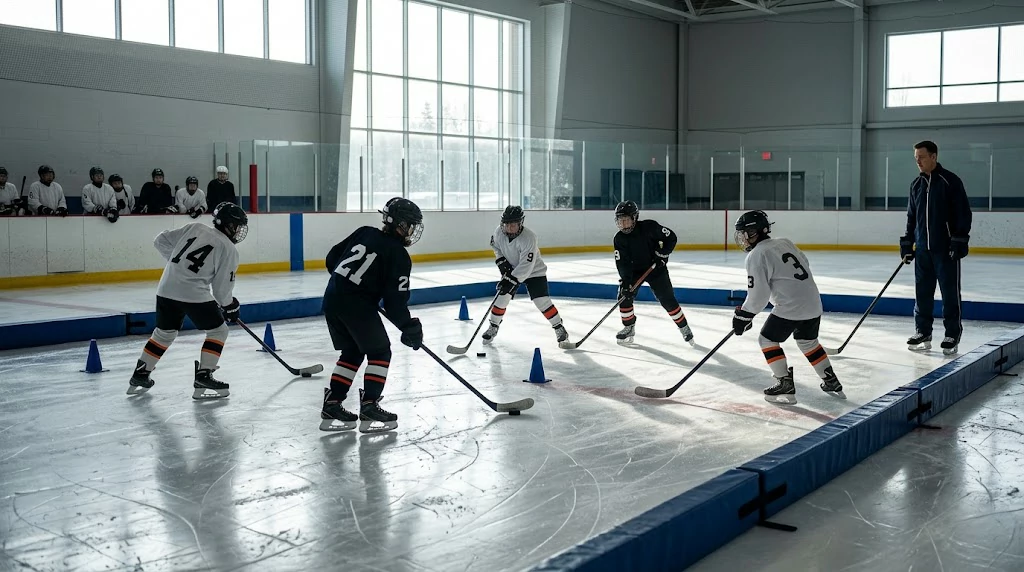
One of the most visible elements is cross-ice hockey for younger players.
Smaller playing areas give children more opportunities to touch the puck, change direction, make decisions and interact with teammates and opponents.
The philosophy is straightforward: young players need repetitions.
More touches can mean more opportunities to develop skating, puck control, passing and decision-making skills.
The model has become an important part of the American player development pathway, connecting grassroots hockey with higher levels of competition.
The Sun Belt Boom: Hockey’s New Map
American hockey is no longer limited to traditional cold-weather regions.
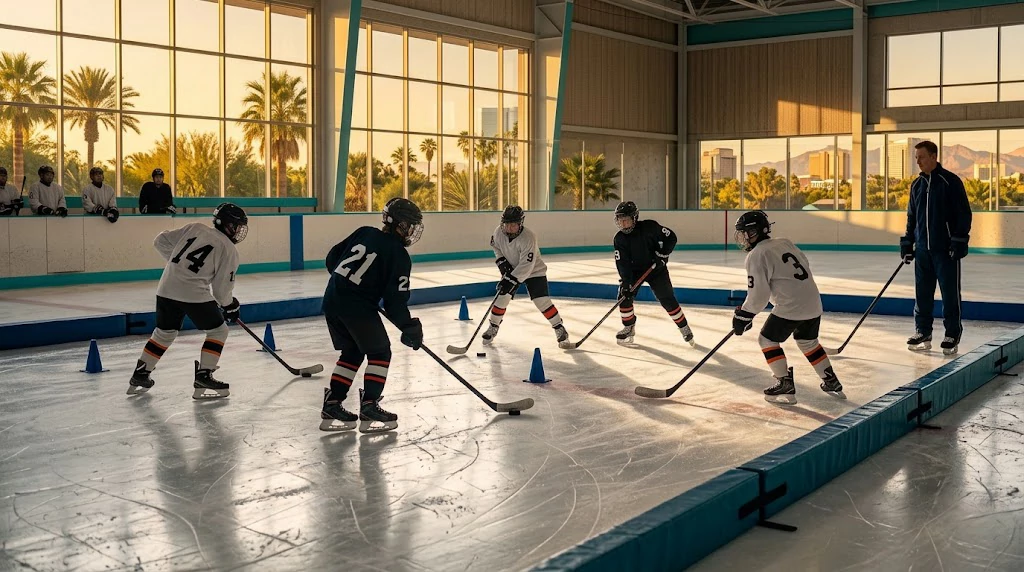
Texas, Florida, Arizona, California and Utah have become increasingly important hockey markets.
The arrival and growth of NHL teams has helped introduce the sport to new audiences, while grassroots programs have expanded around those professional markets.
Utah provides one of the most notable recent examples.
Since the arrival of the Utah NHL franchise, the state has experienced significant membership growth.
Nevada has also seen substantial growth since the arrival of the Vegas Golden Knights, while Washington has added players following the expansion of the Seattle Kraken.
The pattern is increasingly familiar:
An NHL team arrives.
More people watch.
Children become interested.
Learn-to-play programs grow.
Local rinks and youth programs expand.
Over time, a hockey culture develops.
This geographic diversification could have major implications for the future American talent pool.
The New Development League: A New Path for American Talent
USA Hockey is also changing the structure of the American junior development system.
The USA Hockey Development League is scheduled to launch during the 2026-27 season.
The planned league will include 32 selected Tier 1 junior boys’ teams competing in the 15U and 17U age classifications.
Teams are expected to play a 55-game schedule, including required games against league opponents, while the structure limits multiple games on the same day.
The philosophy is built around development rather than simply maximizing the number of games played.
Some high-volume junior programs can approach 90 to 100 games in a season. USA Hockey’s new approach places greater emphasis on training, recovery and long-term player development.
The change also comes as the college hockey landscape continues to evolve.
For American players hoping to reach NCAA hockey, the development pathway is becoming increasingly structured.
The NHL, USA Hockey and USHL have also announced expanded cooperation around Tier I development, including areas such as player health, coaching education, analytics and nutrition.
External authority link: Add the Boston Globe link to “USA Hockey Development League” and the NHL Media link to “expanded cooperation around Tier I development.”
What Parents and Players Should Know
These changes matter beyond the professional and Olympic levels.
For families entering hockey, the biggest issue remains cost.
Hockey remains an investment.
Equipment, registration fees, ice time, coaching, tournaments and travel can add up quickly.
The financial jump can become particularly noticeable when players move from recreational or house leagues into travel hockey.
Parents should therefore compare programs carefully and consider the total season cost rather than looking only at the registration fee.
The development pathway is also becoming clearer.
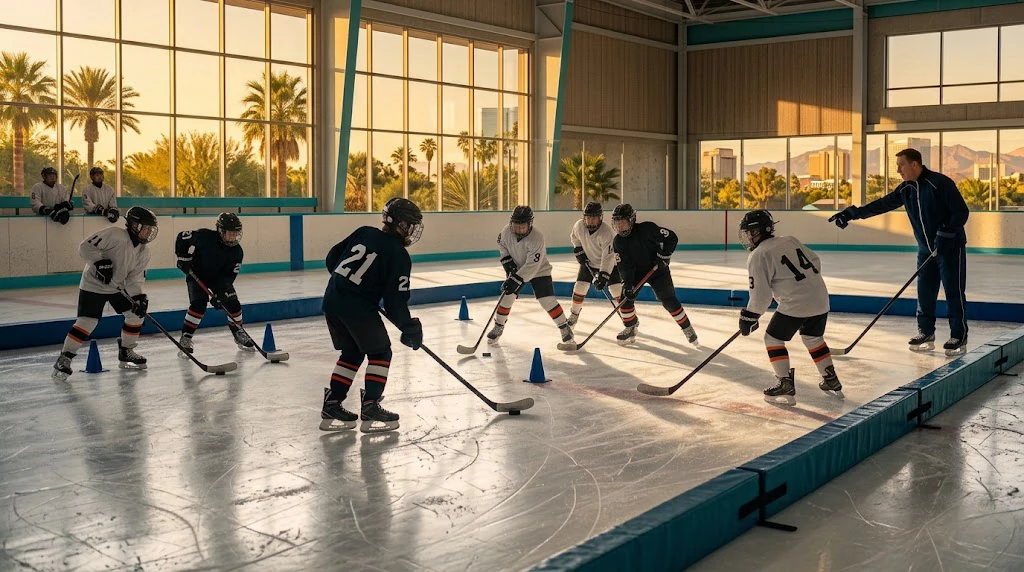
Young players have multiple options depending on their age, ability and goals, from recreational hockey to travel programs and eventually elite junior or college hockey.
For girls, the opportunities have expanded considerably.
The combination of NCAA hockey, professional women’s hockey and international competition provides young players with more visible pathways than previous generations had.
Safety is another important consideration.
Equipment standards and player-safety requirements continue to evolve, including increased attention to protective equipment and neck protection.
Finally, families in newer hockey markets should recognize that the infrastructure around them is changing rapidly.
Texas, Florida, Arizona and Utah are no longer isolated hockey experiments. Youth participation and development programs are becoming increasingly established in these markets.

Frequently Asked Questions
Is youth hockey participation growing in the United States?
Yes. USA Hockey membership reached 586,002 players during the 2025-26 season, an all-time high. Youth hockey added thousands of players, while the 8-and-under age group continued to reach participation records.
Why is girls’ hockey growing?
Several factors are contributing to the growth, including stronger youth development programs, increased visibility of women’s hockey, professional opportunities and the success of Team USA at international competitions.
Female USA Hockey participation exceeded 100,000 players for the first time during the 2025-26 season.
What is the American Development Model?
The American Development Model is USA Hockey’s player-development framework introduced in 2009. It emphasizes long-term development, skill repetition, age-appropriate competition and small-area games for younger players.
Will Olympic success increase youth hockey participation?
The 2026 Olympic success has generated significant visibility for American hockey. Whether the effect produces a long-term increase in participation will depend on how effectively local programs and rinks convert interest into sustained participation.
What is the USA Hockey Development League?
It is a new Tier 1 junior development structure scheduled to begin in the 2026-27 season, with selected 15U and 17U teams and a schedule designed to place greater emphasis on player development.
Is hockey becoming more affordable?
Hockey remains relatively expensive compared with many youth sports. Equipment, ice time and travel are major expenses. Community programs and learn-to-play initiatives can provide lower-cost entry points.
How has NHL participation in the Olympics affected American hockey?
NHL players returned to Olympic competition in 2026 after a 12-year absence. The tournament generated significant attention, particularly around the USA-Canada gold-medal matchup, and created another major international showcase for American hockey.
What are the fastest-growing hockey markets?
Hockey growth is increasingly visible in markets outside the traditional hockey regions, including parts of Texas, Florida, Arizona and Utah. Local participation can vary considerably by city and program.