


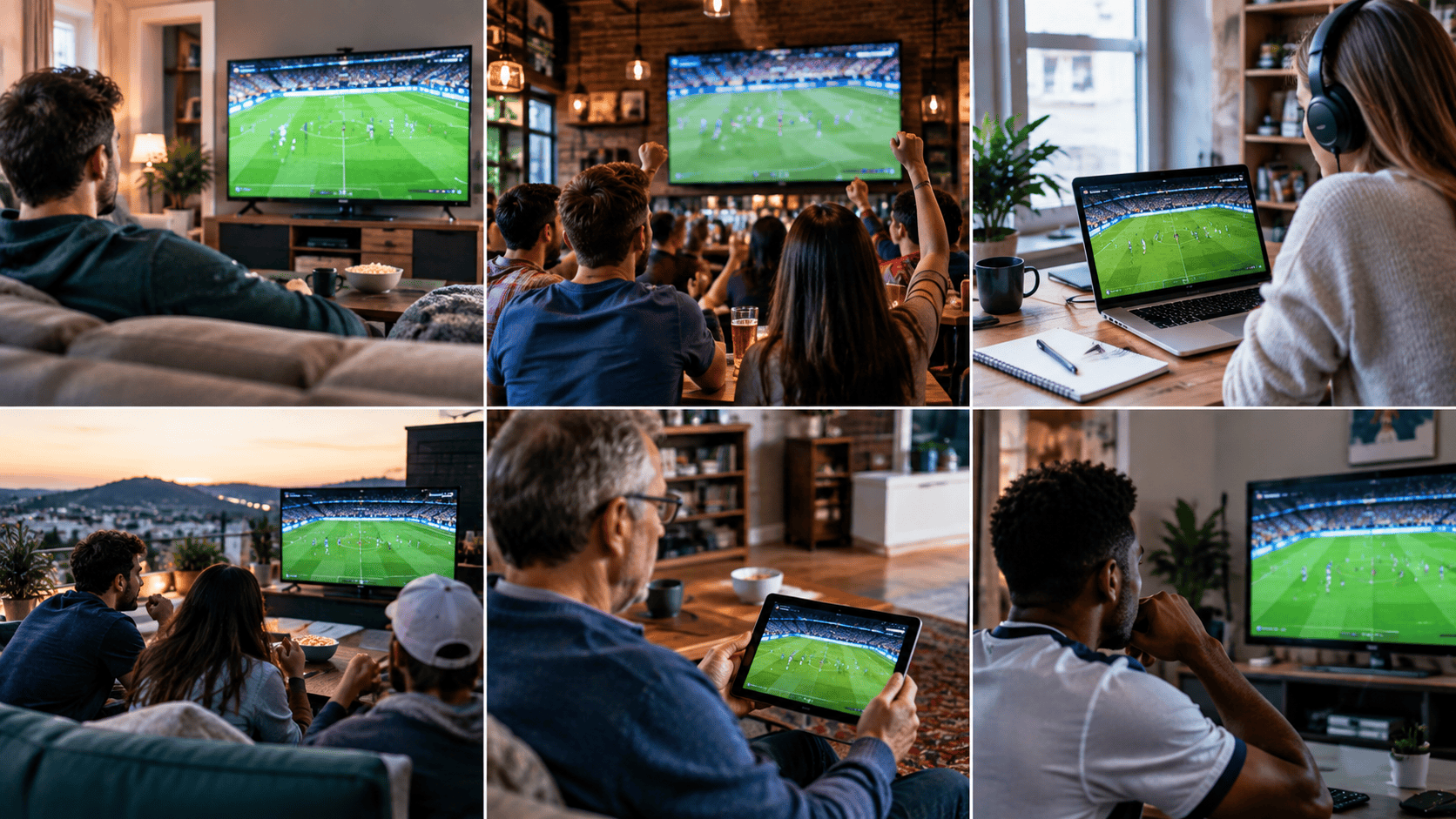
Watching a game in 2026 is no longer as simple as turning on the TV and choosing a channel.
Fans now have more ways to follow their favorite teams than ever. They can stream games, switch between several matches, watch alternative broadcasts, follow live clips on social media, and use apps that add statistics and other information while the game is still happening.
At the same time, sports leagues are trying to reach fans across more platforms. A major game may appear on traditional television, a streaming service, a league app, social media, or even a creator-led broadcast.
This shift is changing more than where fans watch.
It is also changing how fans watch sports.
Some viewers want a simple live game. Others want several games on one screen, real-time data, different commentators, or short clips they can watch on their phones.
Meanwhile, younger fans are spending more time with sports content on social platforms. YouTube reported that NFL-related videos generated more than 20 billion views globally in 2025, showing how much sports fandom now exists outside the live game itself.
Here are 10 sports viewing trends shaping the fan experience in 2026.
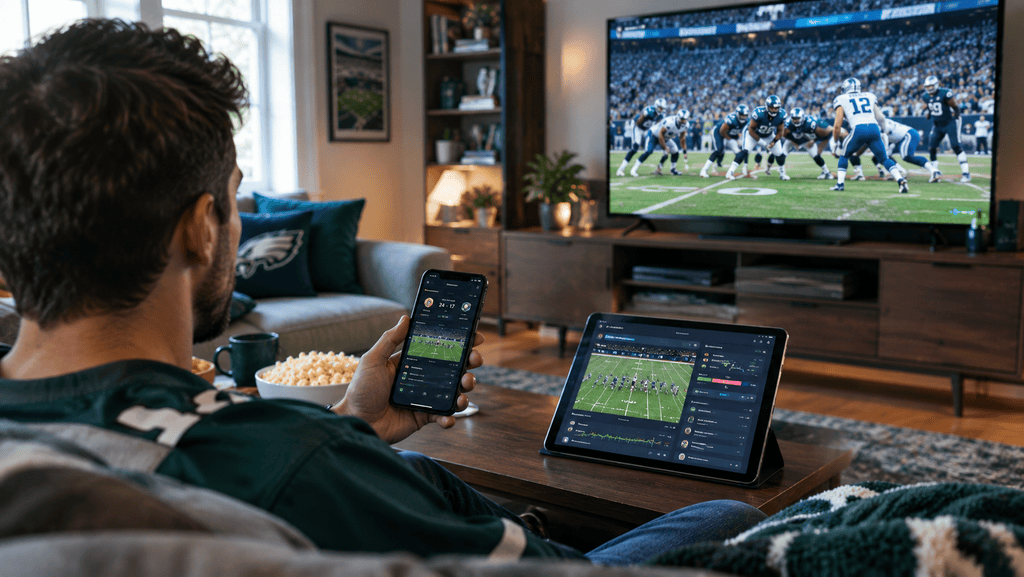
1. Live Sports Are Moving Further Into Streaming
One of the biggest sports viewing trends in 2026 is the continued move from traditional television to streaming.
Major sports rights are no longer limited to broadcast and cable networks. Streaming platforms are becoming important destinations for live games.
The NFL is a clear example. Fans can now find games across CBS, FOX, NBC, ESPN/ABC, Amazon Prime Video, YouTube, Netflix, and NFL services, depending on the game and location.
Netflix has also become part of the live sports picture. The NFL’s Christmas Day games were streamed live on Netflix, and the league says the 2025 Christmas games reached more than 30 million global average viewers each.
The trend is not limited to football.
Major League Soccer, for example, continues to offer every MLS match through Apple TV in more than 100 countries and regions, with no blackouts for subscribers.
For fans, this creates more flexibility.
However, it can also create confusion. A viewer may need to know which service owns the rights before the game starts.
That means where to watch has become almost as important as the game itself.
2. Fans Are Watching Multiple Games at Once
Why choose one game when you can watch several?
Multiview is becoming a major part of modern sports streaming. Instead of switching between channels, fans can place multiple live games on the same screen.
Apple’s sports experience supports up to four live sports streams at the same time on compatible devices.
On Apple Vision Pro, the experience can go even further, with up to five live sports streams available at once for supported events.
The NFL has also expanded multiview options through YouTube.
For fans following several teams, this can be extremely useful.
A football fan can watch the main game while keeping an eye on another matchup. During a busy sports weekend, viewers can follow several games without constantly changing channels.
Still, there is a trade-off.
The more games appear on one screen, the harder it can be to focus on one moment.
Even so, multiview is changing the idea of a traditional sports broadcast. The viewer now has more control over what deserves attention.

3. Alternative Broadcasts Give Fans More Ways to Experience a Game
The main broadcast is no longer the only option.
Sports leagues and broadcasters are experimenting with alternate streams designed for different types of fans.
The NBA has already offered alternate broadcasts with different hosts, styles, languages, and points of view. Its League Pass lineup has included streams such as NBA HooperVision and the NBA Strategy Stream.
In 2025, the league also introduced “Courtside Crawsover,” an alternate broadcast hosted by Jamal Crawford and Dexter Fowler. The show combined game analysis with fan interaction and pop-culture discussion.
This approach changes the role of the commentator.
Instead of simply explaining what is happening, an alternate broadcast can create a different social experience around the game.
Some viewers may want detailed tactical analysis.
Others may prefer humor, celebrity guests, or a more relaxed conversation.
As a result, sports broadcasting is becoming less about finding one perfect presentation and more about offering several versions of the same event.
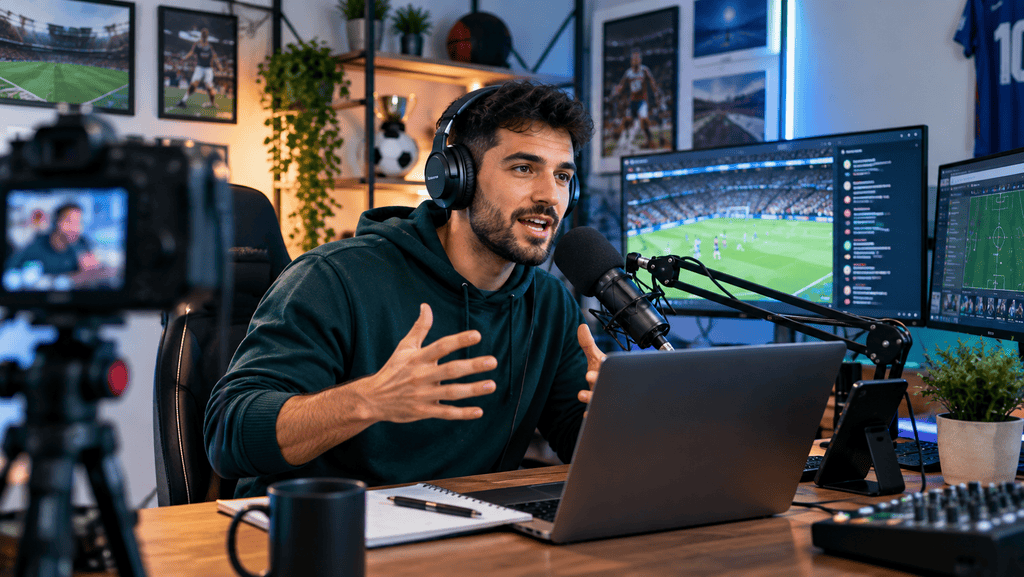
4. Creator Commentary Is Becoming Part of Sports Fandom
Sports fans are also spending more time with creators.
YouTube’s latest NFL report shows just how large this space has become. NFL-related videos received more than 20 billion views on YouTube during 2025. The number of NFL-related video uploads also grew by more than 400% from 2020 to 2025.
That growth matters because many fans are no longer waiting for traditional broadcasters to explain a game.
They can follow analysts, former athletes, streamers, comedians, team creators, and independent commentators.
The result is a more personal viewing experience.
A fan might watch the official game for the action, then move to YouTube for reactions and analysis.
Meanwhile, social platforms can provide short clips almost immediately.
This creates a sports experience that continues before, during, and after the game.
In other words, the broadcast is no longer the entire product.
The conversation around the broadcast has become part of the experience too.
5. AI Is Starting to Make Sports Viewing More Personal
Artificial intelligence is another major sports viewing trend to watch in 2026.
The technology is being used to turn large amounts of sports data into information that fans can understand more easily.
The NBA and Amazon Web Services announced a partnership in 2025 to develop “NBA Inside the Game,” a basketball intelligence platform designed to turn billions of data points into insights and interactive fan experiences.
This points toward a different kind of broadcast.
Instead of every viewer receiving exactly the same information, digital platforms can potentially show information that matches a person’s interests.
For example, a viewer who follows defense might want defensive statistics.
Another fan may care more about scoring records, player comparisons, or team history.
Deloitte has also identified generative AI as a possible tool for personalizing sports content feeds, advertising, and customer support.
The technology is still developing.
However, the direction is clear: sports platforms are looking for ways to make the viewing experience feel more personal.
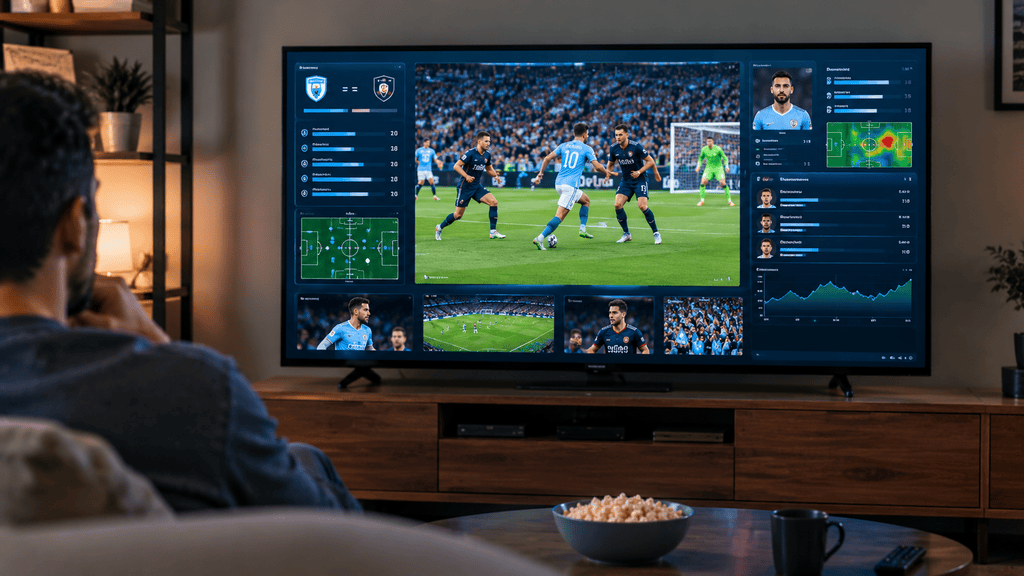
6. Real-Time Data Is Becoming Part of the Broadcast
Sports fans have always loved statistics.
Now, however, statistics can appear while the action is still happening.
Modern sports broadcasts can combine live tracking, player information, historical records, and other data with the video feed.
That creates a more detailed viewing experience.
A basketball viewer might see information about a player’s shooting performance. A football fan may follow player movement or game statistics. A soccer viewer can check match information without leaving the stream.
The NBA’s partnership with AWS is one example of this wider shift toward data-driven viewing. The league says its new platform is designed to create interactive experiences from large amounts of basketball data.
This trend also gives fans more control.
Instead of waiting for a commentator to mention a statistic, viewers can increasingly find information themselves.
Consequently, the sports broadcast is becoming part video, part data platform.
7. Finding the Right Game Is Becoming a Feature of the Product
As sports rights spread across more services, fans need better ways to find games.
This may sound like a small problem.
It is not.
Deloitte found that 35% of consumers surveyed said they needed to subscribe to too many services to watch all the events they wanted. The company also noted that social media competes with streaming platforms for sports attention.
Sports organizations are responding.
The NBA introduced “Tap to Watch” for the 2025-26 season. The feature is designed to help fans find live NBA games across league platforms and media partners.
Apple’s MLS interface also lets fans find matches, follow teams, jump to key plays, and move between live games.
These tools may seem simple.
Yet they solve a major problem.
A great game is useless to a fan if that fan cannot quickly find where it is being shown.
Therefore, sports discovery is becoming an important part of the viewing experience.
8. Social Media Is Becoming a Second Sports Screen
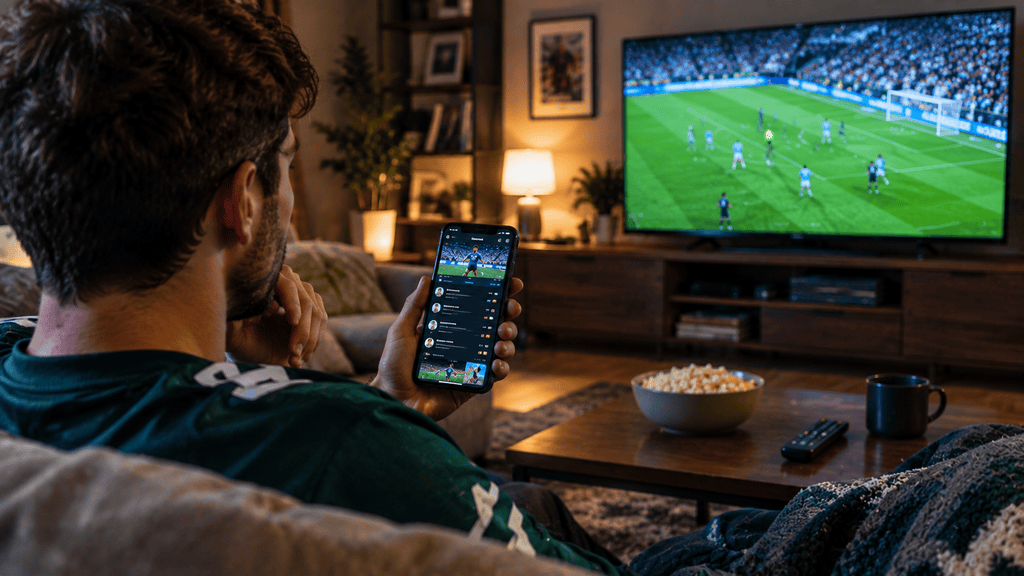
For many fans, the game is only one part of the experience.
The second part happens on a phone.
Deloitte reported that more than 90% of Gen Z and millennial fans surveyed use social media for sports-related content, including clips, highlights, live events, news, and commentary.
This means a fan can watch a game on television while using a phone to follow reactions, statistics, highlights, and conversations.
The experience can continue even when the viewer is away from the television.
YouTube’s NFL data shows the scale of this behavior. More than 30% of NFL-related YouTube views in 2025 happened between the end of the Super Bowl and the start of the regular season.
So, sports fandom is becoming less tied to game time.
Fans can watch a live match, check a short highlight later, follow a creator, and discuss the biggest moments on social media.
The result is a much larger sports content cycle.
9. Immersive Viewing Is Moving Beyond the TV Screen
Virtual reality and other immersive technologies are still developing, but they are becoming part of the conversation around sports viewing.
The idea is simple.
Instead of watching a game as a flat image on a television, fans could experience the event in a more flexible digital space.
Deloitte has described immersive sports as an area where fans can create more personalized digital experiences both at home and inside venues.
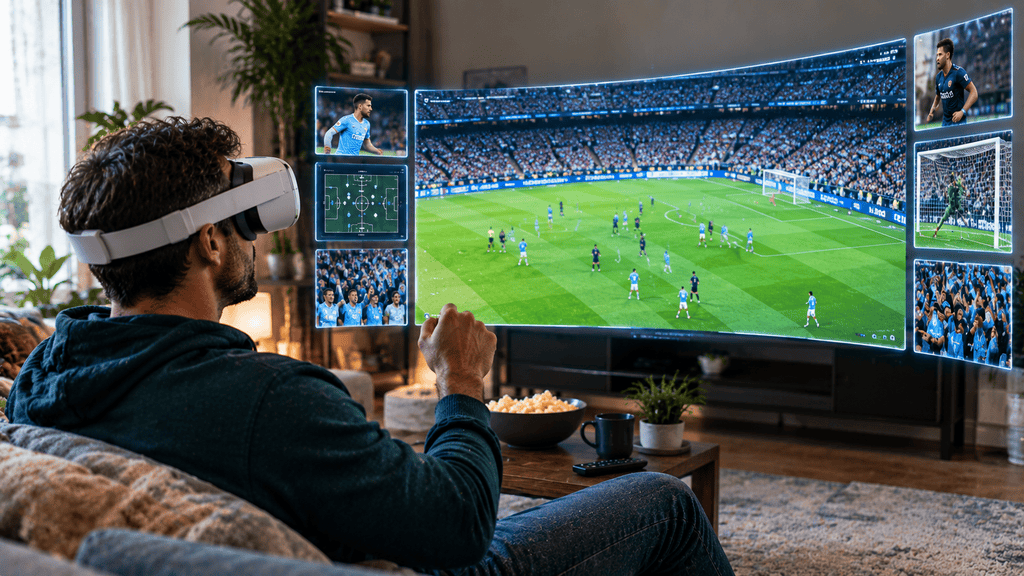
Apple’s current sports features on Vision Pro provide a real example of how this direction can work. Supported users can watch several sports streams at the same time and move the windows around their viewing space.
However, immersive sports are not yet a replacement for normal television or streaming for most fans.
The technology is still expensive and limited.
Nevertheless, it shows where sports viewing could go next.
The screen may become less important than the space around the viewer.
10. Sports Viewing Is Becoming More Global and More Cross-Platform
The final trend connects many of the others.
Sports are increasingly being distributed across borders and platforms.
A fan in one country can follow an American football team on YouTube, watch a game on Netflix, follow highlights on social media, and use a league app for statistics.
At the same time, leagues are trying to reach audiences outside their traditional markets.
The NFL’s 2025 Christmas Day games were viewed from 218 countries and territories, according to the league.
MLS is another example. Apple says its subscribers in more than 100 countries and regions can watch every MLS match.
This global reach can change which teams and athletes become popular.
Nielsen’s 2026 sports research points to the growing role of global talent, digital distribution, pop culture, and cross-platform entertainment in sports viewership.
As a result, sports fandom is becoming less local.
A viewer no longer needs to live near a team to become a serious fan.
What These Sports Viewing Trends Mean for Fans
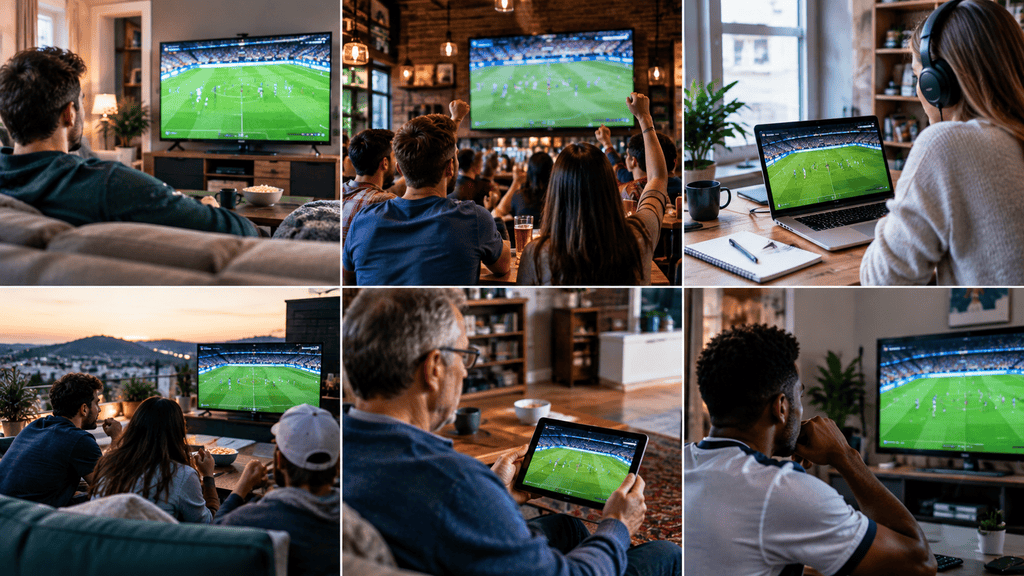
The biggest change is simple: fans have more control.
They can choose where to watch.
They can choose how many games to see.
They can choose the commentators they prefer.
They can follow creators, check statistics, watch highlights, and interact with other fans while the game is happening.
That flexibility is exciting.
At the same time, it can create new problems.
More streaming services can mean higher costs. More platforms can make games harder to find. More information can also become distracting.
Deloitte has already highlighted fragmentation and discoverability as major challenges for the sports streaming market.
Therefore, the next stage of sports viewing may not simply be about adding more technology.
It may be about making all these options easier to use.
The best sports experience could be the one that gives fans plenty of choices without making them work to find the game.
What Could Sports Watching Look Like Next?
The future of sports viewing will probably not be one single format.
Some fans will continue watching games on traditional television.
Others will stream everything.
Some will use multiview. Others will prefer a creator’s commentary or an alternate broadcast.
Meanwhile, AI, live data, social media, and immersive technology will continue to add new layers around the game.
The important point is that these experiences can exist together.
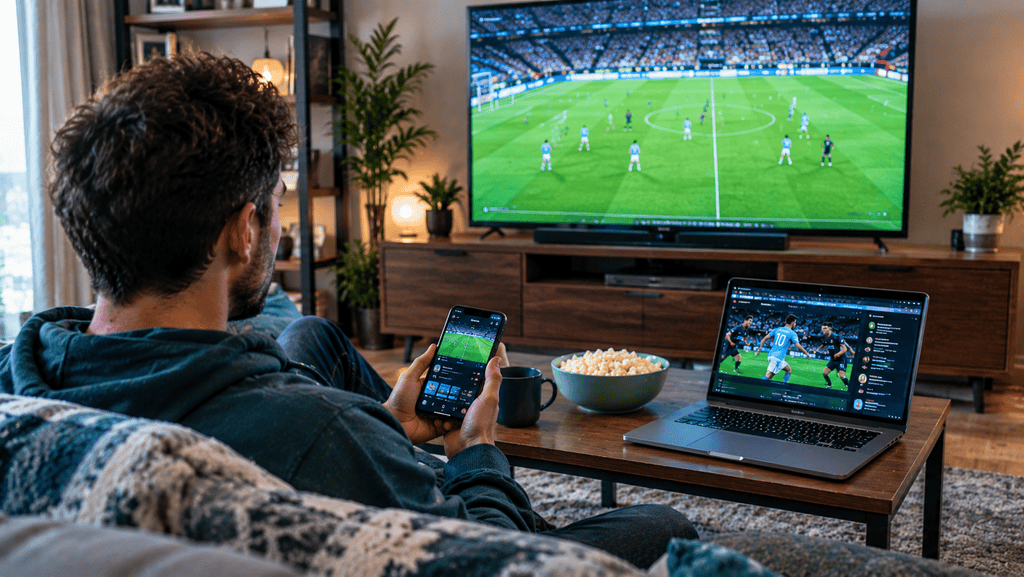
A fan might watch the main broadcast on a large screen, keep another game in a smaller window, check statistics on a phone, and discuss the match with friends online.
That would have sounded unusual a few years ago.
In 2026, it is becoming much closer to normal.
Frequently Asked Questions
What are the biggest sports viewing trends in 2026?
The biggest trends include streaming, multiview, alternate broadcasts, creator commentary, AI-powered features, real-time statistics, social media, immersive viewing, and global sports distribution.
Why are more sports moving to streaming services?
Streaming gives leagues and media companies another way to distribute live games and reach fans across connected devices. Major sports leagues are increasingly using streaming platforms as part of their media strategies.
What is multiview in sports streaming?
Multiview allows fans to watch multiple live games or sports streams on the same screen. Some platforms currently support up to four simultaneous streams, while Apple Vision Pro can support up to five for certain events.
How is AI changing sports broadcasts?
AI can help turn large amounts of sports data into useful insights and personalized content. The NBA and AWS are developing tools designed to create interactive basketball experiences using large amounts of data.
Why are sports fans using social media while watching games?
Social media gives fans quick access to highlights, reactions, news, commentary, and conversations. Deloitte found that more than 90% of Gen Z and millennial fans surveyed use social media for sports-related content.
Are alternate sports broadcasts becoming more popular?
Yes. Major leagues such as the NBA are offering alternate broadcasts with different hosts, analysis styles, languages, and entertainment formats.
Will virtual reality replace normal sports broadcasts?
There is no evidence that VR will replace normal sports broadcasts soon. Instead, immersive technology is developing as another option for fans who want a different viewing experience.
Why is it becoming harder to find live sports?
Sports rights are spread across broadcast networks, cable channels, streaming services, league platforms, and other digital partners. This fragmentation can make it harder for fans to know where a game is available.
Conclusion
Sports viewing in 2026 is no longer a one-screen experience.
Fans now have more choices than ever. Streaming services, multiview, alternate broadcasts, creators, social media, AI, live statistics, and immersive technology are changing the way people follow games.
Some changes make sports easier to watch.
Others create new problems, especially when content is spread across too many services.
Still, one thing is clear.
The modern sports fan is becoming more active.
Instead of simply watching a game, fans can choose the view, the commentary, the information, and even the community around it.
That is the real shift behind the latest sports viewing trends.
The game is still at the center.
But in 2026, the way fans experience that game is becoming almost as important as the action itself.